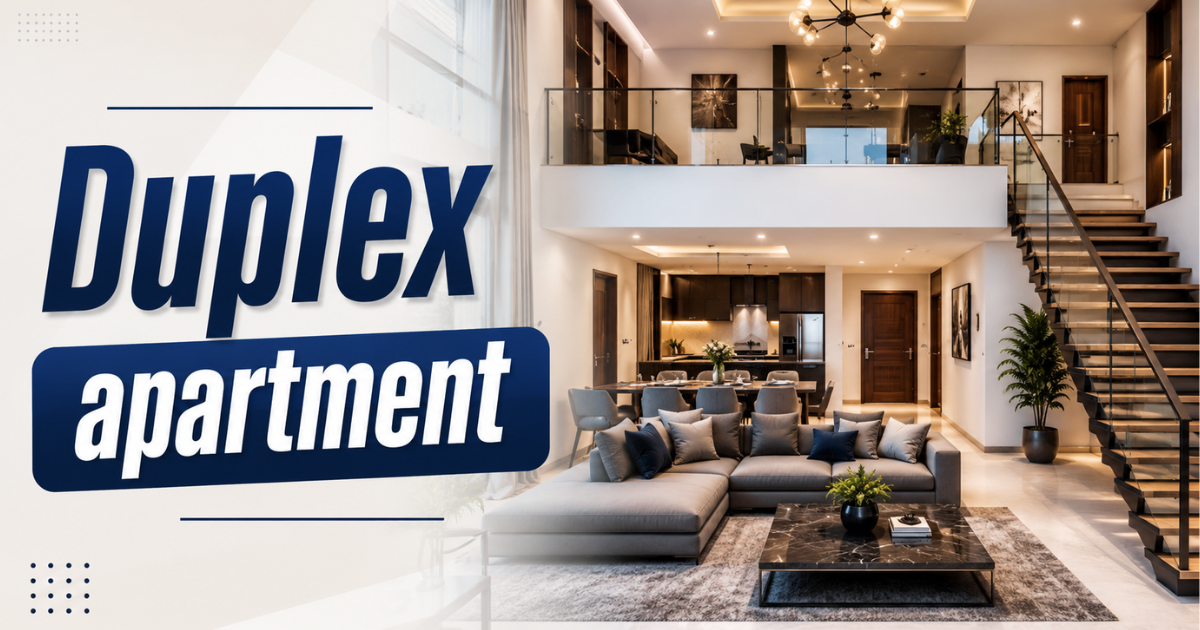
India’s housing market has changed a lot in the last few years, and buyers now want more than four walls and a balcony, they want room to grow. That shift is exactly why the duplex apartment has become such a talked about choice from Mumbai to Bengaluru, and this guide walks through what makes a duplex apartment work so well for Indian families today.
What is a Duplex Apartment?
When I first walked into a Duplex apartment in one of India’s busy metropolitan cities, it felt more like stepping into an independent home than a regular flat. A Duplex apartment is a residential property built as two connected living levels, joined by an internal staircase that turns two floors into one functional home.
Unlike a standalone villa or a plain two-story house, this design gives you the comfort of a house while sitting inside a normal building. Most families choose this style because it works well for a single family who wants more room without buying land in suburban developments far from the city.
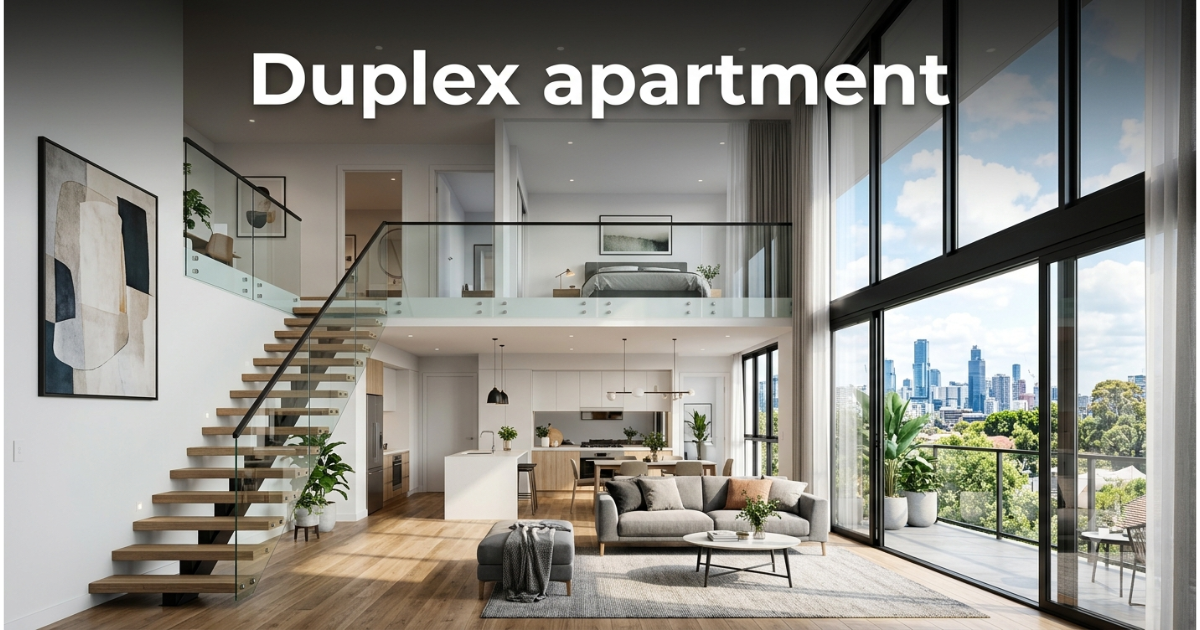
The spacious home usually has a living room, a single kitchen, and a dining area on the ground floor, while the upper floor holds the master bedroom and other bedrooms. This layout keeps privacy intact, since the lower floor stays open for guests and the top stays private for the family.
Builders across India from Pune and Hyderabad to Delhi NCR and Chennai are now designing these homes with stylish layouts, larger carpet areas, and spacious living rooms that make everyday life easier. Most RERA-registered projects also mention the exact carpet area in square feet.
So it’s worth checking this before you finalize a duplex apartment. Many projects include a guest room or a guest bedroom near the entrance, along with multiple bedrooms and additional bedrooms upstairs for growing families. This kind of modern living blends the openness of luxury homes with the practicality of a standard apartment.
Types of Duplex Apartments
There are several types of Duplex apartment designs available across Indian cities, and each one suits a different kind of buyer. A Ground Duplex sits on the lower levels of a residential building and often opens into a private garden or other open areas, which works well for families with children and pets.
The Standard Duplex is the most common type, and honestly, it’s the most common duplex design you’ll see in most cities. It keeps common living spaces on the ground floor and pushes bedrooms up to the upper floor, giving residents greater privacy compared to a normal flat.
A Low Rise Duplex usually appears in smaller buildings, fitted with large windows and balconies that bring in light and air, making it a smart pick for urban locations like Gurugram, Navi Mumbai, and other fast-growing Indian townships.
The Side-by-Side Duplex takes a different route, with two separate homes built next to each other, sharing a common wall but keeping their own entrance and utilities apart. Meanwhile, the Stacked Duplex places one residential unit above another, which suits areas where land limited availability, pushes builders to grow upward instead of outward.
Cost of Building a Duplex Apartment
The cost of building a Duplex apartment changes a lot depending on location, plot size, and the overall design you choose, and this holds true whether you’re building in a tier-1 city like Bengaluru or a growing tier-2 town.
For a standard G+1 duplex built on a 20×40 plot, the construction cost in India usually starts around ₹30 lakh, though this cost climbs fast once you add premium designs or luxury features, and local factors like stamp duty and registration charges add further to the final price of a duplex apartment.
Working with experienced professionals and choosing solid interior finishes also protects your initial investment, especially if you want a spacious layout that lasts. From my own experience helping a relative plan their build, skipping on quality materials almost always costs more lately in repairs.
Advantages of a Duplex Apartment
One of the biggest advantages of a Duplex apartment is space; owners get significantly more living space than typical apartments, plus extra rooms for home offices or a dedicated home office. This extra section of the house also works well for joint families, since everyone gets their own personal space while still sharing one roof.
Many owners choose to rent out one floor and keep the other for themselves, which creates a steady rental income and additional monthly earnings every month. This kind of separate access, along with a separate entrance, keeps family members comfortable while a tenant lives close by without disturbing anyone’s daily routine.
A well planned Duplex apartment also gives better privacy through separate living zones, so daily life feels more like living in luxury villas than in a crowded building. Homeowners enjoy dedicated parking, private gardens, wide balconies, and open terraces, which add real comfort to everyday routines.
On the money side, a duplex often holds strong resale potential, especially in developing residential areas where demand keeps growing year after year. Renting a section brings additional rental income, and because layouts stay highly flexible and flexible, owners can update the interior design or add storage areas whenever needed.
This usable space also supports an affordable price point compared to a full standalone home, offering a taste of premium lifestyle without the higher cost.
Overall, these practical benefits make a Duplex apartment attractive: extra larger living spaces, an additional income stream when part of the home gets rented out, and genuine privacy for every generation under one roof.
In my own circle, friends who bought a duplex apartment in India say the mix of space and earning potential was the deciding factor, especially with property values rising steadily across most Indian metros.
Disadvantages of a Duplex Apartment
Like any property, a Duplex apartment comes with a few drawbacks too. Maintaining two floors takes more effort than a single flat, and cleaning the whole two floors regularly can feel tiring for busy families. Higher maintenance and maintenance costs also add up faster compared to regular flats or standard flats.
Shared walls can let sound and noise travel between floors if the builder skips proper insulation or proper sound insulation, so it pays to check this before buying, and always confirm the walls are properly insulated before signing anything.
Owners who rent part of their home also take on manage tenants duties and extra maintenance responsibilities, which not everyone wants to handle. These limitations matter more if you already have a busy schedule.
Building costs run higher too, since a larger built-up area and complex staircase design push up construction costs for duplex homes and other duplex properties in most Indian real estate markets.
Living farther from cities can also mean increase travel time or even increase commuting time to work, which some buyers overlook at first. Selling a duplex can take longer too, because the buyer pool stays smaller than it is for regular apartments; not everyone wants the extra construction and upkeep that comes with two floors.
Still, for families who value space over a quick resale, these trade-offs rarely change their minds about daily travel.
Duplex Apartment vs Other Property Types
Many people confuse a Duplex apartment simply called a duplex with a normal double storey house, but there’s a key difference worth knowing. A normal two story house may have two independent floors with separate entrances and no internal connection.
While a duplex works as one connected living space joined by an internal staircase, instead of leaving independent floors that never really connect. This connected living space gives both levels a seamless flow that a plain two-storey house or double-storey house rarely offers.
Compared to a flat, a duplex offers two connected units, two connected levels, and greater privacy since it functions as a connected home rather than a stacked box. Next to a full villa sitting on its own plot, a duplex still feels affordable while giving generous living space and spacious living for growing families. Unlike a townhouse, which sits among homes in a row and shares walls with several neighboring homes, a duplex only shares one structural wall at most.
Conclusion
So, is a Duplex apartment an excellent option in 2026? For most families, yes, it stands as an excellent choice that gives real space, comfort, and long-term investment value for years to come. Buyers looking for a valuable investment often find that a well designed duplex brings an ideal balance between affordability and luxury.
A duplex works well for multi generational living, letting an extended family share one home while keeping enough privacy and spacious living for everyone. It also opens up rental income and other rental opportunities, since one section can support a tenant while the family enjoys flexibility in daily life.
FAQs
Duplex apartment
What exactly is a duplex apartment?
It’s a home spread across two floors within a single unit, linked by an internal staircase. Unlike separate flats stacked on top of each other, both levels function as one continuous living space, typically with common areas downstairs and bedrooms upstairs.
What price range should buyers expect when building a duplex apartment?
Costs vary widely based on city, plot dimensions, and design choices. A basic G+1 structure on a 20×40 plot generally begins near ₹30 lakh, with prices rising for upgraded finishes, added features, and applicable registration or stamp duty charges.
Why do buyers prefer duplex apartments over standard flats?
Owners get noticeably more usable space, room for a home office, and the option to rent out one level for extra income. The layout also offers stronger privacy, since shared and private zones are naturally separated across floors, plus better resale value in growing neighborhoods.
Does a duplex apartment come with any disadvantages?
Yes, upkeep is more demanding since there’s double the floor area to clean and maintain, and poor sound insulation between levels can be an issue if construction quality is lacking. Building costs also tend to run higher, and duplexes can take longer to sell due to a smaller pool of interested buyers.
How is a duplex different from a villa, townhouse, or a regular double storey house?
A villa sits on its own independent plot and costs more overall, while a townhouse shares walls with multiple neighboring homes in a row. A basic double story house often has two disconnected floors with separate entries.
A duplex, by contrast, shares at most one wall and is designed as a single connected residence across two floors offering a middle ground between affordability and spacious, house like living.
