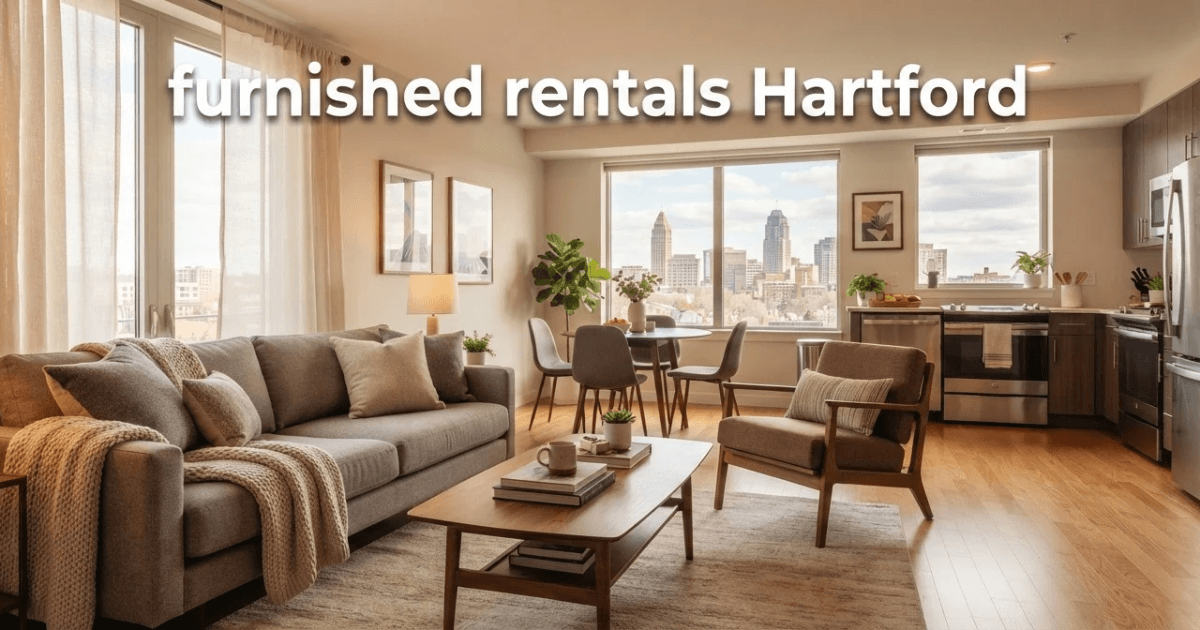
The market for furnished rentals Hartford offers is small, fast-growing and very seasonal. Knowing how it works can save you money, whether you plan to rent a place for a few months or buy one as an investment property.
This guide answers the questions people actually ask: who rents these homes, what they cost, which market trends matter, and whether investing is worth it. It covers what furnished rentals Hartford renters can find today, using published rental market data from Rabbu (as of April 2026) and live apartment listings.
What is the furnished rental market in Hartford?
The furnished rental market in Hartford covers any home rented with furniture already inside. That ranges from nightly Airbnb listings to monthly corporate housing and year-long furnished apartments. It is small next to Boston or New York, yet it serves a steady flow of workers, students and families across the Greater Hartford area.
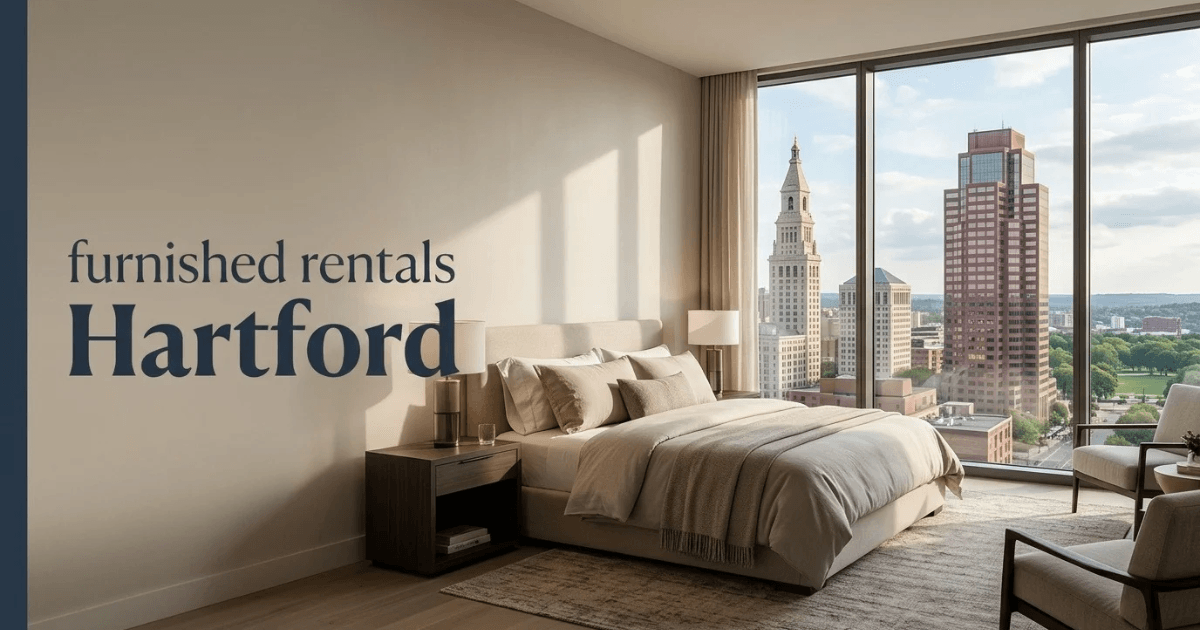
When people search for furnished rentals Hartford, they usually mean one of three overlapping tiers. Short-term rentals (STR) run under 30 days and are booked through platforms. Mid-term rentals run one to six months, while move-in ready long-term units often sit inside a larger multifamily building.
Each tier has its own prices, rules and guests. A three-night visitor watches the average daily rate (ADR), while a relocating employee compares the total monthly price and lease length. Keeping the tiers apart makes the numbers below much easier to read.
Where are furnished rentals located around Hartford?
Most furnished options cluster in downtown Hartford, West Hartford Center and nearby towns such as Windsor, CT and Bloomfield, CT. Renters and buyers like these areas because they pair an easy commute into the city with shopping, dining and quieter streets than the urban core.
West Hartford Center draws people who want urban living in a suburban setting, with Blue Back Square and Bishop’s Corner nearby for restaurants and shopping. One local building, 24 N Main, offers 18 luxury rental apartments and highlights its short drive to UConn Health and Hartford.
Windsor sits about 10 minutes north of Hartford, according to Apartments.com. There, Spark Windsor covers 82 acres along the Farmington River and appears in listings with furnished units. Suburban complexes like this now compete for the same tenants as downtown buildings.
Who rents furnished places in Hartford?
The main renters are business travelers, remote-work travelers, hospital and insurance staff on temporary assignments, students, and families waiting on a home purchase or repair. Most want a place they can live in from day one, without buying furniture or setting up every utility account themselves.
Hartford’s big insurance and health care employers create a steady stream of short assignments. Rabbu reports that about 80% of active Hartford Airbnb listings offer a dedicated workspace. That tells you hosts are building for working guests, not only for tourists.
Families in transition form another group. A household that sells one house before the next one closes may need three or four months of housing. Mid-term furnished units fill exactly that gap.
What do furnished renters expect from a rental?
Renters expect a home that works on arrival: a full kitchen, fast internet, a desk, laundry, parking and clear pricing. In larger buildings they also look for amenities such as a fitness center, swimming pool or clubhouse, plus a pet-friendly policy and the chance to view the unit through 3D tours first.
These guest expectations shape what landlords buy and install. An in-unit washer and dryer, walk-in closets and high-end finishes help a unit stand out. Pricing with utilities included also removes a common worry for people on short stays.
Virtual tours matter even more for furnished units, because many renters book from another state. A clear floor plan with the square footage listed lets them judge the space before they arrive.
How much do furnished rentals cost in Hartford?
Prices for furnished rentals Hartford depend mostly on stay length. Rabbu’s April 2026 data puts the city’s average Airbnb nightly rate at $105. For year-long leases, Spark Windsor listed two-bedroom base rent from about $1,588 to $2,233 a month, plus $35 in required monthly fees.
Hartford’s nightly rate sits far below the Connecticut state average of $373. Rabbu links that gap to Hartford’s role as a more affordable urban market. Listings change often, so treat any rent prices here as a snapshot, not a quote.
Mid-term stays usually price somewhere between those two models, but no source we checked publishes a Hartford-wide average for them. As a rough estimate, hosts often charge more than a similar unfurnished lease to cover furniture, utilities and cleaning. Always check several comparable listings before you agree to a number.
How does the price change with bedroom count?
Larger units earn more per night. Rabbu lists Hartford’s average nightly rate at $92 for studio apartments, $75 for one-bedroom apartments, $143 for two-bedroom apartments and $185 for 3-bedroom properties. A three-bedroom earns about $26,336 a year, nearly triple the $9,174 a one-bedroom earns.
| Unit size | Average nightly rate | Active listings (Apr 2026) |
| Studio | $92 | 5 |
| 1 bedroom | $75 | 58 |
| 2 bedrooms | $143 | 17 |
| 3 bedrooms | $185 | 6 |
Source: Rabbu Hartford market data. One-bedrooms make up 58 of the 88 active listings, yet three-bedrooms earn the most. That gap suggests larger furnished homes face far less competition.
How can renters compare prices fairly?
Use rent comparison tools and rent comps to see what similar units charge nearby. Then compare the full monthly cost, including fees, utilities, parking and cleaning. A lower asking rent can hide extra charges that push the real bill above a rival listing.
Watch for rent specials and rent concessions, such as a free month. These lower the effective rent, which is the asking rent minus the discount spread across the lease. That effective figure is the one to compare.
Many tools also show median rent and percentile rent for a ZIP code. If a furnished unit charges well above the top range, ask what extra value justifies the price.
What trends are shaping Hartford’s furnished rental market?
Three trends now shape furnished rentals Hartford: fast supply growth, strong seasonality and demand from working travelers. Rabbu counted 88 active Airbnb listings in April 2026, with supply up 141% year-over-year. Rental demand still looks healthy, since Rabbu rates the supply/demand balance as above average.
That jump signals rising investor interest, but the starting base is still small. Rabbu says demand has room to absorb new listings for now. It also warns investors to watch for oversaturation if listings keep arriving at this pace.
The second shift is a wider mix of furnished options in suburban complexes. Windsor listings now carry furnished and corporate housing labels on regular apartments. Renters therefore have real choices beyond nightly Airbnb stays.
When is peak season for furnished rentals in Hartford?
Peak season runs from May through October. Rabbu reports July as the top month, with average host revenue of $1,508, followed by August at $1,497. The quietest months are January and February, when average monthly revenue drops to roughly $687 to $698.
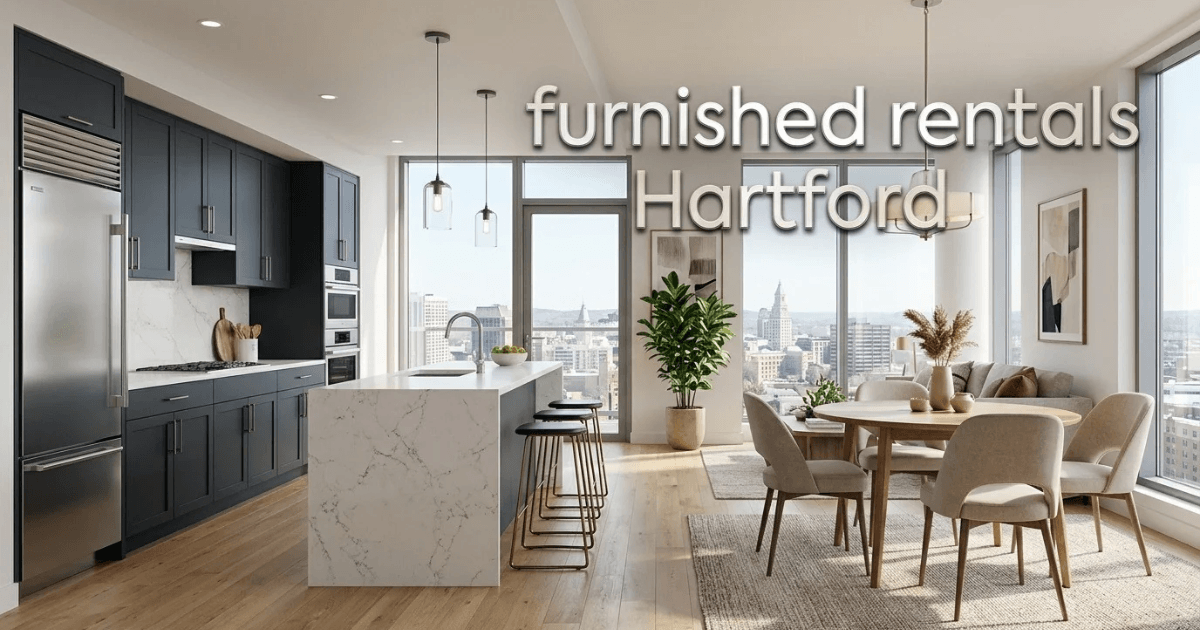
This swing matters to both sides of the lease. Renters who can move in winter often find better rates and more choice. Hosts, on the other hand, need smart off-season pricing and longer stays to keep units filled.
Rabbu advises investors to expect leaner cash flow from December through March. Pairing short summer stays with mid-term winter tenants is one common way to smooth income across the year.
What is the occupancy rate for furnished rentals in Hartford?
Hartford’s average Airbnb occupancy rate was 28% in Rabbu’s April 2026 data, below the 37% Connecticut average. It varies widely by size: three-bedroom listings led at 34%, while studios trailed at just 6%. Well-priced, well-run units can beat the citywide figure.
Low occupancy does not always mean weak demand. A small market adding many new listings often shows a lower average while hosts are still finding the right pricing strategy.
Rabbu’s long-term forecast expects occupancy to settle around 27% to 30% over the next 12 to 18 months. It also suggests ADR could rise 1% to 3% in peak summer months. Treat both as projections, not guarantees.
Is investing in furnished rentals Hartford worth it?
It can be, if you buy the right size and plan for slow months. Rabbu gives Hartford an ROI score of 61 out of 100, which it calls an attractive opportunity. Low home values, about $301,299 on average per the Zillow Home Value Index (ZHVI), help the math.
Cheaper homes than many Northeast markets improve the revenue-to-price ratio and your possible cash-on-cash return. Still, the average Hartford listing earned about $1,105 a month, or $13,262 a year, based on trailing 12-month data. A small unit alone may not cover a full mortgage.
Your results will depend on property selection, condition and management. Budget for furniture, cleaning, insurance and empty nights before you trust any revenue figure.
How do investors finance a furnished rental?
Many investors use a DSCR loan, which qualifies you based on the property’s expected income instead of your personal salary. Rabbu’s partner lenders advertise a down payment as low as 10% to 15% for investment properties. Terms still vary a lot by lender and credit profile.
Ask each lender whether they understand vacation rental underwriting, because some treat nightly income as riskier than a standard lease. Get rates, fees and cash reserve rules in writing so you can compare offers fairly.
Before you apply, gather revenue data for the same street and bedroom count. Lenders and appraisers trust real comps far more than an optimistic projection.
What rules apply to short-term rentals in Hartford?
Hartford may require hosts to get a permit or register a property before hosting guests. Connecticut generally charges sales tax and a room occupancy tax on stays shorter than 30 days. Rules change, so confirm current details with the city and the Connecticut Department of Revenue Services.
Check zoning and licensing with Hartford’s planning office, and read any HOA rules or condo association bylaws before you buy. Rabbu notes that markets like Hartford can include occupancy limits, minimum stay requirements, noise and nuisance ordinances and parking mandates.
Booking platforms such as Airbnb often collect and pay occupancy taxes for hosts, but you are still responsible for checking. Because these taxes target stays under 30 days, some owners prefer mid-term tenants instead.
How do you find the right furnished rental in Hartford?
Start with your stay length, budget and commute, then shortlist three to five listings and compare total costs side by side. Tour in person or by video, read the lease closely, and confirm what furniture, utilities and services come with the rent before you pay any deposit.
These practical tips help renters avoid surprises:
- Move in winter if you can. Demand dips from December to March, so you may get better rates.
- Check the lease terms. Ask about lease duration, lease renewal and early exit fees, since some furnished units need a 12-month lease term.
- Get an inventory list. Photograph every item on move-in day so you are not charged for old damage.
- Verify the manager. Confirm the property management company exists, and never wire a deposit to a stranger.
- Test the commute. Drive the route at rush hour before you sign.
What should investors check before buying?
Investors should confirm permit rules, study real comps for the exact bedroom count, map seasonal revenue swings and add up every operating cost before making an offer. Larger homes earn more in Hartford, so run the numbers on two- and three-bedroom properties, not only the one-bedrooms that dominate supply.
- Use full-year data. One strong July can make a weak property look great.
- Count every cost. Include operating expenses such as cleaning, furniture replacement, insurance, utilities and platform fees.
- Plan for winter. Line up mid-term tenants for the slow months.
- Get local help. A real estate brokerage agent who knows rental zoning can flag problems early.
FAQs
Are furnished rentals Hartford more expensive than unfurnished ones?
Usually, yes, because the rent covers furniture, setup and often utilities. No source we checked publishes a Hartford-wide price gap, so compare a furnished listing with a similar unfurnished unit nearby. Make sure you match the bedroom count, building quality and lease length.
How many Airbnb listings does Hartford have?
Rabbu counted 88 active Airbnb listings in Hartford as of April 2026. One-bedrooms led with 58 listings, followed by 17 two-bedrooms, 6 three-bedrooms and 5 studios. Supply grew 141% over the prior year.
Can I rent a furnished apartment month to month in Hartford?
Some hosts and buildings offer monthly terms, especially mid-term rentals and corporate housing. Many apartment complexes still ask for a 12-month lease, even for furnished units. Ask about flexible terms and early exit fees before you apply.
Do I pay occupancy tax on a two-week stay in Hartford?
Generally yes, because Connecticut applies sales tax and a room occupancy tax to stays shorter than 30 days. Platforms like Airbnb often collect it in the booking total. Check your receipt, or ask the host, if you are unsure.
Which areas near Hartford have furnished apartments?
Downtown Hartford, West Hartford Center, Windsor and Bloomfield all have furnished or corporate options. West Hartford Center suits people who want walkable shopping. Windsor and Bloomfield offer larger complexes with more amenities and a short drive into the city.
