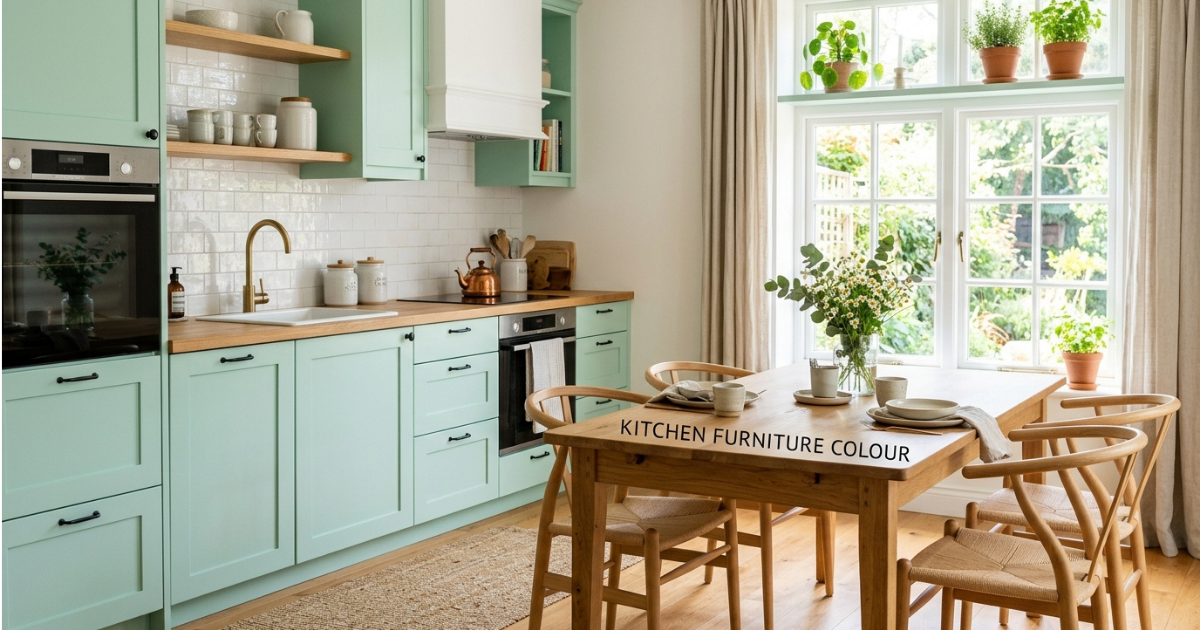
Every kitchen tells its own story, and the kitchen furniture colour you choose decides most of that story before anyone even opens the fridge. Homes that leave a lasting impression almost always share one thing: a confident colour combination running through cabinets, walls, countertops, and laminates.
A good scheme sets the atmosphere and shapes the kitchen design. It instantly signals whether the space feels bright, warm, spacious, or timeless, and it does this quietly, without anyone needing to say a word.
Some homeowners lean toward bold black and white schemes, while others prefer softer, complementary shades. This guide pulls together the best kitchen furniture colour ideas, from classic pairings to bold statement shades, keeping everything practical rather than theoretical.
Getting the furniture, style, flooring, and accessories to work together takes thought. That is the real difference between a kitchen that simply functions and one that genuinely earns compliments from everyone who walks in.
Popular Kitchen Furniture Colour Combinations
Grey and White
Grey and white is one of the most versatile pairings for anyone who wants a modern kitchen without taking any real risk. White lifts the mood of the room, while grey quietly adds depth underneath it.
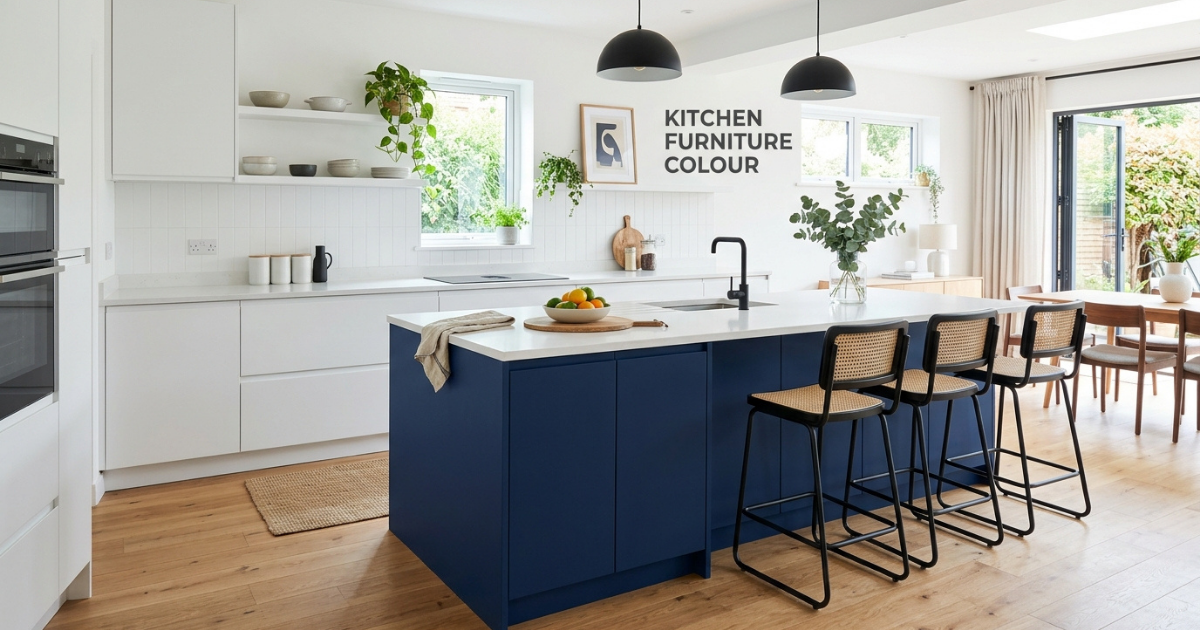
Try painting upper cabinets white and lower cabinets grey for a balanced two-tone effect. This colour pairing suits both contemporary apartments and busy modular kitchens equally well.
Beige and White
Beige and white is a go-to suggestion for homeowners who want a welcoming kitchen rather than a showroom-style one. Beige carries softness and warmth, while white keeps everything looking fresh and clean.
This pairing works beautifully across cabinets, walls, countertops, and backsplash areas. Adding warm lighting brings out the full cozy character of this popular kitchen furniture colour scheme.
White and Wood
White and wood is a timeless combination that never feels dated, bringing both freshness and natural warmth into a room. White surfaces brighten everything, while wood textures add character that white alone cannot achieve.
Light oak, ash, and walnut pair beautifully with white cabinets. Using wood-inspired finishes on lower cabinets while keeping upper sections white creates a genuinely balanced colour arrangement.
This combination stretches across many interior styles, since the white element keeps things clean and modern, while wood introduces warmth and texture. It suits rustic, Scandinavian, and contemporary kitchens equally well.
Black and White
Black and white suits anyone chasing a dramatic kitchen, since bold choices here rarely disappoint. Black adds depth and a luxurious appearance, while white balances the darker shade and stops the space feeling heavy.
Black lower cabinets paired with white upper cabinets, or black used only as an accent, both work beautifully. For balance, keep white as the dominant kitchen furniture colour and introduce black through select cabinets or fixtures.
White and Blue
Blue and white together create a calming atmosphere that feels genuinely fresh. Soft blue gives a light, relaxed appearance, while deeper blue shades offer a stronger statement without losing balance.
White cabinets paired with blue backsplash tiles or select wall sections look lovely. Metallic handles with warm lighting finish this elegant colour combination beautifully.
Grey and Wood
Grey and wood brings modern sophistication together with natural warmth, and it is a safe bet for anyone unsure where to start. Grey cabinets offer a contemporary foundation, while wood stops the room feeling cold.
It works especially well in spacious modular kitchens. Using wood textures selectively across cabinets, shelves, or breakfast counters keeps this balanced colour scheme intact.
Caramel and White
Caramel tones bring real warmth and personality into a kitchen, and combined with white, the result feels comfortable yet modern. Try caramel on laminate panels or lower cabinets, keeping upper cabinets in white.
This works especially well for homeowners who want something warmer than a completely neutral colour palette.
Orange and Black
For a more energetic, contemporary appearance, orange and black creates a striking combination. Orange introduces vibrancy while black adds contrast and sophistication.
Because both colours read strongly, it works best to use one as an accent rather than covering everything. Orange sections combined with black storage units strike exactly the right balance.
More Distinctive Pairings
White and olive green creates a natural, refreshing environment, with olive cabinets bringing earthy character against a clean white foundation. Charcoal grey and gold delivers a luxurious, dramatic colour statement, especially with brass or gold fittings.
Sage green and off-white feels soft and calming, ideal for small kitchens that need to feel open. Navy blue and copper creates a bold, elegant scheme suited to larger kitchens with room to spare.
Mustard yellow with teak wood delivers real warmth and personality, while soft beige and matte black reads as sophisticated without trying too hard. Terracotta and cream suits rustic, countryside-inspired interiors beautifully.
Why Kitchen Colours Matter
Kitchen colours go far beyond decoration, since they shape the perceived size and atmosphere of the room. Light shades make compact spaces feel more open, while darker colours add depth and create dramatic focal points.
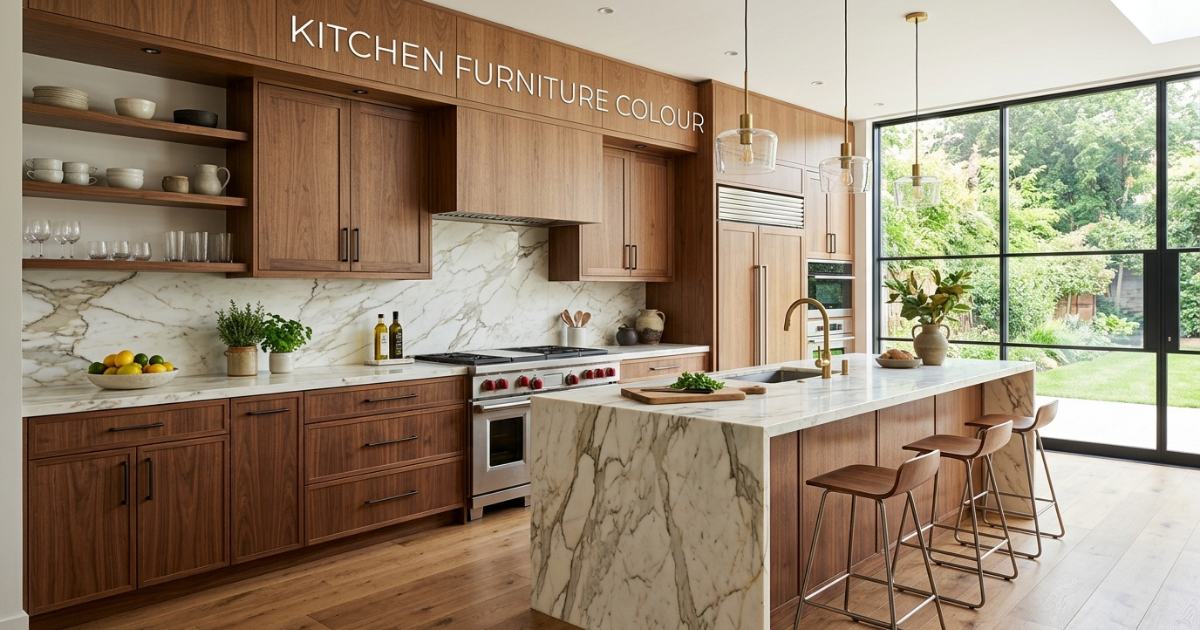
Glossy surfaces reflect light for a brighter appearance, while matte and textured finishes offer a softer, more sophisticated look.
A carefully planned palette ties countertops, cabinets, flooring, walls, and appliances into one cohesive interior. This affects how large a space feels day to day, and it shapes the overall mood of the room too.
Natural lighting deserves special attention, because a kitchen that gets plenty of sunlight can carry deeper colours far more easily than one that cannot. In darker kitchens, lighter walls and reflective finishes help increase perceived brightness.
How to Choose the Right Kitchen Furniture Colour
Before locking in any scheme, it helps to weigh a few genuine factors. Selecting a kitchen furniture colour should never happen in isolation from the rest of your kitchen, since everything needs to work together.
Consider kitchen size. Small kitchens do best with white, cream, beige, or gentle pastel shades that create a spacious feel. Larger kitchens hand you more freedom to experiment with darker colours and bold contrasts.
Check natural lighting. Deeper colours work beautifully wherever sunlight pours in, so naturally dark kitchens should lean on lighter cabinet colours instead. Always weigh how much natural and artificial light actually reaches your kitchen.
Match the overall interior. Wood paired with neutral tones suits natural interiors, while black, white, and grey fit modern minimalist spaces more naturally. A traditional interior generally leans toward warmer wood finishes.
Think about maintenance. Both light and dark surfaces show marks eventually, so choosing finishes that match your cooking habits matters more than trend-chasing. Mid-tones with textured surfaces tend to hide everyday marks best.
Balance light and dark shades. Instead of leaning on dark colours everywhere, pair them with lighter shades for genuine visual relief. Dark lower cabinets matched with white upper cabinets is a classic, reliable move.
Practical Styling Tips
Cabinets and walls should complement each other rather than compete for attention. A neutral wall can balance colourful cabinets, while bold walls work beautifully alongside simpler cabinetry.
The backsplash and countertop should always support your main kitchen furniture colour palette rather than fight it. Choosing related tones creates a far more seamless, organized appearance across the whole kitchen.
Paint samples and material swatches look different depending on the time of day. Always test your chosen colours under morning, afternoon, and evening lighting before making anything final.
Colour becomes far more interesting once combined with different textures. Wood, glass, laminate, metal, and stone-inspired finishes can all be worked into your furniture for real depth.
Colour Ideas by Kitchen Size
Small kitchens generally benefit from lighter furniture colours, and white, cream, pale grey, and soft wood tones all help create a spacious visual effect. Glass-front cabinets and open shelves reduce any sense of heaviness.
Instead of leaning on several strong colours in a small space, pick one main shade and add contrast through handles, accessories, or the backsplash. This keeps a compact colour scheme feeling calm.
Large kitchens open up real experimentation, and dark grey, black, wine, navy, and deep green can all be used on cabinets without making the space feel cramped. Two-tone furniture is another excellent route here.
Darker lower cabinets paired with lighter upper cabinets create genuine contrast while still keeping visual balance. This approach lets a bold kitchen furniture colour choice feel grounded rather than overwhelming.
Final Thoughts
Looking back across every idea shared here, kitchen interiors thrive on a confident colour combination rather than guesswork. Grey and white brings contemporary elegance, beige and white delivers real warmth, and wood and white brings out natural character.
Whether your kitchen counts as a compact modular kitchen or a spacious cooking area, focus on a balanced palette that ties your lighting, cabinetry, countertops, and home décor together. The right kitchen furniture colour makes all of this feel effortless.
In the end, the best scheme always matches your home’s design, available lighting, kitchen size, lifestyle, and genuine personal taste. Choosing your kitchen furniture colour thoughtfully, alongside the right materials, keeps your kitchen genuinely attractive and truly practical for everyday life.
FAQs
What is the most popular kitchen furniture colour combination?
Grey and white remains the most popular choice, since it suits nearly every interior style while keeping the kitchen looking bright, modern, and easy to update over time.
Which kitchen furniture colour works best for small kitchens?
Lighter shades such as white, cream, beige, or pale grey work best, as they reflect light and make a compact kitchen feel noticeably more open and airy.
Can dark kitchen furniture colour schemes work in small spaces?
Yes, but they need to be balanced carefully with lighter walls, good lighting, and glossy finishes so the room does not end up feeling boxed in or heavy.
How do I choose a kitchen furniture colour that won’t go out of style?
Neutral pairings like white and wood, grey and white, or beige and white tend to age well, since they complement changing trends rather than competing with them.
Does natural light affect which kitchen furniture colour I should pick?
Absolutely, Kitchens with plenty of natural light can carry deeper, bolder colours confidently, while darker rooms benefit from lighter cabinets and reflective finishes to stay bright.
