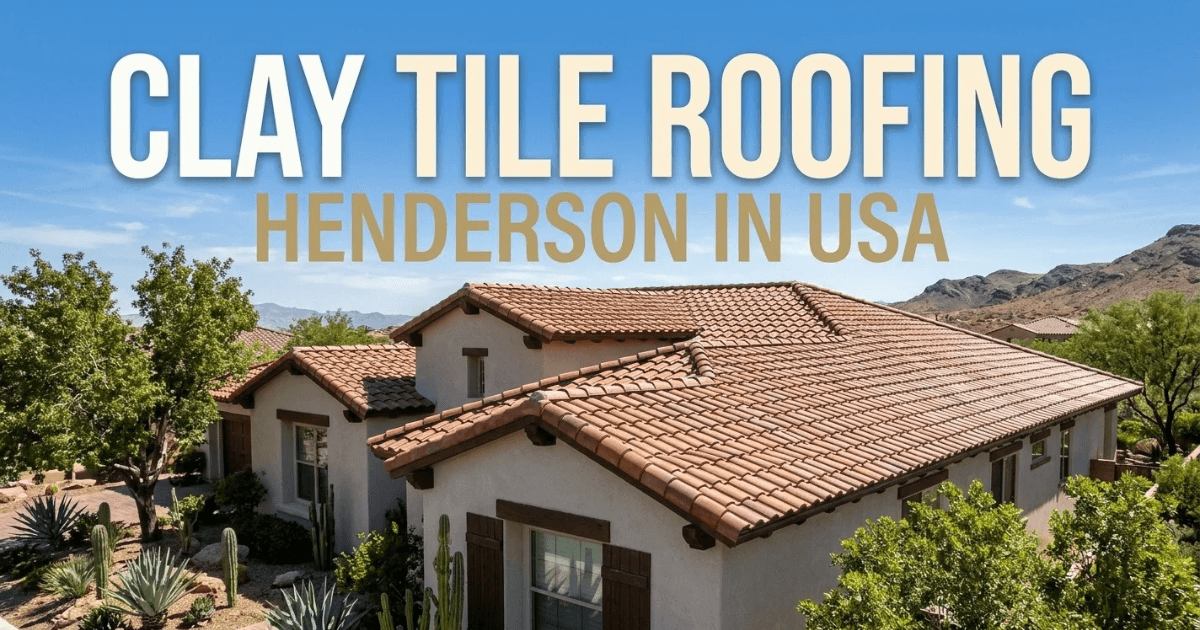
A clay tile roofing system can protect a desert home for decades, but only when a skilled crew installs and maintains it. The tile rarely fails first, because the layers beneath it give out sooner. This guide shows what to look for in a contractor and how our site helps you compare local options.
Why does clay tile roofing work so well in desert heat?
Clay tile suits desert heat because fired clay offers natural thermal resistance, keeps its color in strong sun, and carries a Class A fire rating. These traits help lower summer cooling demand. A well-fastened tile roofing system also delivers wind uplift resistance that meets local building standards.
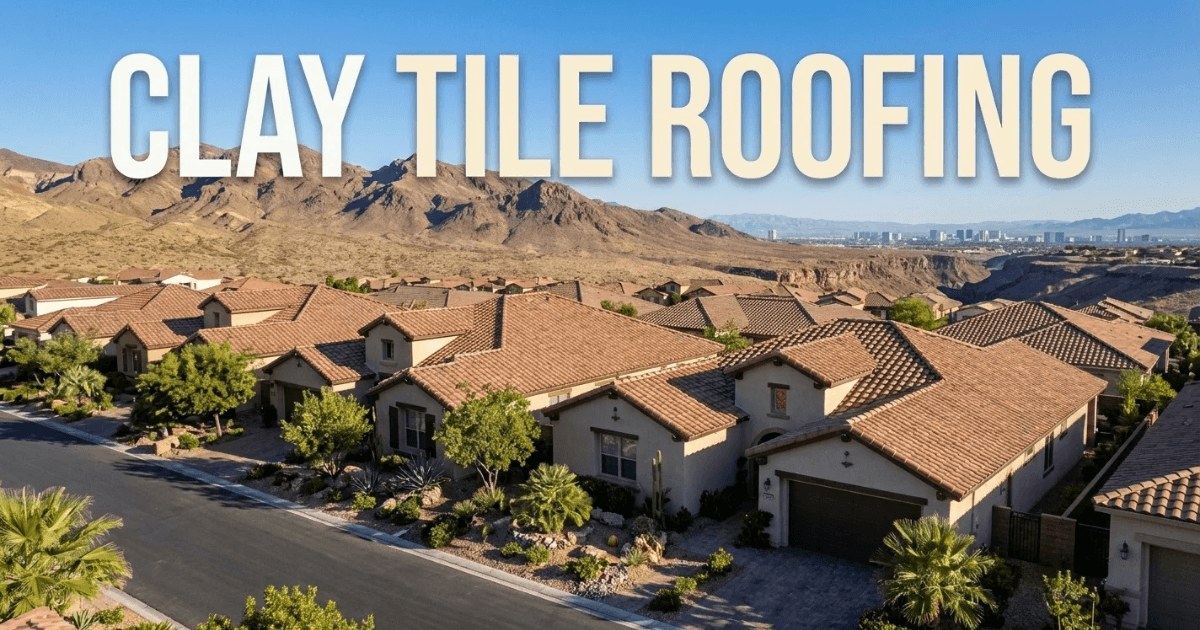
Fired terracotta tile gets its color from the clay body, so it shows a color that holds under UV instead of a fading coating. That matters in Southern Nevada, where extreme UV exposure bakes rooftops most of the year, and Las Vegas hit an all-time high of 120°F on July 7, 2024. Many owners also love the warmth and character of clay tile, and the curved Spanish tile shape leaves an air gap that slows heat transfer and supports a long lifespan.
How does clay tile handle sun, wind, and fire?
Clay resists sun through dense fired material, and it resists fire because it does not burn. A Class A fire rating places it in the top category under standard fire testing. Wind performance, however, depends almost entirely on the installer’s fastening method.
From the repair reports we have reviewed, loose tiles usually trace back to installation shortcuts, not weak clay. Crews secure tiles to wood batten strips with securing nails or approved fasteners, set ridge tiles in mortar, and high winds lift tiles when those links weaken. Thermal shock adds stress too, since daily expansion and contraction works on nails, mortar joints, and flashing year after year.
What parts make up a complete clay tile roof system?
A complete clay tile roof includes roof decking, underlayment, battens, fasteners, flashing, and the tiles on top. Trusses carry the whole load beneath the deck. Complete roofing systems only perform well when every one of these layers does its job.
Flashing seals walls, vents, and roof penetrations, including chimney flashing around masonry, while crews tie in seams, valleys, and drainage and drains so water leaves the roof. Fascia boards support the lowest tile course along the gutter line. Rooftop equipment, such as evaporative coolers and solar mounts, also needs sealed attachment points.
Why does the underlayment matter more than the tile?
The underlayment forms the true waterproof barrier, while clay tile mainly shields it from sun and impact. In desert climates, underlayment that wears out faster than the tile causes most tile roof leaks. That makes underlayment quality the biggest single factor in long-term performance.
Older homes often used organic felt underlayment or paper underlayment, and one Henderson roofing source says felt lasts about 15 to 20 years in local heat. Many crews now install heavy-duty synthetic underlayment, so ask which tile underlayment a contractor plans to use. Roofers call this the 15–20 year underlayment threshold, and many 1990s–2000s concrete tile roofs now face their first underlayment cycle.
What problems do clay tile roofs develop in Southern Nevada?
The most common problems include roof leaks, water intrusion, tile slipping, and underlayment at the end of its service life. Most trace back to corroded nails, decayed battens, or deteriorated mortar. Dry rot in fascia and decking often follows once water reaches the wood.
Interior symptoms often appear first, and moisture evidence on rafters shows an inspector where water travels. Outside, discolored patches, visible wear, roof age, and ponding water where tile meets a flat section all point to trouble. Crews often uncover hidden conditions only after they lift tiles, so expect some flexibility in scope.
How do monsoon storms and windstorms damage a tile roof?
Monsoon storms bring wind, rain, and hail that test every weak point. Sudden monsoon downpours push water under displaced tiles, while gusts loosen tiles that tired fasteners hold. The result often appears as storm damage, wind damage, or hail damage within hours.
The National Weather Service defines the Southwest monsoon season as June 15 through September 30, so rain exposure follows months of drying heat. That timing makes pre-monsoon repairs in late spring a smart habit. After any windstorm, book a post-windstorm inspection, because inspectors often find cracked tiles and early dry rot along the fascia.
What services should a clay tile roofing contractor offer?
A capable tile contractor should offer clay tile installation, clay tile repair and replacement, tile resets, leak detection, and synthetic underlayment replacement. The same company should provide roof inspection, storm damage repair, and emergency tarping. Broad experience with roofing and roof repairs across tile types helps a crew diagnose problems correctly.
Many crews also handle concrete tile repair and replacement, since concrete tile uses the same batten-and-underlayment structure. Tile matching matters when a repair needs replacement tile pieces from an aged tile or discontinued tile line, so ask how the contractor sources tile profiles and tile colors. Some companies add roof maintenance, recoats, elastomeric coating, acrylic roof coating, cool roof silicone coating for a commercial deck, solar installation, or solar-ready reroofing.
Tiled Roof Repair Options: Re-felt or Replace?
A tile re-felt replaces the underlayment and reuses the existing tiles, while a full tile re-roof replaces both. Contractors also call a re-felt lift-and-relay underlayment replacement or tile lift-and-lay. Clay tiles in good shape usually make a re-felt the sensible choice.
During a re-felt, crews may also handle decking replacement, fascia board repair, and dry rot detection while the deck sits open, and a full roof replacement makes sense when many tiles have cracked. Clarify the repair scope versus the replacement scope before work starts, along with removal and disposal of old felt. Good crews also explain their property protection and cleanup plan.
How do you choose a reliable clay tile roofing contractor?
Choose a contractor who shows active licensing and insurance, explains tile-specific methods, and puts everything in a written estimate. Look for photo documentation of current conditions before work begins. A clear manufacturer warranty, workmanship warranty, and labor warranty should also appear in the contract.
In Nevada, the State Contractors Board licenses roofers, so verify a license online and ask who handles permits and inspection and insurance claims paperwork. GAF runs a contractor program, and a GAF Master Elite contractor has met that manufacturer’s stated requirements, although GAF mainly makes shingle and low-slope products. Treat a GAF certified badge as a sign of business standing rather than proof of tile skill.
How do HOA rules affect a tile roof project?
Many HOAs require approval of tile color and profile before a re-roof or large repair. Contractors prepare color and profile submittal packages for HOA architectural review, and the board checks them against its HOA aesthetic guidelines. Skipping this step can force costly rework.
Henderson contains several master-planned communities (Anthem, Green Valley, Seven Hills, Inspirada, Southern Highlands). Experienced crews know which HOA-approved profiles and higher-end tile profiles pass review quickly. Ask to see samples in daylight before the crew orders material.
Which roofing companies offer clay tile services, and what does each website confirm?
Several companies publish clear tile service lists, including 702 Roofing, Outlaws Roofing, and Henderson Roofers. Each brand offers the services listed on its own website, so confirm details with each company. The summaries below reflect only what each site states.
702 Roofing in Henderson lists concrete and clay tile repair and replacement, tile re-felt, leak detection, emergency tarping, insurance claim inspections, commercial and HOA roofing, recoats, storm assessment, metal roofing, and solar-ready reroofing. Its site also mentions reflective cool-roof finishes and matching for aged or discontinued tile. Outlaws Roofing, a GAF Master Elite contractor, lists concrete and clay tile repair, tile underlayment replacement, lift-and-relay work, full tile re-roofs, free inspections, a photo-documented report for insurers, and HOA submittal packages, and it notes that southern exposure gives Henderson stronger UV than central Las Vegas.
Henderson Roofers lists clay tile installation, tile lift-and-lay, tile resets, synthetic underlayment replacement, and post-windstorm inspection with dry rot detection and fascia repair. RoofyUp lists roof repair, replacement, installation, inspection, storm damage roofing, and commercial roofing, and it discusses clay tile alongside natural slate and standing-seam metal. First Quality Roof lists a 14-point roof inspection, repair, replacement, commercial repair, solar installation, and acrylic roof painting.
M & D Roofing serves Brewster, New York, far from the desert, and lists roof installation, roof repair, emergency services, and insurance claim help. Zenith Roofing Solutions describes roofing services across Southern Nevada but does not list individual services on its homepage. Contact RoofyUp, First Quality Roof, M & D Roofing, and Zenith directly about clay tile experience, since none of them names a dedicated clay tile service.
How does clay tile compare with other roofing systems?
Clay tile typically outlasts most alternatives on pitched roofs, but it weighs more and costs more to install. Asphalt shingles and architectural asphalt shingles cost less upfront but age faster under intense sun. Metal roofing, including standing-seam metal, reflects heat well and weighs far less than clay.
Natural slate rivals clay for longevity, though few desert homes use it. Flat and low-slope roofing over patios uses TPO, PVC, modified bitumen, built-up roofing (BUR), or foam roofing, and crews join many of these sheets with heat-welded seams. Membrane roofs, especially reflective white membranes, keep those sections cooler where they meet the tile.
How much does clay tile roof work cost, and is it worth it?
Cost depends on roof size, pitch, tile condition, and scope, so only an on-site inspection gives a real number. A re-felt that reuses sound tile generally costs less than a full re-roof with new clay. For most owners, clay proves worth it because the tile can outlive several underlayment cycles.
Ask each bidder to separate labor, underlayment, battens, tile, and disposal so you can compare bids line by line. Clay adds structural durability, and a durable, long-lasting roof cuts repeat repair visits, while attic upgrades can bring insulation and lower power bills. Check tile compatibility too, since some older profiles no longer fit modern replacement tiles.
How does our website help you find the right clay tile roofer?
Our site gathers clay tile roofing guidance and local contractor options in one place, so you can compare tile services in one sitting. We focus on what each company states publicly. That approach saves time and keeps your comparison fair.
We organize providers by the services they confirm, from storm assessment to specialty roofs, multi-family roofing, and residential and commercial roofing. You can shortlist contractors for roofing and roof repairs, then call the best fits. Every listing points you back to the company’s own website for final details.
What do people ask most about clay tile roofing?
How long does clay tile roofing last in desert heat?
Clay tile often lasts for decades, but the underlayment beneath it sets the real repair schedule. Felt underlayment typically lasts about 15 to 20 years in Henderson heat, according to local roofers. Synthetic underlayment usually stretches that window, so ask which product your roof has today.
When should you schedule clay tile roof maintenance?
Schedule an inspection each spring before monsoon season and another after any major storm. That simple rhythm catches slipped tiles and failing mortar while fixes stay small. Owners who follow it usually face smaller roofing and roof repairs bills over the life of the roof.
Where should you start your search for a clay tile roofer?
Start on our website, where you can explore Authentic Clay Tile Roofing Systems Built for Desert Heat and compare contractors by the services they confirm. Bring this guide’s checklist and ask each company about underlayment, fastening, documentation, and HOA approval. Then contact two or three providers, and choose the one that answers clearly and puts every promise in writing.
