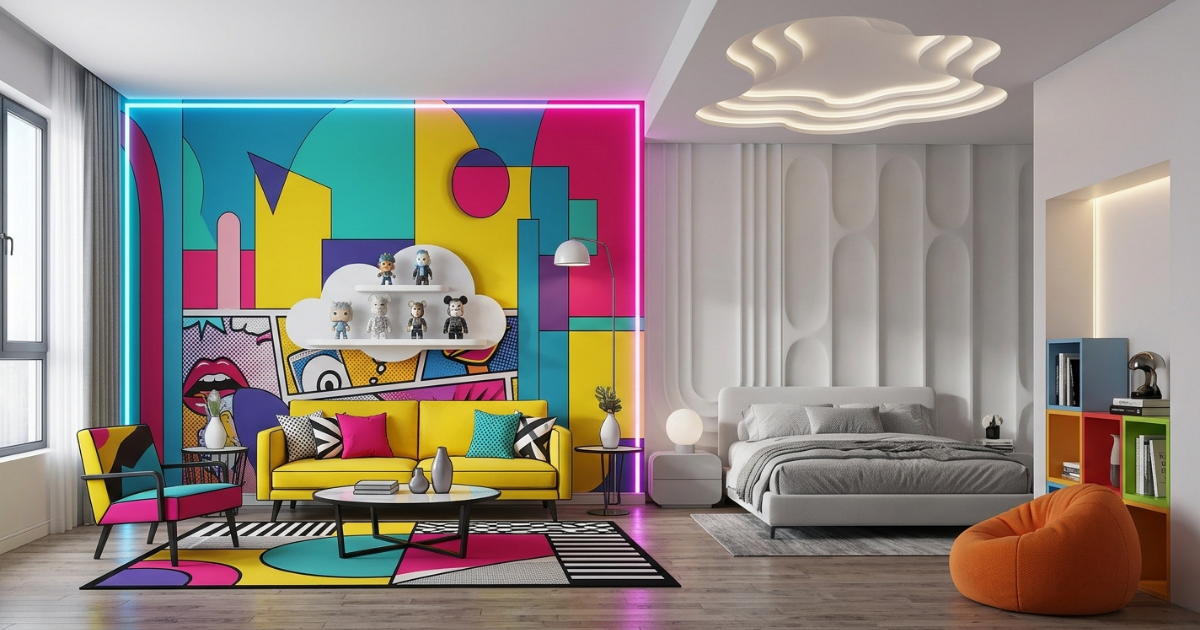
A Pop design for room changes how a house feels long before furniture goes in. POP, or Plaster of Paris, shapes layered ceilings, borders, curves, and recessed lighting, and pairs naturally with floor and wall tiles.
Bedrooms feel calmer with simple layers and soft light, while living rooms carry more detail since guests spend time there. A false ceiling also hides wiring, pipes, and ducts, so the room stays neat above and below.
Every style, from gypsum to wood to PVC, brings its own finish. Choosing the right one depends on ceiling height, room size, and how much light the space already gets.
What Is POP Design?
POP stands for Plaster of Paris, a soft material molded into borders, panels, and niches. It hides wiring and uneven surfaces while leaving space for recessed lights and LED strips.
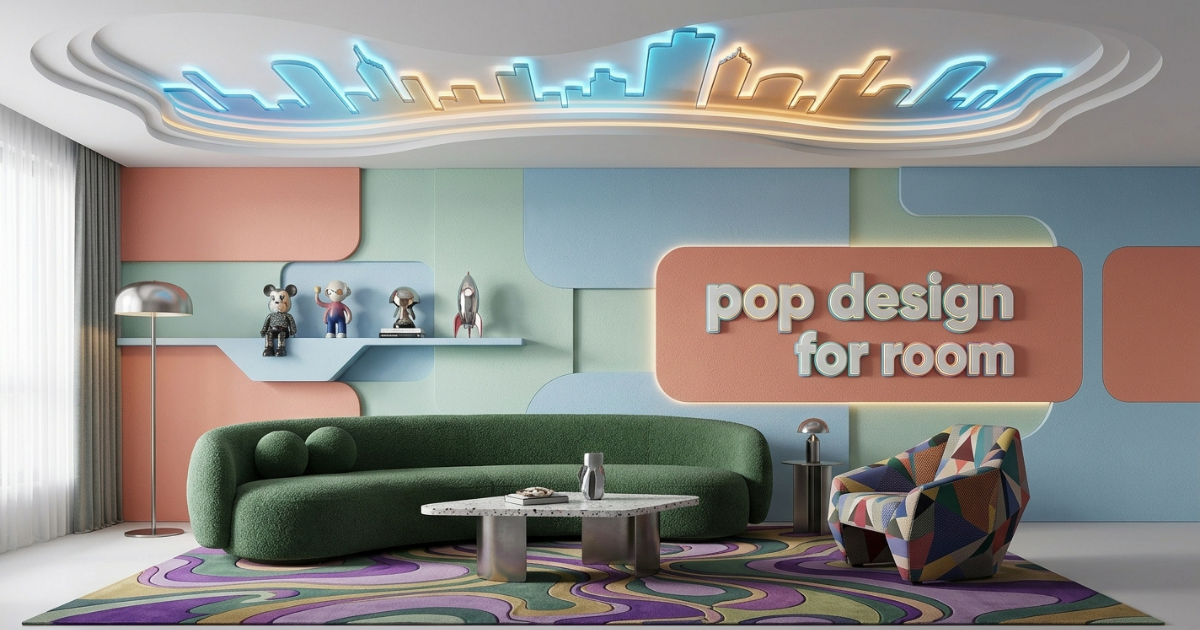
A false ceiling sits below the structural ceiling, creating a gap for services to stay concealed. This mix of decoration and function is exactly why a Pop design for room stays popular in homes today.
Benefits of POP Design
A false ceiling does more than look good, and this is one reason a pop design for room stays a smart investment. It hides wiring, improves lighting through spotlights and pendant fixtures, and adds a layer of insulation and better acoustics.
Some materials even carry fire-resistant properties once installed correctly. A well-planned Pop design for room also hides minor ceiling flaws and fits any budget, from simple touch-ups to full renovations.
Latest Trends
Wooden beams and panels bring warmth into modern interiors, while geometric patterns paired with LED lighting keep ceilings interesting. Coffered ceilings now mix traditional detailing with contemporary lighting.
Plain white is fading out, replaced by textured and coloured finishes. Minimalist tray ceilings, cove lighting, and neutral tones now define a fresh pop design for room look in both bedrooms and living rooms.
How to Choose the Right Design
Start by checking the ceiling height, since low rooms suit simple borders, not heavy layers. Room size matters too, as bigger spaces handle bolder patterns better than small ones.
Plan the lighting before plaster work begins, and pick materials based on moisture levels. Always match the design with existing furniture and wall colours so the ceiling never feels separate from the rest of the room, since a rushed pop design for room choice rarely ages well.
Small Bedroom Pop Design for Room Ideas
A layered ceiling with soft light keeps a small bedroom airy. Recessed lights give even illumination, while a plain border frames the room without adding bulk.
Geometric shapes in shallow forms add character without crowding the space. A floating panel above the bed, lit from hidden LED strips, becomes an instant focal point.
Wood-effect panels bring warmth, and cove lighting adds a gentle glow for a relaxing feel. Dual-tone ceilings, accent tile walls, and curved edges round out simple, stylish choices for compact rooms.
Why Tiles Matter with POP
Ceilings bring their own shapes and detail, so tiles and walls should support, not compete. A busy ceiling suits plain matte tiles, while a simple ceiling allows for a bold accent wall.
Glossy tiles reflect light and brighten small rooms, while matte tiles keep things calm and understated. Getting this balance right is a key part of any good Pop design for room plan.
Choosing the Right Floor Tiles
Large-format tiles cut down on grout lines and make small rooms look bigger. Light shades like white, cream, and soft grey keep the space bright and open.
Wood-look tiles add warmth for those who want a natural feel. Vitrified and porcelain tiles remain popular for their strength and easy upkeep, and choosing them well ties the whole pop design for room scheme together.
Tile Finishes for Bedrooms
Matte tiles suit detailed ceilings, while glossy tiles help brighten smaller rooms under LED light. Wood-look tiles bring natural texture, and marble-look tiles lift the space toward a premium feel.
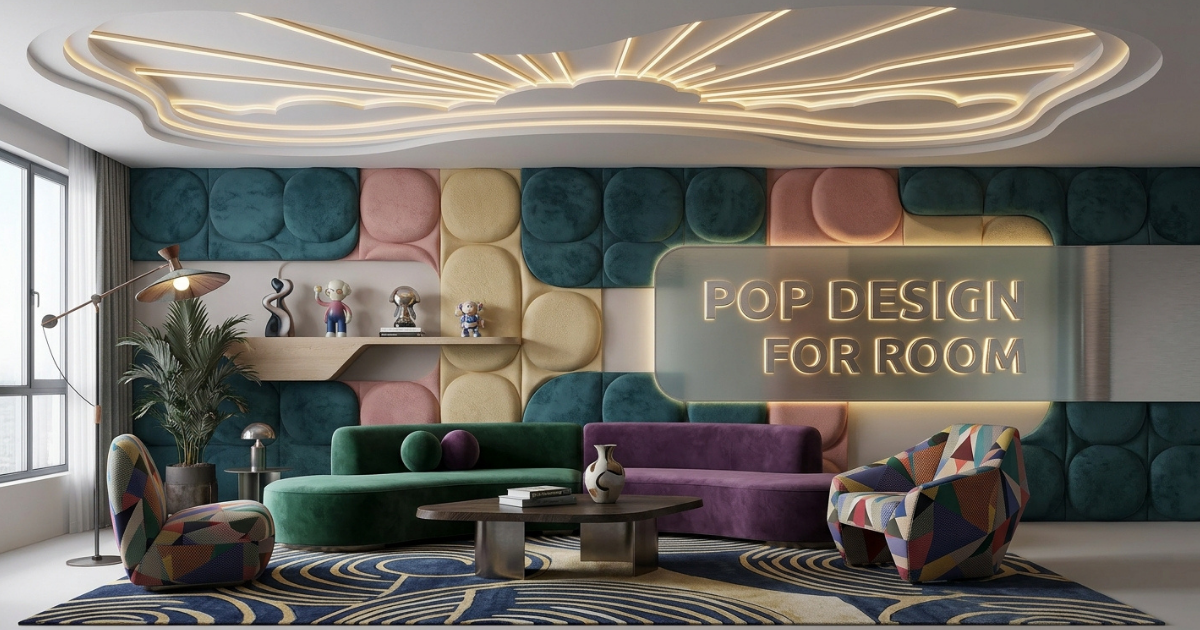
Textured tiles work well on a feature wall behind the bed. Many tile brands now offer full collections built specifically for bedroom use.
Coordinating Tile Colors with POP
Dark or busy ceilings need lighter floor tiles to avoid a heavy look. A white or cream ceiling pairs well with darker grey, beige, or charcoal tiles for contrast.
A neutral palette across the whole room often works best. The goal is balance between ceiling, walls, floor, and furniture, not competition between them.
Best Tiles for a Master Bedroom
Larger bedrooms allow more freedom to experiment with texture and colour. Marble-look tiles add a premium touch, while stone-look and wood-look tiles feel more natural.
If the ceiling already has multiple layers, keep the floor simple. One accent wall behind the bed is often enough decoration on its own.
Making a Small Bedroom Look Bigger
Light-colored, large-format tiles instantly open up a room. Simple ceiling patterns paired with concealed lighting avoid clutter and keep the eye moving smoothly.
Mirrors and reflective surfaces help too, as does keeping furniture in proportion. One clear focal point works far better than decorating every single wall.
Lighting Tips for Small Bedrooms
LED strips around ceiling edges create a floating look, while recessed lights give focused brightness where needed. Warm, indirect lighting feels far more relaxing than anything too bright.
If floor tiles are glossy, keep lighting controlled to avoid harsh reflections. Pendant lights near the bed work well, as long as they do not overcrowd the design.
POP Ceiling and Tile Combinations
A simple white ceiling pairs naturally with marble-look or beige tiles, while geometric patterns suit plain matte finishes. Floating panels look striking beside light marble or wood-look tiles.
Dark ceilings need light flooring to balance the room. A curved ceiling finishes nicely with neutral marble or stone-look tiles underneath.
Popular False Ceiling Ideas
A single-layer ceiling with recessed lights suits apartments with limited height. Multi-layered designs add depth in larger living rooms and bedrooms alike.
Gypsum ceilings offer clean lines, while wooden panels bring natural texture. Coffered and geometric patterns create a strong architectural feel, and a plus-minus design adds a three-dimensional touch to any pop design for room plan.
False Ceilings for Different Rooms
Living rooms suit layered gypsum or coffered styles with cove lighting. Bedrooms do better with minimal designs and soft, indirect light.
Dining rooms benefit from a tray ceiling paired with a pendant light. Bathrooms need moisture-resistant PVC, while home offices work well with clean, functional panels, showing how flexible a pop design for room can be across a whole house.
Materials Used for False Ceilings
Gypsum suits smooth, modern shapes and takes paint easily. POP handles decorative curves and borders, while wood adds natural warmth to any space.
PVC resists moisture, making it ideal for kitchens and bathrooms. Concrete, meanwhile, brings an industrial look to more contemporary interiors.
Popular Living Room POP Ideas
A single-tier ceiling with a raised border suits smaller living rooms well. Multi-level designs add depth where ceiling height allows for it.
Cove lighting creates a relaxed glow, while a tray ceiling frames a central light fixture nicely. Geometric wall panels behind a sofa or television unit also make a strong, modern pop design for room feature.
POP False Ceiling for Living Rooms
A false ceiling turns a plain living room into a real architectural feature. Plan lighting, whether recessed spotlights or pendant fixtures, before plaster work begins.
Elaborate ceilings suit rooms with generous height. Simple borders work better where space is limited.
POP Wall Design for Living Rooms
An accent wall is an easy way to bring POP into a living room without covering every surface. The wall behind a sofa or television unit works particularly well.
Geometric panels feel modern, while curved patterns lean softer and more traditional. Using POP on just one wall also keeps costs down, which makes this style of pop design for room work popular with budget-conscious homeowners.
Simple POP Designs for Living Rooms
Not every living room needs heavy detailing. A basic border with concealed LED lighting suits smaller rooms perfectly well.
A simple central panel adds interest without overwhelming the space. This kind of minimal pop design for room approach matches almost any furniture style.
POP Design for Hall and Living Room
Where a hall and living room share one space, the ceiling should feel continuous. A POP border running across both areas ties the zones together.
Slightly different ceiling sections can still mark out the seating area from the entrance. This creates separation without needing any physical wall.
Small Living Room POP Ideas
Skip complicated patterns in a small living room. A narrow border or simple tray ceiling adds enough detail without shrinking the space.
Light-colored POP in white or off-white keeps the room feeling open. Concealed lighting along the edges adds depth without clutter.
Final Thoughts
A good Pop design for room work always balances ceiling, walls, floor, and lighting together. Small spaces benefit from light colors and simple patterns, while larger rooms allow more texture and detail.
Whether it is a cozy bedroom or a busy living room, the right combination of POP and tiles creates a space that feels finished, warm, and genuinely comfortable to live in.
FAQs
Is POP design suitable for a small bedroom?
Yes. Simple borders, floating panels, and shallow layered designs add character without making a small room feel crowded.
Which tiles work best with a Pop design for room in a bedroom?
Large-format, light-colored tiles suit small bedrooms best. Marble-look, wood-look, matte, and subtle glossy finish all work depending on the ceiling style.
Are glossy tiles suitable with POP lighting?
Yes, glossy tiles reflect LED light nicely and brighten a room, though lighting should stay controlled to avoid harsh reflections.
What color tiles suit a bold POP ceiling?
Neutral shades like cream, beige, light grey, and off-white generally work best, letting the ceiling stay the main visual feature.
How can I make a small bedroom look bigger with POP design?
Use light-colored tiles, larger tile formats, minimal ceiling detailing, and concealed lighting, paired with a clutter-free furniture layout, to make the room feel more open.
