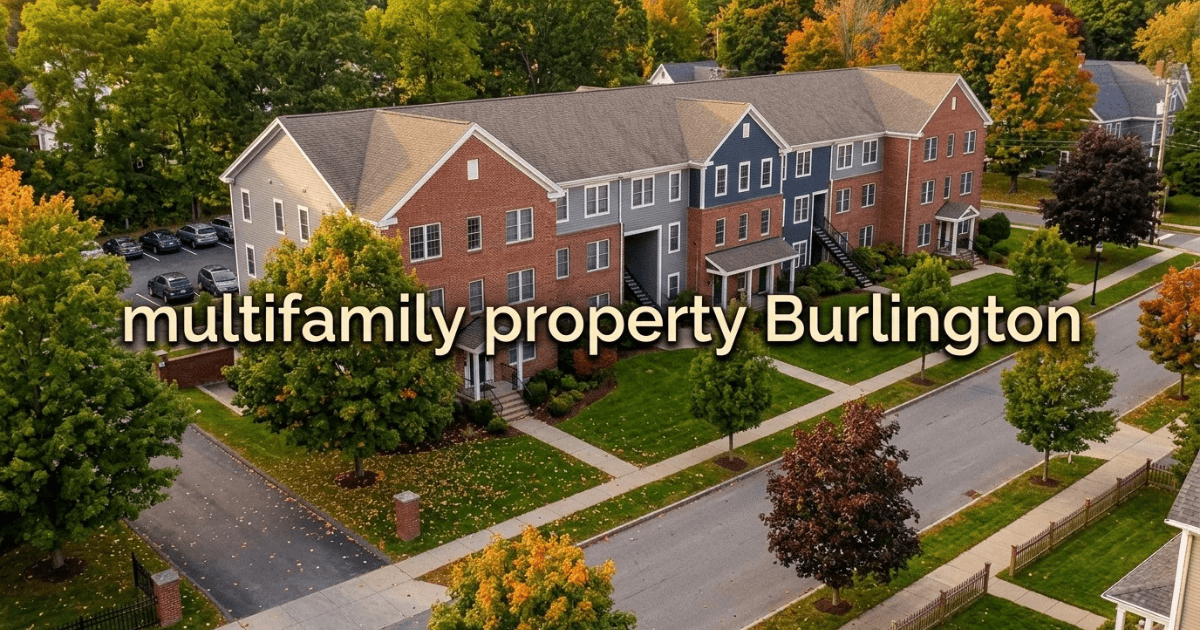
Multifamily property Burlington prices in late 2026 start just under $250,000 and run past $6 million, so the honest answer to “how much?” depends on what you buy and how you pay for it. The sticker price is only the first layer. You also pay one-time closing costs and yearly costs to own, and those can decide whether a building makes sense for you.
If you’re comparing multifamily property Burlington listings for the first time, this guide covers all three layers. Prices come from the public MLS feed on local real estate agent websites on November 3, 2026, and estimates are labeled as estimates.
What does multifamily property cost in Burlington right now?
On November 3, 2026, local brokerage sites showed about 32 to 35 active multifamily homes for sale in Burlington. Asking prices ran from $249,900 for a small two-unit home to $6,242,000 for a large apartment building. Many listings clustered between roughly $725,000 and $1.2 million, which is where most buyers will end up shopping.
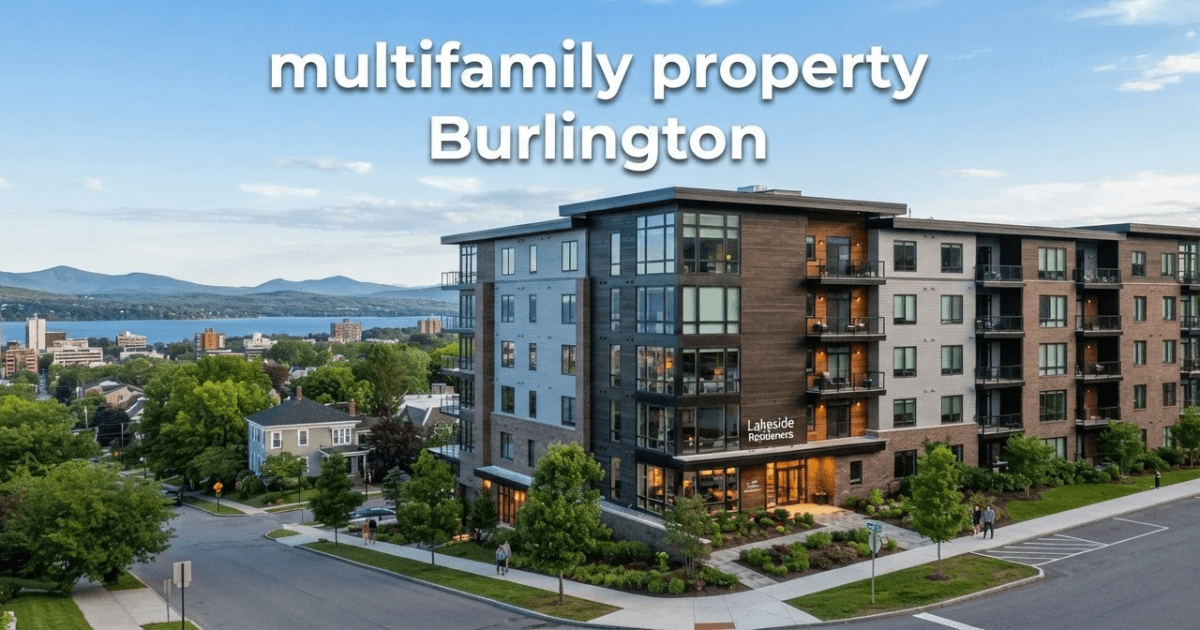
The range is wide because “multifamily” covers everything from a duplex with two units to a building with dozens of apartments. A triplex or fourplex close to downtown usually costs more than a duplex farther out, even with similar square footage. Status matters too, because some of the lowest-priced homes go pending or under contract within weeks.
What do the least expensive multifamily listings look like?
At the low end, 18 Strong Street was listed at $249,900 for 1,594 square feet and was already under contract. 50 North Cove Road asked $425,000 for 2,052 square feet on 0.66 acres, and 73-75 North Champlain Street asked $499,000 for 1,920 square feet. Under $500,000, choices are thin and they move fast.
These smaller buildings draw first-time buyers who plan to live in one unit and rent the other. A lower listing price often reflects smaller units, older systems, or needed work, so line up financing early and act quickly.
What Does It Cost to Buy or Build a Multifamily Property?
Bigger buildings in Burlington generally list above $1 million. Examples on November 3, 2026, included 380-382 North Avenue at $1,095,000 for 7,039 square feet, 25-27 South Willard Street at $1,550,000 for 8,078 square feet, and 76 Ethan Allen Parkway at $1,650,000. The largest listing, at 21,408 square feet, asked $6,242,000.
How much does multifamily property cost per square foot in Burlington?
Based on my own math from asking prices on November 3, 2026, Burlington multifamily listings ranged from about $155 to about $455 per square foot. Many fell between $250 and $400. Treat these as rough guides, since asking prices are not sale prices and listing square footage is not always measured the same way.
| Address | Asking price | Square feet | Approx. price per sq ft |
| 18 Strong Street | $249,900 | 1,594 | $157 |
| 50 North Cove Road | $425,000 | 2,052 | $207 |
| 73-75 North Champlain Street | $499,000 | 1,920 | $260 |
| 52 North Union Street | $725,000 | 2,785 | $260 |
| 476-478 St. Paul Street | $860,000 | 2,084 | $413 |
| 362 North Winooski Avenue | $929,000 | 2,390 | $389 |
| 380-382 North Avenue | $1,095,000 | 7,039 | $156 |
| 141-143 Howard Street | $1,200,000 | 3,231 | $371 |
| 25-27 South Willard Street | $1,550,000 | 8,078 | $192 |
Price per square foot swings with condition, location, lot size, and how many units fit in the space. A large older building can look cheap per foot and still need heavy upgrades. Compare listings by price per unit too, and ask the listing agent for the unit count and mix, because summary feeds don’t always show it.
What one-time costs do you pay when you buy?
On top of your down payment, you pay Vermont’s property transfer tax, lender fees, title and attorney costs, an appraisal, and inspections. Owner-occupied buyers get a reduced transfer tax rate of 0.5% on the first $200,000. Buyers of long-term rental buildings pay the 1.25% general rate plus a 0.22% clean water surcharge.
What Transfer Tax Applies When You Buy a Rental Property in Vermont?
For an investor buying a long-term rental, Vermont’s general transfer tax rate is 1.25%, plus a 0.22% clean water surcharge. On an $800,000 building, that works out to about $10,000 in transfer tax plus up to $1,760 in surcharge. In Vermont, the buyer normally pays this tax when the deed is recorded.
If you’ll live in one of the units, the first $200,000 is taxed at 0.5% and the rest at the general rate. In the same $800,000 example, an owner-occupant would pay about $1,000 plus $7,500, or roughly $8,500 before the surcharge. Vermont’s higher 3.4% rate targets year-round homes that are neither the buyer’s main home nor rented long term, so a true rental building normally stays at the general rate.
What other closing costs should you plan for?
Expect lender origination fees, an appraisal, title insurance, attorney fees, recording fees, and prepaid property taxes and insurance held in escrow, plus building inspections. The exact total varies by loan and price. Your lender’s Loan Estimate lists each charge line by line, so request one early and compare offers from at least two lenders.
Budget separately for specialists who check heating systems, electrical panels, roofs, and, in older buildings, lead paint. Vermont requires specific lead-safe maintenance practices in rental housing built before 1978, so ask the seller for compliance records as part of your due diligence.
How much down payment do you need for a Burlington multifamily?
It depends on whether you’ll live there. If you occupy one unit of a two-to-four-unit building, an FHA loan allows as little as 3.5% down, and Fannie Mae conventional loans allow as little as 5% down. If you won’t live there, conventional lenders usually want about 25% down on a two-to-four-unit investment property.
Living in one unit while renting the others, often called house hacking, is the most common way buyers get into multifamily property Burlington deals with less cash. FHA adds a “self-sufficiency” test for three- and four-unit buildings, so projected rents must roughly cover the full payment. Each program also has credit, income, and loan-limit rules, so talk to a lender about the specific building before you make an offer.
What do commercial apartment loans cost?
Buildings with five or more units usually need a commercial loan, not a standard home mortgage. One national lender advertised Vermont apartment loans from $1.5 million, up to 80% of value, with a lowest rate of 6.54% on October 31, 2026. Lenders also weigh debt service coverage, and interest rates vary widely.
What does it cost each year to own a multifamily property in Burlington?
Yearly costs for multifamily property Burlington owners include property taxes, insurance, the city’s rental registration fee, any utilities you pay, repairs, and property management if you hire it. Property taxes are usually the biggest line. One Census-based estimate puts Burlington’s effective property tax rate near 1.79% of value, though your bill depends on the assessment.
How much are property taxes on Burlington multifamily homes?
Burlington’s FY2027 education tax rates are $1.5489 per $100 of equalized value for homestead property and $1.5154 for nonhomestead property, with the city’s municipal rate added on top. As a rough estimate, an $800,000 building taxed near a 1.79% effective rate would owe about $14,300 a year.
In an owner-occupied building, the part you live in can be declared as your homestead, while the rented units are taxed as nonhomestead. Vermont’s property tax system is complex, and rates change every year as school budgets pass. Ask the seller for the most recent tax bill and check the city assessor’s records rather than relying on estimates.
What does Burlington charge landlords to register rental units?
Burlington charges an annual registration fee for every rental unit subject to inspection. A 2026 ordinance change set it at $120 per unit per year, or $80 for owner-occupied buildings with two or fewer units. Unregistered units violate the city’s minimum housing code, and repeated failed re-inspections carry extra fees.
The fee funds the city’s rental inspection program, which checks units against Chapter 18 of the city code. A 2023 city presentation listed re-inspection fees of $75, $150, and $300 per unit for each failed follow-up, so fixing violations quickly saves money. Before you buy, ask whether every unit is registered and whether any violations are still open.
What Should You Set Aside for Repairs and Empty Units?
There is no single right number, so build your budget from the property’s actual history. Ask for at least 12 months of repair invoices and utility bills. For vacancy, Chittenden County’s rental vacancy rate was 3.3% in June 2026, according to a local appraiser, and it has hovered between 3% and 4% since mid-2024.
Older buildings need reserves for capital expenditures like roofs, boilers, and windows, separate from routine maintenance. Heating costs in a Vermont winter can be large if the landlord pays for heat, so check who pays which utilities. Experts often treat 5% vacancy as a sign of a healthy market, which makes it a sensible conservative number for your own math.
How much rent can a Burlington multifamily bring in?
Rent depends on unit size, condition, and location, so the building’s actual rent roll and leases matter more than any citywide figure. As a broad reference, Redfin’s rental tracker showed a Burlington median rent of about $1,737 when this article was written. Newer or larger units can rent well above that, and older studios below it.
How do you check whether the numbers work?
Start with two quick checks: the gross rent multiplier, which divides the price by yearly rent, and the cap rate, which divides net operating income by the price. A lower multiplier and a higher cap rate usually point to better cash flow. Then run a full monthly budget that includes your mortgage payment.
Here is a made-up example to show the math, not data from any listing. A $700,000 duplex with two units at $2,000 a month brings in $48,000 of rental income a year, a gross rent multiplier of about 14.6. Subtract an estimated 3.3% vacancy, about $12,500 in property taxes, and an assumed $9,000 for insurance, repairs, and shared utilities, and net operating income lands near $24,900, roughly a 3.6% cap rate.
A cap rate that low often means rent alone won’t cover a mortgage. That’s why many Burlington buyers live in one unit or count on long-term appreciation and equity growth. Run your own numbers with real quotes, not the seller’s projections.
Is buying multifamily property in Burlington worth it?
It can be, especially if you live in one unit and use a low-down-payment loan. Burlington has steady renter demand and a vacancy rate below what experts call healthy. Pure investors face thin cash flow at current prices, high property taxes, and strict housing rules, so the deal has to work on real numbers, not hopes.
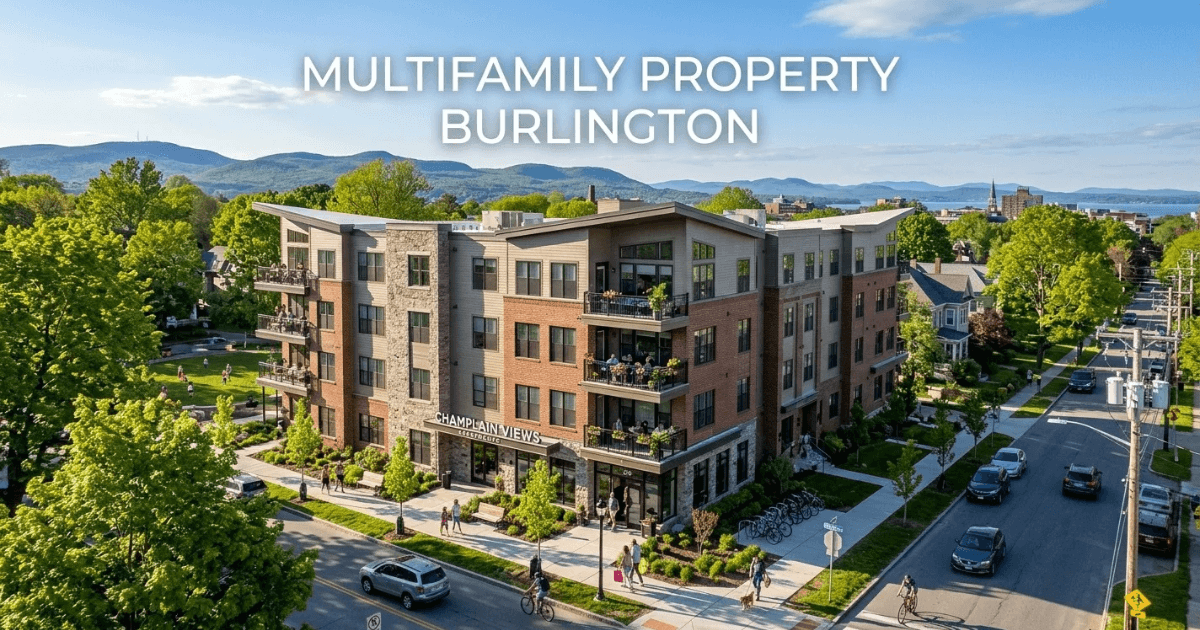
For many multifamily property Burlington buyers, demand is the main draw. It comes from the University of Vermont, the UVM Medical Center, downtown jobs, and the pull of Lake Champlain. A recent wave of new apartments loosened the market compared with the pandemic years, which can help buyers negotiate but also means you shouldn’t assume rents will keep jumping.
Can you turn a Burlington multifamily into short-term rentals?
Not freely, because Burlington’s short-term rental rules center on the host’s primary residence, so buying a building just to run several Airbnb units doesn’t fit the city’s model. Hosts register every year and pay a 9% city tax plus Vermont’s 9% state tax. For most buyers, long-term tenants remain the more reliable plan.
Should you look at towns near Burlington?
It’s worth a look if Burlington prices stretch your budget. Nearby Chittenden County towns offer different price points and newer housing. In Milton, about 20 minutes away, O’Brien Brothers’ Parkside neighborhood includes two new construction duplex floor plans of 1,700 or 2,000 square feet, alongside single-family models starting at $494,900.
Ask the builder whether one buyer can own and rent both sides, since many new duplexes sell each side separately. A newer building usually brings lower repair costs and better energy efficiency, while the trade-off is a longer commute.
How can you get a better deal on multifamily property in Burlington?
Smart multifamily property Burlington buyers get pre-approved for the right loan type, study each building’s real income and expenses, and target listings that have sat unsold. On November 3, 2026, several listings had been active for 138 to 242 days on market, which can signal room to negotiate. A careful inspection protects you from costly surprises.
- Ask for the paperwork. Request the rent roll, signed leases, the list of security deposits held, and 12 months of utility bills and repair invoices.
- Check the city file. Confirm every unit is registered and ask about open housing code violations or recent inspection results.
- Watch the calendar. Listings such as 6-8 Chase Street (242 days) and 30-34 Greene Street (224 days) had been for sale for months.
- Use real numbers. Plug in actual tax bills and insurance quotes, list your operating expenses, and assume at least 5% vacancy.
- Inspect deeply. Hire inspectors who know older buildings, and check heat, wiring, exits, and lead compliance.
FAQs
What is the cheapest multifamily property in Burlington right now?
On November 3, 2026, the lowest-priced multifamily property Burlington listing was 18 Strong Street at $249,900, and it was already under contract. The next lowest asks were $425,000 for 50 North Cove Road and $499,000 for 73-75 North Champlain Street. Listings change daily, so check the MLS for current options.
Can you buy a Burlington duplex with 3.5% down?
Yes, if you use an FHA loan and live in one of the units as your main home. You’ll also need to meet FHA’s credit and loan-limit rules. Fannie Mae conventional loans offer a 5% down option for owner-occupied two-to-four-unit homes, which can be a better fit for some buyers.
Does Vermont’s 3.4% transfer tax apply to rental buildings?
Generally not to long-term rentals. The 3.4% rate applies to year-round homes the buyer won’t live in and won’t rent long term. A building rented to long-term tenants usually pays the 1.25% general rate plus the 0.22% clean water surcharge, while owner-occupants pay 0.5% on the first $200,000.
How much is Burlington’s rental registration fee?
Burlington’s annual fee is $120 per rental unit after a 2026 ordinance change. Owner-occupied buildings with two or fewer units pay a reduced $80 fee. The money supports the city’s rental inspection program, and a unit without a paid registration violates the city’s minimum housing ordinance.
What vacancy rate should you use for a Burlington rental?
Chittenden County’s rental vacancy rate was 3.3% in June 2026 and has stayed between 3% and 4% since mid-2024, according to a local appraiser. Many buyers use 5% in their budgets to stay conservative, since experts treat 5% as the mark of a balanced, healthy rental market.
