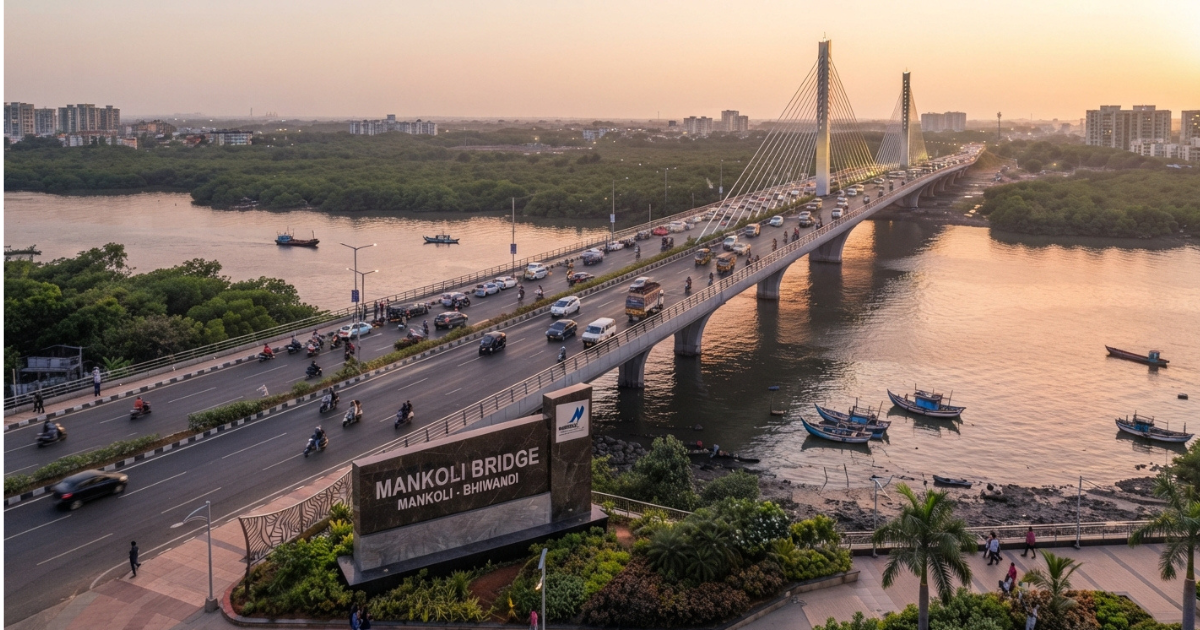
Every time I mention Bhiwandi or Thane to a friend in Dombivli, the conversation eventually turns to the Mankoli Bridge. The Mumbai Metropolitan Region Development Authority, known as MMRDA, built this six-lane bridge over the Ulhas Creek to solve a real problem.
Too many vehicles were squeezed into too few congested routes. Locals simply call it the Mankoli crossing, though its official name ties it to the Mankoli–Motagaon Link Road.
The structure runs roughly 980 metres and gives drivers a faster connection without weaving through old bottlenecks. By 2026, this road infrastructure stands completed and open for public transport. I have used the Mankoli Bridge myself on trips toward Motagaon. People now refer to it interchangeably as the Mankoli Dombivali Bridge, the Motagaon-Mankoli Bridge, the Mankoli-Motagaon Bridge, or the Dombivli-Bhiwandi Bridge.
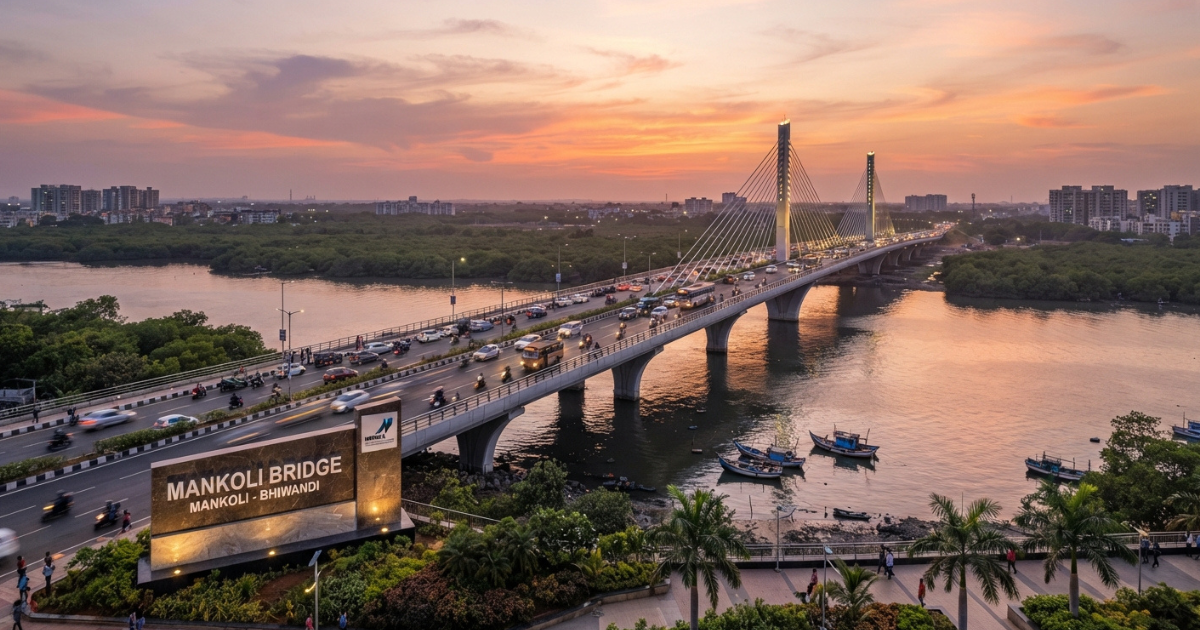
All these names point to the same road connection. Residents and daily commuters across the Kalyan-Dombivli region treat the Mankoli Bridge as their direct route toward Kalyan and beyond. This single link road has quietly reshaped how homebuyers, investors, and developers view once less-connected locations, because better highways and easier access mean shorter travel times on nearby roads.
The infrastructure development here goes beyond concrete and steel; it touches residential development and commercial development across the surrounding areas. This article walks through every part of that story, including the bridge’s 27 meters width and six lanes of operational traffic.
Overview
Ask anyone who studies the Mankoli–Motagaon project and they will tell you it exists to shorten the ride from Dombivli toward the Mumbai-Nashik Highway, cutting straight through Mankoli rather than looping around it. The six-lane bridge spans the Ulhas Creek.
It links Motagaon directly to Bhiwandi, easing daily congestion and improving movement for anyone heading toward Thane. This crossing forms one piece of the larger Mankoli–Motagaon Link Road.
That stretch measures close to 2.89 km according to MMRDA records, and the Motagaon-Mankoli Bridge itself carries a six-lane road bridge design built by the Mumbai Metropolitan Region Development Authority. The main bridge portion measures around 980 metres.
It splits into three lanes running each way, and it now serves several important areas and destinations across the region, all built around the same Mankoli Bridge concept.
Bridge Status (2026)
I checked in on the Mankoli Bridge status myself this year, and it remains fully operational as part of the Mankoli–Motagaon Link Road joining Dombivli with the Mumbai-Nashik Highway near Mankoli. MMRDA confirms the six-lane bridge reached completed status.
The scheduled completion date was December 31 2023, and it opened for public transport shortly after, spanning 27 metres in width across three lanes over the Ulhas Creek toward Bhiwandi and the wider road network.
Under the name Mankoli Dombivali Bridge, the crossing now trims travel time by roughly 15–20 minutes for people moving toward Thane, boosting overall accessibility for the area. The Motagaon-Mankoli Bridge, however, took a longer road to get here. Its construction timeline slipped because of land acquisition issues and the COVID-19 pandemic, even though the foundation stone went down back in December 2016 with a target of 36 months.
An October 2022 update placed the project at 80% construction, with an expected opening in 2023, and current project information confirms the link road stands fully finished heading into 2026, keeping the Mankoli Bridge fully usable today.
Route
Picture the drive as a simple line: the Mankoli Bridge, starting from Motagaon in Dombivli, carries you straight to Mankoli and onward into Bhiwandi, connecting further with the Mumbai-Nashik Highway.
Every motorist who once dreaded the old congested routes can now bypass them entirely, since MMRDA designed this stretch to link up with NH-160, previously known as NH-3.
That link feeds into the broader road network toward Thane and Mumbai. Under its other name, the Motagaon-Mankoli Bridge gives commuters a dependable corridor that connects both sides of the region without detours.
Why the Bridge Is Important
This road infrastructure matters because it directly serves people moving between Dombivli, Bhiwandi, and Thane, and I have felt that difference on my own commutes across the Mankoli Bridge. Connectivity through Motagaon and Mankoli cuts travel time.
The estimated saving sits at 15–20 minutes on this corridor, according to MMRDA, and it steers traffic away from congested sections, giving drivers a genuine alternative route toward NH-160 and the Mumbai-Nashik Highway.
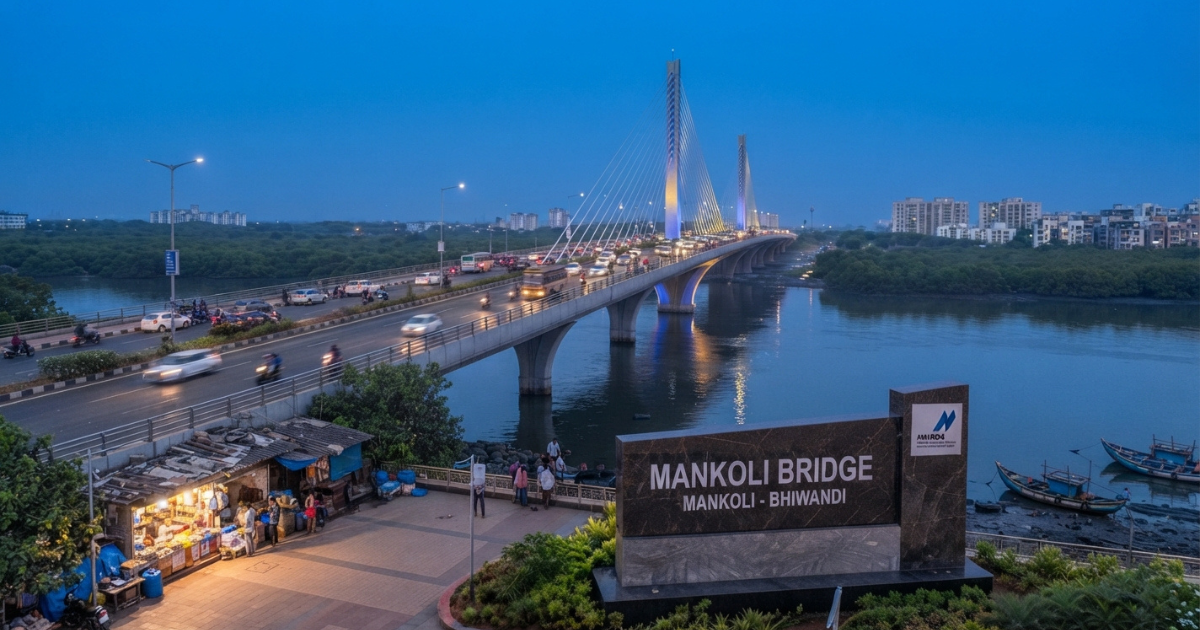
That matters for both private commuters and commercial traffic heading to Mumbai. Before the Mankoli Bridge existed, anyone travelling this way faced routes through Mumbra-Thane or Kalyan-Bhiwandi, both known for heavy traffic, especially during peak commuting hours.
The Marathon article even pointed out how badly those journey times stretched out. This alternative connection eased pressure off those existing roads for good.
How the Bridge Improves Connectivity
The clearest benefit here is improved road connectivity between Dombivli and Mankoli, with easier access toward NH-160 and other regional routes. MMRDA designed this link partly to pull traffic away from busy zones.
Areas like Mumbra, Shilphata, Kalamboli, and Panvel now see spread-out load across the road network. Better real estate demand naturally follows, since buyers want homes close to workplaces, highways, commercial areas, and solid public infrastructure.
Commuters heading toward Bhiwandi and Thane now save real travel time, and I have heard daily commuters describe how the Mankoli Bridge changes the feel of an entire working week.
Project Details
Strip away the names and you find one structure described three ways. The Mankoli–Motagaon Link Road carries a six-lane Ulhas Creek Bridge measuring 980 metres long and 27 metres wide, arranged as 3+3 lanes.
It joins Motagaon, Dombivli, Mankoli, and Bhiwandi, finished by December 31 2023 and now operational under MMRDA. Called the Mankoli Dombivali Bridge, the same crossing carries a bridge width and current status of completed.
The Mankoli Bridge delivers a travel-time benefit of 15–20 minutes through its implementing authority. As the Motagaon-Mankoli Bridge, it also goes by the alternative name Mankoli-Motagaon Bridge, sitting at the same location.
It is built as a bridge type classed as a six-lane road bridge, with matching length, lanes, and water crossing over the Ulhas Creek, overseen by the same authority.
Future Importance
I expect the Mankoli Bridge to matter even more as the Mankoli-Motagaon corridor fuels fresh residential development and commercial development across Dombivli, Bhiwandi, and neighboring areas.
It sits inside a larger transportation network meant to strengthen road infrastructure across the Mumbai Metropolitan Region, and as new projects appear, the connectivity benefits here should grow further.
This growth should happen especially alongside the Kalyan Ring Road, which links Motagaon-Mankoli with parts of Kalyan-Dombivli. This should sharpen regional connectivity over time.
Viewed as the Motagaon-Mankoli corridor, the same stretch stands ready to support residential expansion and rising commercial activity, tying established areas to fresh developing locations as future transportation projects move forward.
Dombivli to Mankoli Distance
People often ask me the exact distance from Dombivli to the Mankoli Bridge, and the honest answer depends entirely on your starting point and chosen route. This is not built as a long-distance corridor. It simply offers a shorter crossing over the Ulhas Creek. What actually matters to commuters is not the number on the odometer but the drop in travel time.
The real value lies in the freedom to skip congested sections of the road network. MMRDA places the real saving from the Mankoli–Motagaon connection at roughly 15–20 minutes toward Bhiwandi and Thane. That saving counts for far more than a few saved kilometers, especially once you factor in everyday traffic conditions around the Mankoli Bridge.
Is Mankoli Bridge Open in 2026?
Yes, the Mankoli Bridge sits open and operational through 2026, and MMRDA confirms this six-lane bridge reached completed status before opening for public transport.
That said, an open bridge does not promise smooth connecting roads at every hour; traffic, road maintenance, railway crossings, and peak-hour congestion can still stretch your journey time. Something every regular commuter learns quickly is that the Mankoli Bridge helps, but local conditions still shape the actual drive.
Areas That Could Benefit
From what I have seen, this infrastructure touches far more than one town. Dombivli, Motagaon, Mankoli, Bhiwandi, Kalyan, and Thane all sit inside its reach.
Several developing residential corridors nearby also gain from the Mankoli Bridge. The actual gain to individual properties shifts with distance, condition of approach roads, availability of public transport, and quality of surrounding local infrastructure.
Impact on Property Investors
The Mankoli Dombivali Bridge has also caught the eye of property investors, and that makes sense — infrastructure projects like this one often shift the connectivity and development potential of nearby surrounding areas. Early investment in these developing locations can pay off before an area fully matures, but property appreciation is never guaranteed.
I always suggest checking property prices, rental demand, upcoming projects, developer reputation, and local development plans before betting on any location tied to the Mankoli Bridge.
Benefits for Daily Commuters
For anyone shuttling between Dombivli, Bhiwandi, and Thane, the Mankoli Bridge earns its keep daily. It offers a direct road connection, cuts reliance on old congested routes, and improves Bhiwandi access.
This bridge also sharpens connectivity toward Thane. Both private vehicles and commercial vehicles move faster now, and it opens up developing residential areas that once felt out of reach. The wider road network is expected to lift regional connectivity further as new infrastructure projects land near the Mankoli Bridge.
Connection with the Kalyan-Dombivli Region
The Motagaon-Mankoli Bridge plays a real role inside the broader transportation network of the Kalyan-Dombivli region, tying into the larger road network through the planned Kalyan-Dombivli Ring Road. Original project information confirms this link was built with exactly that goal in mind, and it matters because commuters can now reach multiple destinations without depending on one single road corridor.
Why the Bridge Matters for Property Buyers
Anyone eyeing property across Dombivli, Kalyan, or Bhiwandi should treat infrastructure as a genuine factor, since the Motagaon-Mankoli Bridge gives a real edge to homes near connecting roads.
Before buying, though, I always recommend checking the distance to the bridge, condition of approach roads, public transport availability, nearby schools and hospitals.
Closeness to employment centers, current traffic conditions, any future infrastructure projects, the developer reputation, and prevailing property prices and rental demand all deserve attention before buying near the Mankoli Bridge.
Conclusion
Stepping back, the Mankoli Bridge stands out as a genuine connector for Dombivli, Bhiwandi, and Thane, its six-lane bridge frame crossing the Ulhas Creek between Motagaon and Mankoli, feeding into the Mumbai-Nashik Highway.
By 2026, the Mankoli Bridge runs fully operational, delivering real Dombivli-Bhiwandi connectivity, shorter travel times, and a working escape from old congested routes.
This is exactly why property buyers and investors keep watching this infrastructure development for its effect on accessibility, residential areas, and commercial areas. As the Mankoli Dombivali Bridge, it carries weight across real estate markets too.
It eases the road network, cuts travel time, smooths traffic movement, and lifts the real estate sector through stronger residential demand, better commercial connectivity, and fresh development potential across emerging locations.
FAQs
Is the Mankoli Bridge open for traffic in 2026?
Yes, the Mankoli Bridge is open and fully operational in 2026. MMRDA confirms this six-lane bridge reached completed status and now carries public transport and private vehicles across the Ulhas Creek between Dombivli and Bhiwandi.
How long is the Mankoli Bridge and how many lanes does it have?
The Mankoli Bridge measures approximately 980 metres in length and about 27 metres in width, built as a six-lane road bridge with three lanes running in each direction over the Ulhas Creek.
How much travel time does the Mankoli Bridge save commuters?
According to MMRDA, the Mankoli Bridge reduces travel time between Dombivli, Bhiwandi, and Thane by roughly 15–20 minutes, depending on traffic conditions and the road network used to reach it.
Does the Mankoli Bridge affect property prices in Dombivli and Bhiwandi?
Improved connectivity from the Mankoli Bridge can support residential demand, commercial development, and long-term property appreciation around Dombivli, Motagaon, and Bhiwandi, though property values also depend on local amenities, construction quality, and employment opportunities.
What other names is the Mankoli Bridge known by?
The Mankoli Bridge is also called the Mankoli Dombivali Bridge, the Motagaon-Mankoli Bridge, the Mankoli-Motagaon Bridge, and the Dombivli-Bhiwandi Bridge — all referring to the same six-lane bridge connecting Motagaon and Mankoli across the Ulhas Creek.
