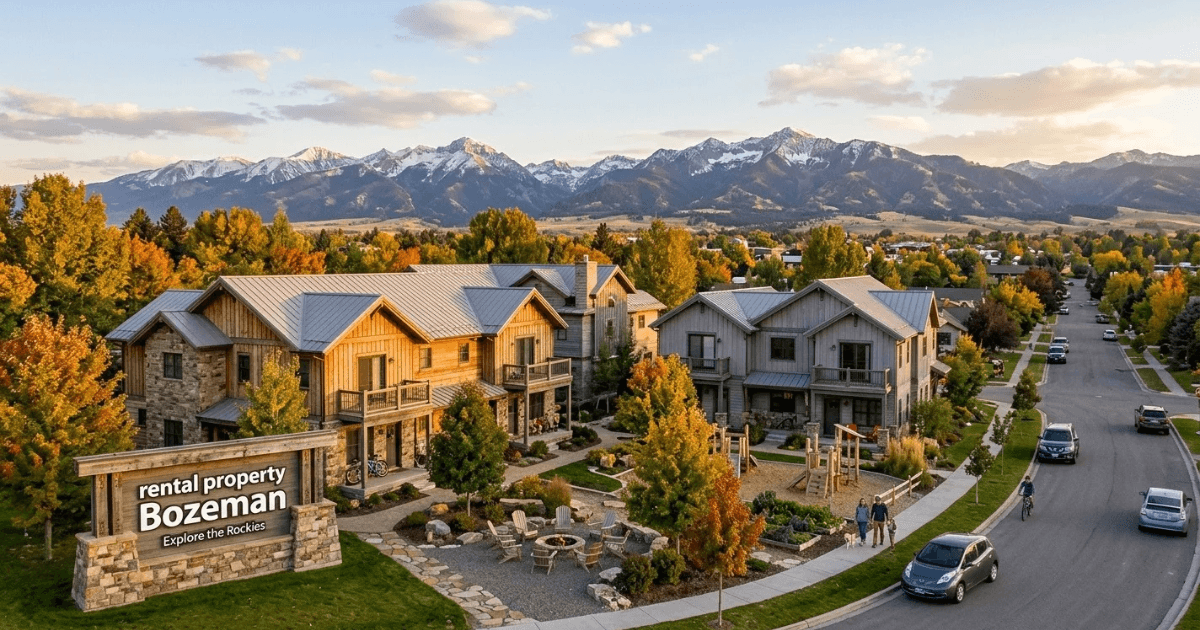
Every rental property Bozeman landlords buy needs a plan that fits local rules, not just a great view. The Bozeman rental market has cooled from its tightest years, new housing supply has opened, and city rules now shape what you can do with a home. This guide gives landlords plain answers on property types, permits, tenants, upkeep, and money.
Figures come from public sources and local property pros, and estimates are labeled as estimates. Rules change, so confirm details with the city, the state, or an attorney. This is general information, not legal or tax advice.
How does the Bozeman rental market work for landlords?
Demand follows the seasons and the university calendar. It peaks in late spring and summer, when Montana State University terms turn over and people move for summer jobs. Winter is usually quieter, so plan your lease end date around that cycle.
Well-priced homes in good condition often draw several inquiries, so be ready to screen fast. Growth supports housing demand, too: the city’s 2024 population estimate was 57,894, up 8.1% from 2020. MSU has more than 17,000 students.
Is Bozeman still a good place to buy a rental?
Yes, with more caution than before. Demand has not vanished, since the university, tourism, remote work, and airport access still pull people in. Yet the rental vacancy rate has risen as new units opened, so run conservative numbers instead of copying old success stories from peak years.
Two local housing reports showed Bozeman vacancy at 3.6% in 2021 and 9.4% in 2023. Nearly 1,300 units arrived in 2022 and 2023. Treat those as snapshots, and base your pricing on today’s comparable rentals.
How much rent can you charge?
Rent depends on size, condition, location, parking, yard, and pet policy. Census data lists median gross rent at $1,611 in Bozeman, while a county housing strategy puts average rents near $1,900 for Bozeman and Belgrade. Price your home from current listings of similar homes.
Survey data lags behind the street, so recent listings show true market rent better. A free rental analysis from a local management company can give you a second opinion. Treat any average as a starting point, not a promise.
Which property type works best for a Bozeman rental?
In most cases, townhomes, small multifamily buildings, and long-term single-family homes fit local demand and rules best. A nightly-rental-first plan carries far more risk because of strict city limits.
Bozeman’s housing mix includes apartments, condos, duplexes, and mobile homes. The 2026 Unified Development Code update added housing variety and merged zoning districts. That signals the city wants more smaller homes, which often suit steady rent better than a showpiece house.
Do single-family homes still make sense?
They can, especially as long-term rentals or furnished mid-term rentals for newcomers moving into the Gallatin Valley. Check zoning and HOA covenants first. A home with mountain views does not automatically work as a short-term rental, so legal use must come before charm.
Houses give you more yard and snow to manage, which raises upkeep costs. Review financing terms, insurance needs, and lease restrictions before you count any rent. Verify the zoning district too, since it controls which rental uses are allowed.
Is an ADU worth the cost?
It can be, but the math changed in 2026. The city began charging impact fees on accessory dwelling units on February 1, 2026. Add those fees, plus construction and permit costs, to your budget from day one, since an ADU can add flexibility and income over time.
Impact fees have existed since 1996, and the city adjusted them for 2026. Any rental property Bozeman owners add through infill development needs a full cost check. Ask the city for its current fee schedule before you price the project.
Can you run a short-term rental in Bozeman?
Sometimes, but the rules are strict. New Type 1 and Type 2A permits require the host to live in the home at least 70% of the year, and new Type 3 short-term rentals are prohibited. Investor-owned nightly rentals face tight limits.
Type 2B covers only an ADU or extra unit in the same building as the host’s home. Older Type 3 approvals continue only if the application was complete before December 14, 2023 and the approval stays active. Confirm everything with the city before you build an offer around nightly income.
Does a short-term rental permit transfer when you sell?
No. The city says an STR permit does not run with the land, so a sale or transfer ends the approval. A buyer cannot assume the seller’s nightly income will continue. Verify permit status early, before inspection deadlines and before you write an offer.
That single rule can erase the income a listing promises. Ask the seller for permit records, then confirm with the city whether any approval is active. If the answer is unclear, run the numbers as a long-term rental for any rental property Bozeman buyers consider.
What ongoing costs come with a short-term rental?
Expect a $325 annual STR registration fee, a fire inspection every three years, and an annual primary-residence certification. The permit number must appear on every public listing. Montana also adds an 8% combined lodging facility tax on stays.
Hosting platforms must send the city quarterly reports. Montana requires a seller’s permit, and units rented to the same guest for 30 continuous days or more are exempt from the lodging tax. Some short-term lodging also needs state licensing and county environmental-health plan review.
Is a mid-term furnished rental a safer choice?
For many owners, yes, because mid-term rentals follow different rules than nightly stays. Furnished homes serve relocating workers and corporate housing renters, and city planning documents note demand from second homeowners and part-time residents.
Corporate-stay sites let renters filter by furnished homes, utilities included, high-speed internet, and lease terms of one to six months. Offer flexible lease terms and clear all-in pricing to stand out. Still, underwrite the home as a long-term rental first and treat any furnished premium as a bonus.
How should you screen tenants?
Publish written screening criteria and apply them to every applicant. Ask for a complete rental application, photo ID, proof of income, and landlord references, then run a credit check and background check. Consistent rules protect you and keep you in line with fair housing laws.
Fair housing laws protect every applicant, and Bozeman also protects sexual orientation, gender identity, and gender expression. State any application fee in your criteria upfront. Clear rules also help good applicants apply faster.
What should a written rental agreement include?
Put everything in writing: the security deposit, repairs, pet policy, late fees, pet allowances, and term length. Use a lease agreement written for Montana law, because state rules differ and generic forms may miss local details.
Oral agreements may be legal in some cases, but a written lease protects you far better. Say whether you charge a pet deposit or pet rent, and note that assistance animals are not pets, so pet fees do not apply to them. Ask a Montana attorney or use a lawyer-reviewed template to check your form.
Should you require renters insurance?
It is worth considering for most rentals. Renters insurance helps you avoid legal hassles when a tenant’s belongings are damaged, and it usually costs little. Laws differ by state, so talk to a legal professional before you add a mandatory clause.
You still need landlord insurance to protect against liability claims. Ask your agent how the two policies work together.
How do you keep a Bozeman rental in good shape?
Plan preventative maintenance by season, record the home’s condition, and keep trusted trades on call. Small fixes caught early cost less than emergency repairs in winter. A written schedule keeps basics like siding, windows, and appliances from slipping.
Test smoke detectors and carbon monoxide detectors, and keep the unit up to code compliance. Keep a plumber, electrician, handyman, and locksmith on call before you need them. Every rental property Bozeman owners hold also needs a seasonal schedule.
What seasonal maintenance should you plan for?
You can handle these tasks yourself or hire local Bozeman-area companies that clear driveways and sidewalks after each snowfall. Whichever you choose, write the responsibility into the lease.
Hiring help adds cost but removes the risk of a missed storm. Build it into your operating expenses so it never surprises you. Review those costs each year as prices change.
How should you document the property’s condition?
Take detailed photos before each new tenant, complete a condition checklist at move-in, and repeat it at the move-out walkthrough. Dated before-and-after photos help you support any deposit deduction. Give the tenant a copy of each checklist.
Do the move-in inspection with the tenant, and let them keep photos too. Shoot new photos between every tenancy, not just the first. Good property photography also helps your listing when you re-rent.
Should you hire a property manager?
A property manager makes sense if you want hands-off investing, live far away, or dislike dealing with tenants. A manager handles listing marketing, qualifying renters, and tenant issues. The trade-off is a monthly cost, while self-managing saves fees but costs your time.
This option suits out-of-state investors especially. Interview several property management companies and read their reviews before you sign. Ask what each charges, what it covers, and how it handles repairs, and get the answers in writing.
How do you run a rental like a business?
Treat your rental as a business from day one. Learn federal, state, and local rules, keep your finances organized, screen every tenant, and carry insurance. Rental income feels like passive income, but it still needs steady attention and clear records.
Keep a separate account for rent and expenses, and save every repair receipt. Budget for empty months, because your mortgage payment, taxes, and upkeep continue during vacancy. Know the trade-offs: rent may not cover that payment, and entry and exit costs can run high, yet property appreciation may reward patient owners.
Which tax points should landlords know?
Interest on an investment property loan is tax-deductible, and rental income is not subject to Social Security tax. Higher earners may owe a 3.8% surtax on net investment income. A tax professional can confirm how these rules apply to you.
The surtax can apply when adjusted gross income passes $200,000 for single filers or $250,000 for married couples filing jointly. A local broker has written about Montana tax relief for homesteads and long-term rentals, so ask whether your rental qualifies. You can also hold real estate in a self-directed IRA.
How do you check a Bozeman deal before you buy?
Verify legal use first, then run cautious numbers. Confirm the allowed rental type, model vacancy conservatively, and add fees, taxes, insurance, and HOA limits before you trust any rent estimate. A good-looking home should never outrank a sound plan.
Use this checklist before you make an offer:
- Confirm zoning and the allowed rental use.
- Treat any existing STR approval as non-transferable.
- Review insurance, HOA rules, and lease limits.
- Add management costs if you will not be on site.
- Include current impact fees for ADU projects.
A local agent can help you test the story behind a listing.
FAQs
Is rental property Bozeman investing worth it in 2026?
It can be, if you plan for today’s market. The university, tourism, and in-migration support demand, but vacancy rose after new apartments opened. Base your decision on conservative cash flow, legal use, and total costs, not on past rent spikes.
Can I rent my Bozeman home on Airbnb?
Possibly, but only under the city’s short-term rental rules. New Type 1 and Type 2A permits need primary-residence occupancy for at least 70% of the year, and new Type 3 rentals are prohibited. Check current rules with the city before you list on any platform.
What insurance do Bozeman landlords need?
Carry landlord insurance to protect against liability claims, and consider requiring renters insurance for your tenants. Ask a legal professional before you add a mandatory clause to your lease. An insurance agent can match coverage to your property type and how you rent it.
Which nearby towns should I compare with Bozeman?
Compare Belgrade, Manhattan, Three Forks, Gallatin Gateway, and Livingston. Belgrade sits near the airport and the I-90 corridor, Manhattan and Three Forks lie west along I-90, Gallatin Gateway is south toward the canyon, and Livingston is over Bozeman Pass. Check current listings in each town for homes like yours.
What should I do before listing a rental?
Price from current comparables, make the home rent-ready, and photograph it well. Publish written screening criteria, use a Montana lease, and plan the lease start around the season. Then respond to inquiries quickly, since good homes draw several of them.
