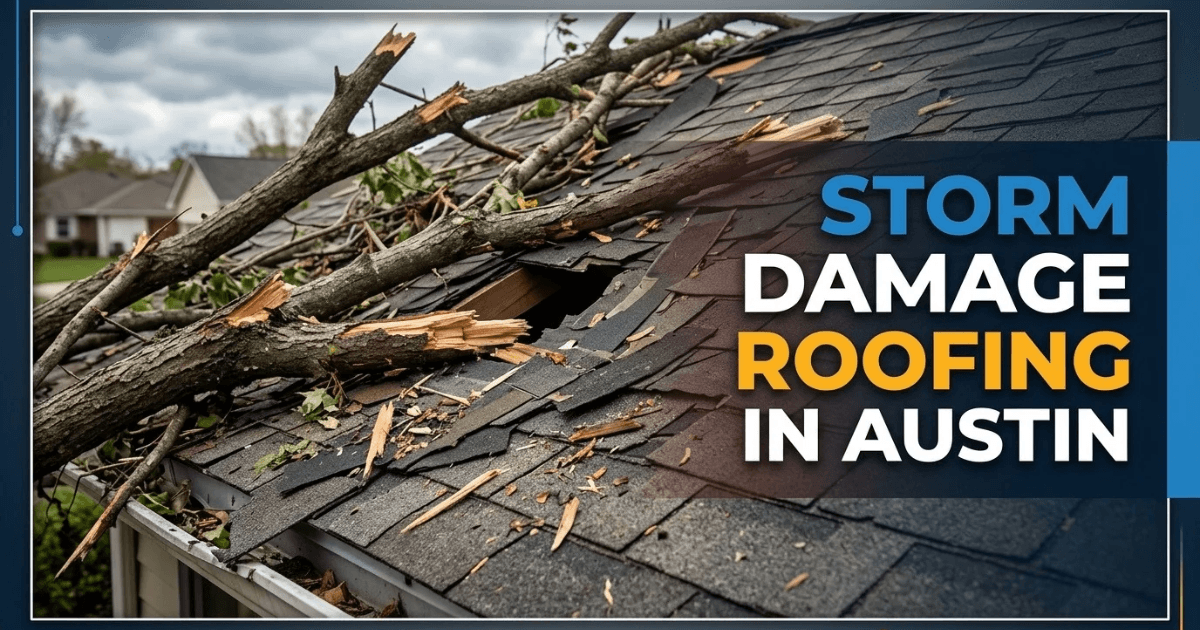
This guide answers does homeowners insurance cover roof damage, explains how your policy shapes storm damage roofing in Austin, and shows what to check in a roofing contractor before the next Central Texas storm.
What Roof Repairs Will Your Homeowners Insurance Pay For?
Most policies treat your roof as part of the house, so dwelling coverage, also called structural coverage, pays to repair it after a covered event. The insurer still applies your coverage limit and deductible. Your declarations page lists both numbers, and together they decide how much you spend out of pocket on storm damage roofing in Austin.
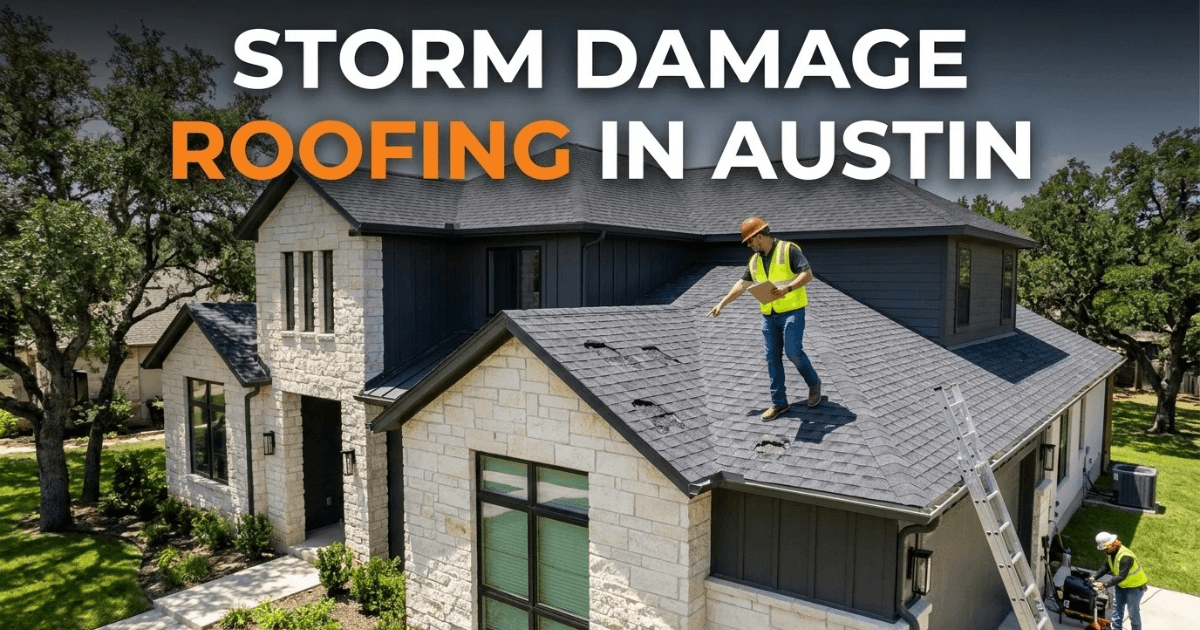
A covered peril is any cause of loss your contract names or does not exclude, which explains named perils vs. open perils coverage. Named-perils forms list each risk, while open-perils forms protect against everything except stated exclusions. Most Austin homeowners carry the HO-3 special form, and some choose the broader HO-5 comprehensive form.
What Other Coverage Help After Roof Damage?
A roof claim often reaches beyond the roof. Other structures coverage (Coverage B) pays for a damaged fence, shed, or detached garage, and personal property coverage replaces belongings that rain ruins. Loss of use coverage reimburses additional living expenses if you must leave home during repairs.
Liability coverage works differently because it protects you when a visitor trips and suffers an injury on your property. You pay anything above that cap.
Which Add-Ons Close the Biggest Coverage Gaps?
An endorsement or insurance rider adds protection your base policy leaves out. Common choices include building code coverage, water backup coverage, flood insurance, and earthquake insurance. Coastal insurers sometimes sell a wind damage rider, though most Austin policies already include wind.
Building code coverage matters because a new Austin roof must meet current building codes, and code upgrades raise the cost of storm damage roofing in Austin. An independent insurance agent can compare loss settlement terms across carriers.
Which Storm Events Count as Covered Perils in Austin?
Wind damage, hail damage, a lightning strike, and falling objects rank as the most common covered perils for Central Texas roofs, and they drive most claims for storm damage roofing in Austin. Insurers pay when the storm acts as the proximate cause of the loss. Adjusters look for that clear link.
Spring storms bring high winds through straight-line winds, a sudden microburst, or a rare derecho, and policies treat each as a windstorm. A tornado or a weakening Gulf hurricane can hurl flying debris and projectiles onto roofs. Heavy rain entering through a storm-made opening also qualifies.
Storm-downed trees and fallen tree limbs drive many Austin claims, especially under heritage live oaks. Policies also pay for fire and smoke damage after a lightning-sparked blaze. During Winter Storm Uri in February 2021, the weight of snow and ice and the occasional ice dam added claims citywide.
What Roof Problems Are Left Out of Your Insurance Policy?
Insurers refuse to pay for wear and tear, gradual damage, and lack of maintenance or neglect. They also exclude flood damage, earth movement, and sinkholes without separate policies. These policy exclusions explain what insurance doesn’t cover for roof damage, including an aging roof that has reached the end of useful life.
Policies also exclude pest damage or infestation from squirrels and raccoons, plus improper installation and faulty workmanship by a past roofer. Insurers separate cosmetic damage, like small dents on metal panels, from functional damage that lets water in. Many Texas carriers now add cosmetic-damage exclusions.
Why Do Roof Insurance Claims Get Denied?
Insurers deny claims when they blame pre-existing damage, age, or missed upkeep instead of the storm, and a hail mark below your deductible can also produce a denied claim. The gap between covered vs. denied roof claims usually comes down to cause and proof. Clear photos and records of any past storm damage roofing in Austin answer why roof insurance claims get denied before the insurer asks.
The Houston Chronicle reported that nearly 47% of Texas homeowner’s claims in 2024 ended as claims closed without payment. Other homeowners face low ball offer or underpayment that covers only a patch. Unreasonable rejections can support a bad faith complaint to the Texas Department of Insurance.
How Much Will Insurance Pay for a Damaged Roof?
Your payout depends on whether you carry Replacement Cost Value (RCV) or Actual Cash Value (ACV) coverage. RCV pays to replace the roof with materials of like kind and quality, minus your deductible. ACV subtracts depreciation for age, so an older roof brings a much smaller check.
Many insurers hold back recoverable depreciation until your roofer finishes the job and sends a final invoice. Some carriers apply a 10-year roof rule and switch older roofs to ACV payouts. Ask your agent to explain RCV vs ACV roof coverage in writing before you schedule storm damage roofing in Austin.
Insurers aim to restore your home to its pre-loss condition, not upgrade it. Widespread hail damage on an 18-year-old roof can still earn a full replacement when matching shingles no longer exist. Under ACV, you still absorb heavy depreciation.
How Do Deductibles Affect Roof Claims?
Texas policies often use a wind/hail deductible separate from the All Other Perils (AOP) deductible. Many set it as a percentage-based deductible, commonly 1% or 2% of your dwelling limit. On a home insured for $400,000, a 2% deductible means you pay the first $8,000.
A hurricane deductible applies mostly to coastal counties, not Travis County. Texas law also bars roofers from absorbing your deductible, as the FAQ below explains. Knowing how deductibles affect roof claims helps you budget for storm damage roofing in Austin and spot a roofer who promises a free roof.
How Does Roof Material Change a Storm Damage Claim?
Asphalt shingles cover most Austin homes, so they account for much of the storm damage roofing in Austin, and they show hail damage and wind damage quickly. A metal roof resists impact but often draws cosmetic damage disputes, while a tile roof or slate roof can crack. A flat roof tends to pool water and hide punctures.
Beyond the surface, adjusters inspect the roof decking, underlayment, flashing, and the secondary water barrier that blocks water when shingles fail. They also check the chimney, roof vents, gutters, and the soffits and fascia along the roofline. Damage to any part affects the whole roofing system and roofing structure.
Inside the house, the attic often shows damage first. Check the rafters and insulation with a flashlight after every major storm. Wet wood or stained insulation reveals leaks before ceilings stain.
Common Indicators of Storm Damage to Your Roof
The clearest signs of storm damage on a roof include missing shingles, lifted shingles, and torn or warped shingles. Look for hail bruises and dents on shingles, vents, and gutters. Granule loss appears as sandy grit at downspouts, often called granules in gutters.
Indoors, roof leaks leave interior water stains shaped like brown or yellow rings on ceilings. A sagging roof signals structural damage, and in severe cases a partial roof collapse. Cracked tiles and a broken shingle seal let rain in long after the storm.
Trapped moisture also leads to structural rot in the decking. Insurers may refuse that secondary damage if you delay reporting.
Storm Damaged Your Roof? Steps to Take Right Away
Start with safety, document the damage, then file a claim. Stay off the roof, watch for downed power lines, and check the property from the yard. Knowing what to do after a storm damages your roof protects you and your claim.
Do a ground-level inspection with binoculars and capture photos and videos of every visible problem as documentation. Start a claim folder with the storm date, your policy number, and notes from every call. Keep temporary repair receipts, because insurers usually reimburse reasonable costs to prevent further damage after a storm.
Policies require you to limit further loss, so book emergency roof tarping if water enters the house. Texas insurers must acknowledge your claim within 15 days under the state’s Prompt Payment of Claims Act. Check your policy’s claim deadline too.
How Does the Adjuster Inspection Work?
The insurance adjuster visits your home to measure the scope of damage and write an estimate. Ask your roofer to attend the adjuster inspection, because a contractor experienced in storm damage roofing in Austin can flag missed bruised shingles. That step prevents later disputes.
If the estimate misses items, your roofer can file supplements for added work found during tear-off. You can also request a re-inspection, gather multiple repair estimates, or hire a public adjuster. A well-documented hail damage roof insurance claim usually ends in a fair settlement and timely reimbursement.
Throughout the claims process, keep a recent roof condition report or roof inspection on file as a baseline. The National Roofing Contractors Association (NRCA) recommends inspecting roofs every spring and fall and after major storms. That baseline strengthens any roof storm damage insurance claim.
Austin Storm Damage Roofers: How to Pick the Right One
Choose a local roofing contractor with an Austin address, active liability insurance and written warranties. Texas has no statewide roofing license, so a licensed, insured professional here usually holds voluntary credentials from the Roofing Contractors Association of Texas. Request a certificate of insurance first.
Watch out for storm chasers, out-of-town crews who knock on doors after a hailstorm and vanish before warranty problems appear. They also handle Austin permits and code upgrades without pressure.
Good providers also suggest tree trimming to keep limbs about 10 feet from the roofline and wind mitigation upgrades. From our time reviewing Austin listings, the best roofers answer questions plainly. They never promise that insurance will pay.
What Services Do the Brands We Reviewed Offer?
We reviewed five brands to show what clear service information looks like, and each brand offers the services listed on its own website. Kelly Roofing and Midwest Roofing serve Florida and Minnesota, so treat them as benchmarks rather than local options. Use their pages as a checklist.
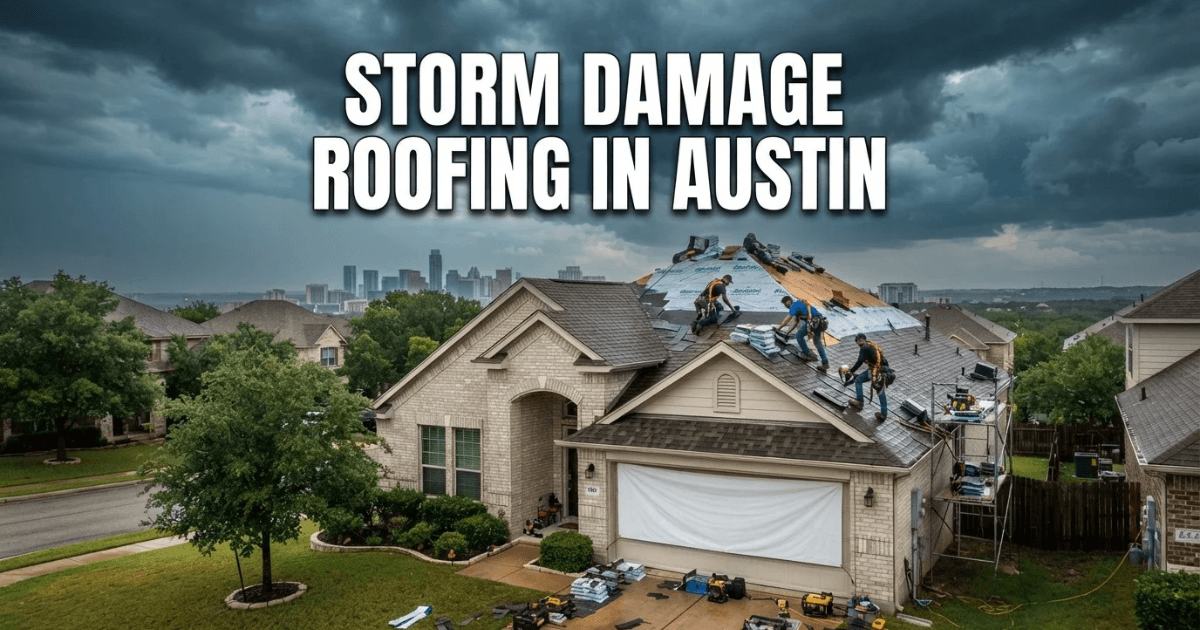
Kelly Roofing lists tile, shingle, metal, and flat roof repair and replacement, emergency roof tarping, wind mitigation, seamless gutters, skylights, insulation, and a roof condition report. Midwest Roofing in the Twin Cities offers a free storm damage inspection and states plainly that it does not promise coverage. Expect that same honesty from an Austin roofer.
On the insurance side, Matic compares home insurance quotes from multiple carriers, and The Andover Companies sells home insurance with optional water backup coverage and scheduled personal property through independent agents. Vargas Gonzalez offers a free claims consultation and case evaluation.
What Do Austin Homeowners Ask Most About Roof Insurance Claims?
These answers cover two questions Austin homeowners ask us most after a storm. Each answer stands on its own. Your own policy wording still decides the final outcome.
Can a Roofer Pay My Deductible in Texas?
No, Texas law prohibits it. Section 27.02 of the Texas Business and Commerce Code bars contractors from waiving, rebating, or absorbing your deductible. A roofer who offers this puts you and your claim at legal risk.
Does Insurance Pay for Hail Dents on a Metal Roof?
It depends on your policy. Many Texas carriers exclude cosmetic damage on a metal roof but still pay for functional damage that causes leaks or loosens fasteners. Look for a cosmetic exclusion endorsement before the next storm season.
Where Can You Find the Right Storm Damage Roofer in Austin?
Insurance pays for sudden storm damage, skips neglect and age, and rewards homeowners who document everything and hire carefully. Our site gathers providers of storm damage roofing in Austin in one place, so you can compare credentials and services without chasing door-knockers. Visit us before the next hailstorm to learn more about What Insurance Does and Doesn’t Cover for Roof Damage and find a roofer you ca
