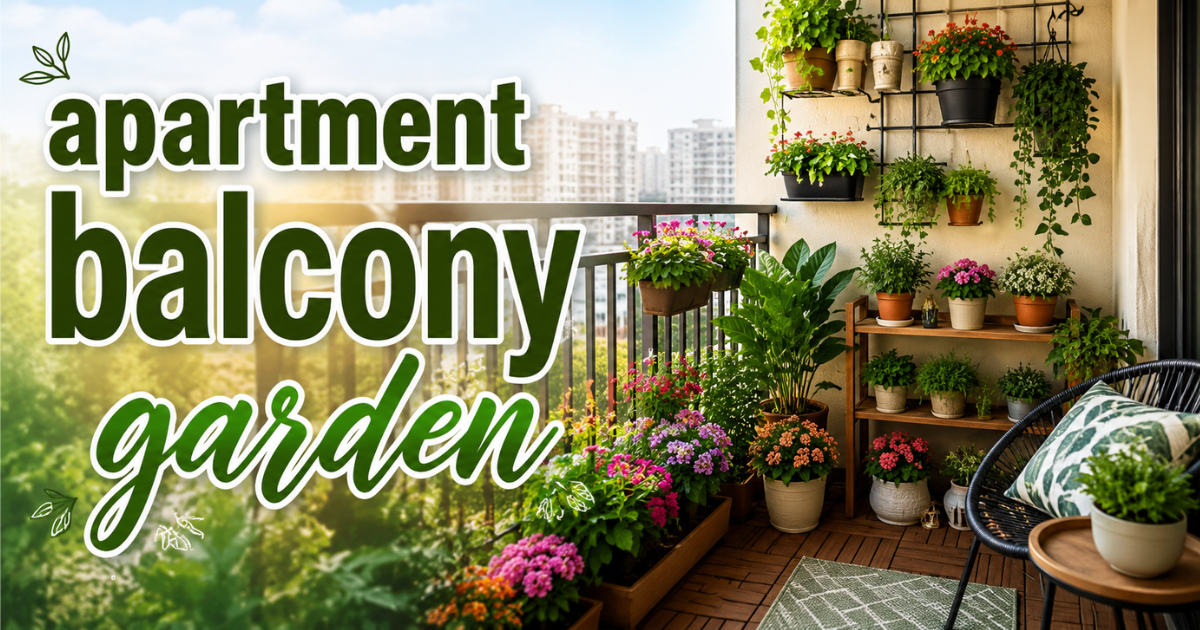
That’s the real magic of an apartment balcony garden it doesn’t need acres of land, just a little planning and patience. More people living in apartments and high-rises are discovering that a balcony can double as a personal retreat and a source of fresh herbs.
Urban greenery helps cool down concrete-heavy neighborhoods, and cities like Delhi are now encouraging rooftop and balcony gardens through local policy. Whether you’re working with a narrow ledge or a wide terrace, an apartment balcony garden can be shaped to fit almost any layout.
It also helps to remember that balcony gardening is a slower kind of hobby, and that’s part of the appeal. You’re not managing acres of land; you’re checking on a dozen pots and noticing new leaves each week. Give yourself permission to experiment, lose a plant or two along the way, and treat every small harvest as a genuine win.
Make the Most of a Small Footprint
Space is the biggest challenge on any small balcony, and the smartest fix is to stop thinking sideways and start thinking upward. Wall-mounted planters, a simple trellis, and tiered plant stands let you grow far more than the floor alone would allow.
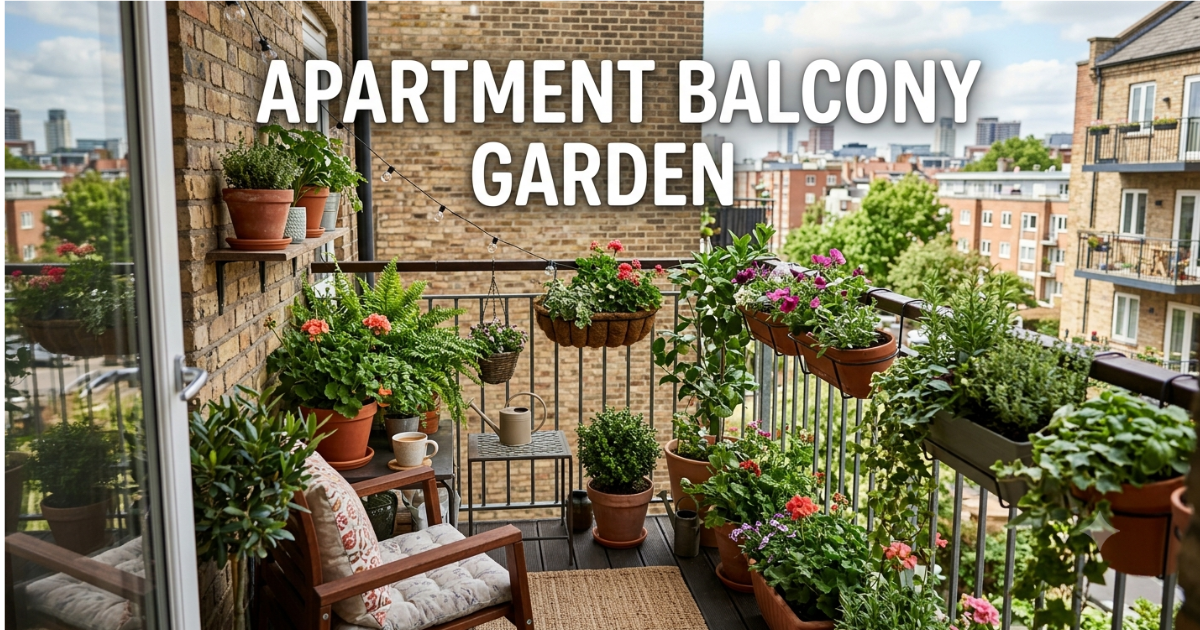
A slim vertical panel with basic drip irrigation can turn one bare wall into a green backdrop without taking up a single square foot of walking space. This trick alone can double the plant count in a compact apartment balcony garden.
Railings deserve just as much attention as walls. Hooking lightweight planters onto the railing, or hanging baskets from an overhead beam, keeps your plants floating around the edges instead of crowding the center. This is especially useful in older apartment buildings, where grills and railings are already built for exactly this kind of use. Pothos, ferns, and trailing succulents all do well in these elevated spots, since they tolerate a bit of neglect.
Build a Mini Kitchen Garden
Nothing beats snipping fresh coriander or plucking a ripe cherry tomato right outside your kitchen window. A kitchen-style apartment balcony garden is one of the most rewarding projects for beginners, and it doesn’t demand much space.
Start with a few grow bags or rectangular planters and stick to easy performers like mint, spinach, green chilies, and cherry tomatoes all of which handle Indian balcony conditions well.
Match your choices to your climate. Hardy herbs such as Tulsi, curry leaves, and lemongrass practically grow themselves.
Companion planting say, basil next to tomatoes tends to improve overall yield in tight spaces. Seasonally, summer works well for tomatoes and brinjal, monsoon suits spinach and fenugreek, and winter is ideal for carrots, peas, and broccoli.
A few basics make the difference between a thriving apartment balcony garden and a disappointing one. Use a lightweight, well-draining potting mix rather than garden soil, and keep pots big enough for root growth.
A 12-18 inch pot works for tomatoes, while herbs are fine in 6-8 inches. Water consistently rather than occasionally flooding the soil, and most vegetables need six to eight hours of direct sun for the best yield.
Add Color, Calm and Low Maintenance Greenery
A balcony doesn’t have to be purely functional; it can also be beautiful and restful. Flowering plants like marigold, petunia, bougainvillea, and jasmine bring instant color and fragrance to any apartment balcony garden.
Mixing hanging pots with railing planters lets you display blooms at different heights. Because many flowers are seasonal, pairing them with evergreen foliage plants like coleus keeps the balcony looking full year-round.
For a calmer mood, a small Zen-style corner works wonders. Simple elements — a bonsai, a shallow tray of raked pebbles, a low stool, and a cushion create a spot for quiet tea or a few stretches after work. Lucky bamboo, jade plants, and aloe vera fit naturally into this style, since they all carry a sense of quiet permanence and calm.
If your schedule doesn’t allow for daily plant care, lean into low-maintenance greenery instead. Succulents, snake plants, and ZZ plants tolerate irregular watering and still look sharp. Self-watering pots and simple wicking spikes are worth the investment if you travel often, since they keep soil moist for days without extra effort.
Choose Planters That Actually Work
The right container changes everything about an apartment balcony garden. Hanging planters and railing-mounted pots are ideal for small balconies because they free up floor space entirely.
Deep rectangular troughs suit vegetables and herbs that need more root room. Materials matter too lightweight fiber or UV-resistant plastic holds up better outdoors than cheap options that crack in the sun.
A coconut coir liner in hanging baskets improves airflow and prevents root rot, which is a common problem in poorly drained containers. Old paint cans, plastic bottles, and even broken buckets make surprisingly good planters once you drill a few drainage holes and add a coat of paint.
If you’d rather buy than build, there are plenty of purpose-made options worth considering. Hanging baskets with coir liners, sturdy rectangle planters, and dedicated bonsai trays all give roots the room they need. Whatever you choose, always prioritize drainage — waterlogged roots are one of the fastest ways to lose a plant, no matter how good the container looks.
Get the Basics Right Sun, Soil and Feeding
Before buying a single plant, spend a few days observing how sunlight moves across your space. This single habit can make or break an apartment balcony garden faster than any other factor. South and west facing spaces get the most direct light and suit tomatoes, chilies, and succulents, while balconies with partial shade are better suited to mint, lettuce, and ferns.
Soil quality matters just as much as sunlight. A mix of coco peat, compost, and a bit of sand drains well and keeps roots healthy, and every pot needs drainage holes to avoid waterlogging. Container plants use up nutrients faster than garden soil, so feed them every few weeks with organic fertilizer, compost, or diluted vermicompost tea.
Keep an eye out for common pests like aphids and mealybugs, and treat early with a mild neem oil or soapy water spray before infestations spread through your pots. One often-overlooked detail is weight. Balconies have load limits, so stick to lightweight pots and soil mixes, and place heavier containers near corners or load-bearing walls.
Style It Like a Living Room
An apartment balcony garden feels complete once you add a place to sit and enjoy it. Foldable chairs, a small bistro table, or even a slim bench turn the space into a proper outdoor nook. Tuck a corner ottoman with hidden storage nearby to keep your gardening tools out of sight but within reach.
Lighting extends the balcony’s life well into the evening. String lights along the railing, a few solar lanterns near the pots, or warm festoon bulbs overhead create a cozy glow without complicated wiring. Personal touches a small mirror to make the space feel larger, a wind spinner, or a favorite piece of weatherproof art — make the balcony feel like an extension of your home.
For extra privacy or shade, train a climbing vine like money plant, bougainvillea, or jasmine along a trellis or the railing itself. Climbers also cool the space during peak summer heat.
A Real Balcony Garden Story
Neha, a software engineer in Mumbai, was doubtful that anything would survive on her high-rise balcony. She started small — two pots for a cherry tomato and a green chilli plant, plus a railing planter for coriander. Within weeks, the seeds had sprouted, and soon she was harvesting chilies and clipping fresh coriander for her meals. A few weeks later came her first ripe cherry tomatoes.
What began as a hesitant experiment turned into her favorite way to unwind after work. A year on, her small apartment balcony garden has grown to include basil and mint too. Watering her plants each evening has become a small but meaningful ritual — proof that even a skeptical beginner in a small apartment can build something genuinely green.
Bringing It All Together
Whatever direction you take a kitchen garden, a flower-filled corner, a Zen retreat, or a mix of all three, the goal stays the same for every apartment balcony garden. Start small, pick plants that match your light and lifestyle, and don’t be afraid to experiment with planters, layouts, and decor until the space feels like yours.
There’s no single right way to design this kind of space, and that’s really the point. Some people want a productive kitchen patch, others want a quiet flower corner, and plenty end up wanting a bit of everything.
Give it a season, adjust based on what survives, and let your green corner evolve naturally over time.A well-planned green corner isn’t just decoration; it’s a personal sanctuary that brings a bit of nature back into apartment life, one pot at a time.
FAQs
How much sunlight does an apartment balcony garden need?
Most vegetables and flowering plants need six to eight hours of direct sunlight, though herbs like mint and leafy greens can manage with partial shade.
What are the easiest plants to grow in an apartment balcony garden for beginners?
Mint, spinach, cherry tomatoes, green chilies, and succulents are all forgiving choices that handle small mistakes well while you learn the basics.
How do I stop my apartment balcony garden from becoming too heavy for the structure?
Choose lightweight fiber or plastic pots, use a light potting mix instead of garden soil, and place heavier containers near corners or load-bearing walls.
Can I grow vegetables in an apartment balcony garden with limited space?
Yes, grow bags, railing planters, and vertical stands let you grow tomatoes, chilies, and leafy greens even on a narrow ledge with very little floor space.
How often should I water plants in an apartment balcony garden?
Check the soil daily during summer and water when the top inch feels dry; container plants dry out faster than garden beds, so consistency matters more than quantity.
