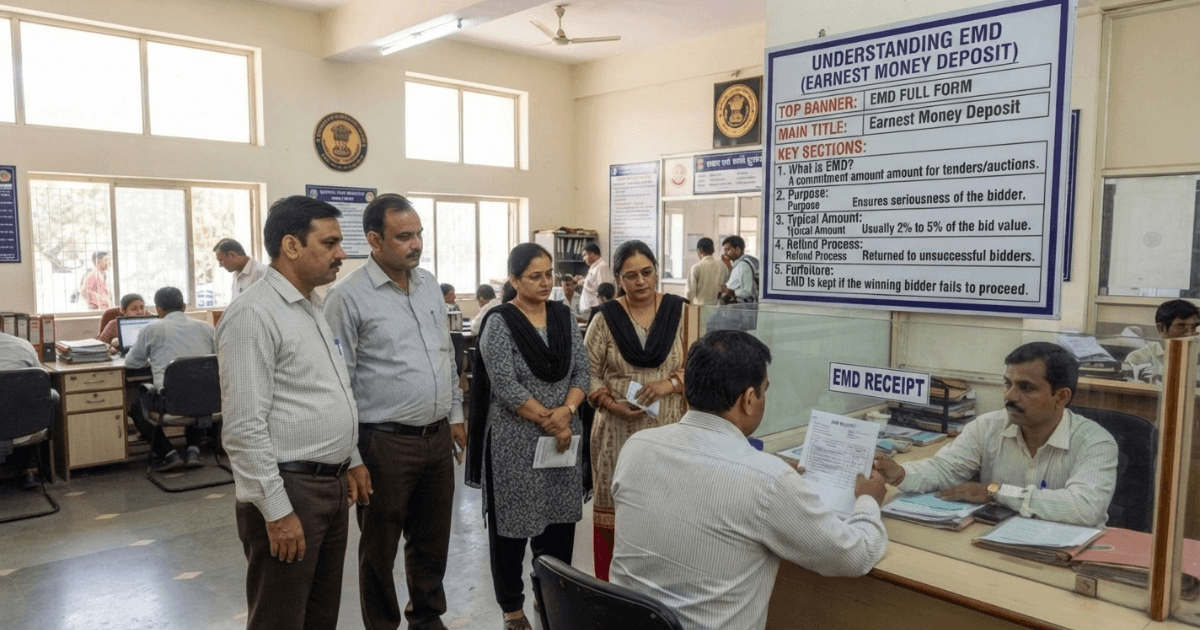
The first time I read a government tender document, one line stopped me: “Submit EMD with your bid.” If you feel the same confusion, the EMD full form is your starting point: Earnest Money Deposit. It is a sum of money that a participant pays to prove genuine interest and commitment in a tender.
Tendering authorities use this financial deposit as a financial safeguard against non-serious bids and against a successful bidder who ignores the tender conditions. The EMD amount, payment method, refund rules, and exemptions all come from the procurement rules behind each tender. In this guide, I break down the EMD full form, the application process, and the documentation that every bidder and eligible applicants need before sending a tender application.
What Is EMD? The EMD Full Form Explained
EMD stands for Earnest Money Deposit, and this full form of EMD appears in almost every Indian tender. It is a small deposit that a bidder pays while participating in a tender to say, “I am serious about the offer.” Knowing the EMD full form is easy, but knowing why the deposit exists helps you bid smarter.
The tendering authority uses it for protection against risks, such as a winner refusing to proceed or someone withdrawing the bid during the tendering process. Every tender notice states the EMD requirement, the applicable amount, the accepted payment methods, and the cases that lead to money refunded or forfeited. Once you pay, you accept the specified obligations that the issuing authority sets for that particular tender.
Why Is EMD Important?
Beyond the EMD full form, you should understand the purposes EMD serves. It encourages serious bidders, discourages non-serious bids, and demonstrates serious intent better than any promise. When businesses put real money down, the buyer’s exposure drops, which reduces risk and gives the buyer financial protection.

Every bidder meets the same financial conditions, which supports fair competition and cuts speculative participation. Since the buyer can declare the money forfeited under specified circumstances, bidders have an incentive to comply with the tender’s requirements. In short, EMD encourages compliance and keeps the bidding process on track from start to finish.
This standardized financial condition leaves the buyer with an organized tender process and a list of bids considered from people with genuine intention.
How Does EMD Work?
Once the EMD full form is clear, the process follows a few simple stages. The buyer states the amount or calculation method, and you pay through the option the tender authority allows. The committee then reviews each bid evaluated for compliance, and your EMD ends up refunded, adjusted, or forfeited.
How Much Is EMD in a Tender?
There is no single EMD amount, even though the EMD full form stays the same everywhere. The tendering authority sets it based on the project value, nature of work, and procurement rules, often at 1% to 5% of the estimated contract value. For example, a ₹1 crore tender with an EMD rate of 2% needs ₹2 lakh.
How to Calculate EMD in a Tender
The EMD full form tells you what the money is, and the EMD calculation formula tells you how much: EMD = Estimated Tender Value × EMD Percentage ÷ 100. A job with an estimated project value of ₹20 lakh at 3% needs ₹60000. Still, treat the tender document as the controlling source, because the buyer’s figure always wins.
How Is EMD Paid?
People who search the EMD full form usually ask next how to pay it. Depending on the procurement platform, payment methods include a bank draft, pay order, online bank transfer via NEFT or RTGS, a bank guarantee, or a Fixed Deposit Receipt (FDR). Check the tender notice first, because not every buyer accepts every option.
EMD Refund: When Do You Get Your Money Back?
Many people who look up the EMD full form care most about getting the money back. In most cases, EMD stays refundable, and unsuccessful bidders see the deposit returned after the buyer declares the tendering process completed. The refund provisions in the tender document and the buyer’s conditions set the exact timeline.
A successful bidder follows another path after the award, where the buyer may treat the EMD as adjusted against another required security under its security requirements. Since refund procedures vary, read the EMD refund clause and the tender’s terms before assuming anything.
When Can EMD Be Forfeited?
A buyer declares EMD forfeited when a bidder has violated the conditions specified in the bidding documents. Common triggers include withdrawal of the bid after submission, failure to accept the award, failure to sign the contract after winning, a failure to complete required formalities, and providing incorrect information. I once watched a contractor lose his deposit because he changed his mind a day after bidding.
Each tender document lists its own forfeiture conditions, so read the relevant clauses before submitting a bid. That ten-minute habit protects you from losing the EMD over simple non-compliance.
EMD Exemption: Who Is Eligible?
The EMD full form says deposit, yet some bidders never pay it. Many government policies offer EMD exemptions to eligible MSMEs, eligible startups, and special categories under government provisions, including the Micro Small and Medium Enterprises sector and some government-recognized organizations. Still, this benefit is not universal, and the individual tender document decides whether it is applicable.

Match your profile against the eligibility requirements before you claim anything. Your eligibility only counts when you back it with valid supporting documents.
Documents Required for EMD Exemption
An exemption needs solid documentary evidence, and the bidding conditions of each tender decide which documents applicants must attach. An MSME usually submits its MSME registration certificate, while a new firm attaches a startup registration certificate or startup recognition certificate. Some bidders also add government-issued eligibility documents or other registration certificates.
A certificate missing from the file, an expired paper, or incorrect documentation can cancel your claim, no matter how well you know the EMD full form. Upload everything in the prescribed format before the submission deadline, and keep copies of submitted documents. I always tell clients to recheck expiry dates a week early, not the night before.
EMD vs Performance Security
Many bidders who learn the EMD full form still confuse it with security deposits. EMD belongs to the bidding stage and shows seriousness, while performance security applies at the post-award stage and protects the fulfillment of the contract. Since the terminology varies, let the procurement rules and tender’s terms guide you.
Challenges of EMD for Bidders
Understanding the EMD full form is simple, but paying it creates financial pressure for small businesses that must arrange funds from limited working capital. The risk of forfeiture and refund delays also squeeze cash flow for unsuccessful bidders. Always review the financial requirements before you commit.
Benefits of Understanding EMD Requirements
Learning the EMD rules early helps you plan your financial commitment, arrange the necessary funds, prepare supporting documentation, and track deadlines. In my view, proper preparation is what separates regular winners from bidders who keep facing application errors.
Important Things to Check Before Paying EMD
Before submitting a tender, confirm the exact EMD amount, whether it is a percentage or fixed amount, the accepted payment method, and the payment deadline. Match the EMD exemption rules with your eligibility requirements, and gather the required certificates and required exemption documents. If you use bank guarantees or FDRs, check their validity requirements too.
Finally, read the refund conditions, forfeiture conditions, and tender-specific instructions. One payment mistake or documentation mistake can cause disqualification. Knowing the EMD full form is step one, and this checklist is step two.
Conclusion
The EMD full form, Earnest Money Deposit, names a small financial component of tendering processes that carries real weight. It proves bidder commitment, cuts non-serious participation, and gives the organization conducting the tender solid protection. Its amount and percentage of EMD are not universal, so every specific tender document sets its own payment method, exemption provisions, refund provisions, and forfeiture conditions.
Most mistakes in tender and bidding procedures come from rushing, not from missing knowledge. When applicants and businesses learn the EMD full form and the EMD requirements early, they avoid compliance problems and send stronger applications. So before your next bid, check the eligibility conditions line by line.
FAQs
What is the EMD full form?
EMD stands for Earnest Money Deposit, a financial deposit that bidders pay to show commitment to a tender. Buyers include an EMD required clause to test seriousness and gain financial protection under specified conditions.
Is EMD refundable?
Yes, EMD is usually refundable under the conditions the tendering authority sets. Unsuccessful bidders get refunds after the tender process, while successful bidders follow separate refund procedures and timelines in the terms of the tender.
Who can get an EMD exemption?
Eligible organizations like qualifying MSMEs and startups can claim an EMD exemption under applicable rules and government provisions. They must meet the eligibility criteria and documentation requirements of the relevant tender, often with MSME registration certificates or startup registration certificates.
How is EMD calculated?
Once you know the EMD full form, the math is easy. Multiplying the estimated tender value by the EMD percentage and then dividing by 100 gives you the calculated amount the tender expects.
Can EMD be forfeited?
Yes. A buyer can declare EMD forfeited when a bidder violates conditions, such as withdrawing a bid or failing to complete post-award formalities.
