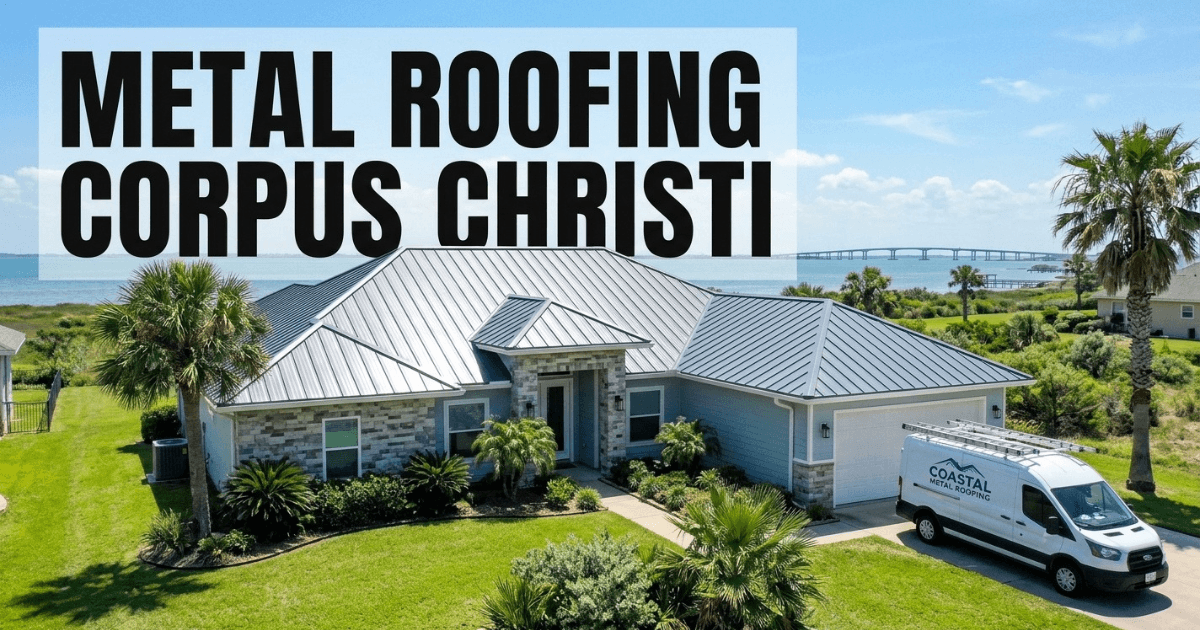
Corpus Christi sits on the Gulf, where salt, sun, and storms test every roof. Standing seam metal roofing has become a popular answer to that climate. This guide covers how it works, what it costs, and how to choose an installer.
Type for contractors metal roofing Corpus Christi into a search bar, and dozens of names appear. I have reviewed plenty of Coastal Bend roofing bids, and the same gaps keep showing up. Some skip the underlayment spec, and others ignore the windstorm paperwork.
What Is Standing Seam Metal Roofing?
A standing seam metal roof uses sleek vertical panels that run from the ridge to the eave. Raised seams join each panel to the next, while hidden clips hold everything to the roof decking. No exposed screws pierce the surface, so water has very few ways inside.
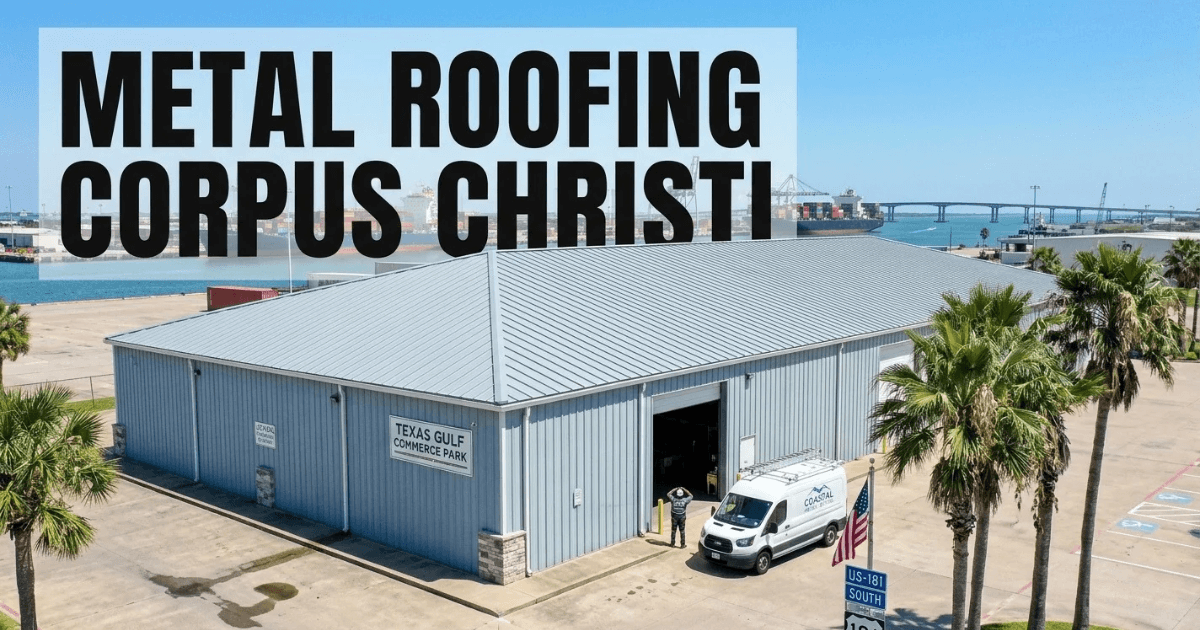
Most metal roofing systems use either exposed or concealed fasteners. Standing seam metal roofing relies on concealed clips, which explains its clean lines and higher price. You will see it on residential metal roofing and commercial metal roofing Corpus Christi jobs across the city.
Many crews use roll-formed panels cut to the exact length of each roof plane and close the seams with a mechanical seamer. On-site panel fabrication removes end joints, and shops with sheet metal fabrication skills bend matching custom sheet metal work for hips and valleys. Ask which panel profiles each contractor carries.
On the coast, seam style matters. A 1-inch seam finished as a double lock seam folds the metal twice, creating sealed panel connections that resist uplift. Pair that with concealed fasteners and wind-rated attachment systems tested for your zone.
Why Does Standing Seam Suit the Corpus Christi Coast?
Corpus Christi gets wind, salt, heat, and heavy rain, often in the same week. Standing seam handles that mix because its clips let the metal move and its seams sit above the water line. Fewer holes also mean fewer weak points when rain blows sideways.
Homes on North Padre Island, in Port Aransas, and along Corpus Christi Bay face that exposure most directly. Flour Bluff and Portland still catch gale-force winds whenever storms cross the Coastal Bend.
What Coastal Problems Does a Metal Roof Have to Handle?
The main threats are salt air corrosion, wind-driven rain, hail, and constant heat and UV exposure. Humidity and heavy rain pile extra moisture on top of that. A solid metal roof answers each threat with the right metal, the right coating, and tight edge details.
Salt spray eats through weak paint, and corrosion usually starts at cut edges first. Hurricane winds, tropical storms, and falling debris attack panel edges and surfaces. Daily expansion and contraction can also leave loosened fasteners on exposed-fastener roofs.
Flashing problems and drainage concerns cause most roof leaks, and recurring leaks usually mean someone caulked instead of fixing. That moisture brings water damage, attic condensation, and aging materials that fail early. Storm damage speeds up the whole cycle.
Which Materials and Finishes Should You Ask About?
Most coastal installers recommend 24-gauge steel with a Galvalume steel coating, or aluminum for waterfront homes. A Kynar 500 finish protects the color for decades. Get the metal, gauge, and finish for the whole roofing system in writing, since those choices decide how long the roof lasts.
Galvalume coats the steel substrate with roughly 55 percent aluminum and 45 percent zinc and silicon. Pure aluminum never rusts, so it suits homes out on the barrier islands. Insist on corrosion-resistant fasteners, because a cheap screw can rust before the panel does.
Some suppliers offer powder coat finishes, including a Sherwin-Williams line, plus cool-metal coatings that can earn ENERGY STAR labels. Flat panels can show oil canning, a visible waviness. A matte black finish highlights it, so ask about stiffening ribs.
What Components Make Up a Complete Metal Roof?
Panels cover the roof, but the parts around them do much of the waterproofing. A full system includes underlayment, flashing, trim, vents, and gutters. If a quote lists only “metal panels and labor,” ask what happens at every edge and pipe.
Self-adhesive membranes cover the roof decking and act as moisture barriers if water slips past the metal. Crews should fasten new sheathing with ring shank nails, which grip better in high wind. Attic ventilation through the soffit and ridge vents keeps heat from building up.
Custom-made trim and flashing closes the gaps that panels cannot cover. Kickout flashing, parapet coping, and sealed roof penetrations around skylights stop most leaks. Sized gutters, sound fascia, and clean roof edges handle drainage, while sealants serve only as backup.
How Does Standing Seam Compare With Other Metal Roofing Options?
Standing seam offers the cleanest look and the fewest exposed fasteners, but you have other choices. Stone-coated steel, architectural metal shingles, metal wood shake, and R-panel metal roofing all appear on local homes. Each comes in design patterns and colors for different budgets and styles.
DECRA and GAF TimberSteel both make stone-coated steel products that mimic tile or shake. R-panel leaves exposed metal screw heads that cut costs but add upkeep. Standing seam also handles low-slope roofing, where shingles tend to fail.
What Windstorm Rules Apply to Roofs in Corpus Christi?
Corpus Christi sits inside a catastrophe area designated by TDI, so roofs must meet the Texas windstorm code. A TDI-compliant installation earns a WPI-8 certificate of compliance. TWIA (Texas Windstorm Insurance Association) requires that certificate before it insures a building, so skipping it can cost you coverage.
Some contractors file a WPI-1 windstorm inspection application to open the process with TDI. An appointed inspector then checks the job against the coastal windstorm area standard. Final windstorm certification produces the WPI-8, which stays with the house.
Some owners add a FORTIFIED Roof designation from IBHS for a possible insurance discount. Good contractors explain the Texas Coastal Windstorm Requirements without prompting.
How Much Does Standing Seam cost for Metal Roofing Corpus Christi?
Rise Roofing’s website lists standing seam at $12 to $16 per square foot installed and puts a typical home at $24,000 to $32,000. Roof size, pitch, metal, and tear-off needs set your final price. Collect at least three written bids to compare.
A complete teardown costs more than an overlay but exposes hidden rot. A fixed-price proposal or itemized estimate should list everything from underlayment to permits and engineering. I distrust bids that skip windstorm inspection fees, since those totals tend to grow.
Ask about roof financing if one lump sum strains your budget. Metal often outlasts two shingle roofs and adds resale value. Rise Roofing cites a 50+ year lifespan, and a manufacturer-backed warranty plus a workmanship warranty cover early problems.
What Should You Look for in Roofing Contractors in Corpus Christi?
Look for metal experience, verifiable credentials, and real windstorm know-how. A strong contractor shows an RCAT (Roofing Contractors Association of Texas) license, proof of insurance, and a clear warranty. They also explain the WPI-8 process and give you a written scope before taking a deposit.
Texas does not license roofers statewide, so the voluntary RCAT license offers a rare objective check. When you compare roofing contractors Corpus Christi residents recommend, put fully licensed and insured installers first. GAF Master Elite contractor status or an Owens Corning Certified Installer badge adds manufacturer training.
Ask how each company handles damage evaluation, leak diagnosis, and insurance documentation. Good firms offer a free comprehensive roof inspection with satellite and drone measurements and photo documentation. Also confirm that you get a transferable roof warranty.
Which Local Companies Offer Metal Roofing Corpus Christi?
Several local and regional companies serve the area, and each one offers the services its own website lists. Some specialize in metal, while others handle every roof type. Read each company’s service pages before you call, so you know exactly what it does.
STX Metal Roofing’s website says it installs metal roofing for homes, subdivisions, and commercial properties, fabricating its panels on site. Its site also shows an MRA roofing system graphic and offers free estimates. Rise Roofing’s site covers 24-gauge steel standing seam, WPI-8 coordination, roof replacement, new roof installation, commercial roof coating, and commercial roof replacement.
Ja-Mar Roofing lists roof repair, roof maintenance, roof inspection, and standing seam metal roofing systems. Its site also covers sheet metal fabrication, wall cladding and wall panels, roof coatings, historic roofing restoration, and storm damage work. Ja-Mar states that it holds GAF Master Elite status and RCAT licensing.
Bayfront Roofing lists emergency roof repair, emergency roof tarping, roof leak repair, flashing repair, decking repair, and annual service agreements. It also offers windstorm certification and insurance claims assistance, with R-panel and DECRA metal options. Its homepage does not mention standing seam.
Alpha Omega Siding lists standing seam metal roofing, composition shingles, modified bitumen, repairs, and roof installations. Innovo Residential focuses on new home construction and lists roofing and siding among its services. Its page gives no detail on metal roofing work.
How Does a Standing Seam Installation Usually Go?
A typical metal roof installation starts with a roof inspection, then moves through permits, tear-off, deck repair, underlayment, panels, and trim. A complete system replacement takes several days to two weeks, and new construction roofing often goes faster. The windstorm inspector visits during the work, and the WPI-8 follows final approval.
Afterward, schedule roof maintenance yearly and after major storms. Checking sealants and gutters catches small issues before they force a roof replacement. After a storm, call for storm damage repair quickly and photograph everything.
Is Standing Seam Metal Roofing Worth It in Corpus Christi?
For homeowners who plan to stay put, usually yes. Standing seam costs more than shingles upfront, but it resists wind, salt, and hail far better and lasts 40 years or more. Fewer repairs, a possible insurance discount, and stronger resale value narrow the gap.
Weigh how long you will own the home, how close you live to the water, and what your insurer offers. If you plan to sell within five years, quality shingles may make more sense. In high-exposure spots like Ingleside or Aransas Pass, standing seam usually pays off.
Where Can You Find the Right Standing Seam Contractor in Corpus Christi?
A solid standing seam metal roof needs the right metal, tight edge details, and a contractor who handles windstorm certification without prompting. Our site lists roofing contractors Corpus Christi homeowners can compare, along with the services each company’s website confirms. Visit us to find the right fit for standing seam metal roofing Corpus Christi.
What Do Homeowners Ask Most About Standing Seam Roofs?
Most questions involve lifespan, overlays, and the windstorm paperwork that coastal roofs need. The short answers below cover the points homeowners raise most often during estimates. Each answer stands on its own, so jump straight to the question you care about.
How long does a standing seam metal roof last in Corpus Christi?
With Galvalume steel or aluminum and a Kynar finish, most standing seam roofs here last 40 to 60 years. Beachfront salt can shorten that lifespan for homes right on the sand. Yearly inspections and prompt repairs keep a roof near the top of that range.
Can I put standing seam over existing shingles?
Some codes allow metal over one shingle layer, but most coastal contractors recommend a full tear-off. Removing old shingles lets the crew inspect the deck and meet windstorm attachment rules. It also stops trapped moisture from rotting the plywood beneath the new metal.
Do I need a WPI-8 for a metal roof?
Yes, if your home sits in the TDI catastrophe area and you want TWIA coverage, and that area includes all of Nueces County. Corpus Christi falls mostly inside Nueces County, so nearly every local roof needs one. Your contractor should schedule the inspections as part of the job.
