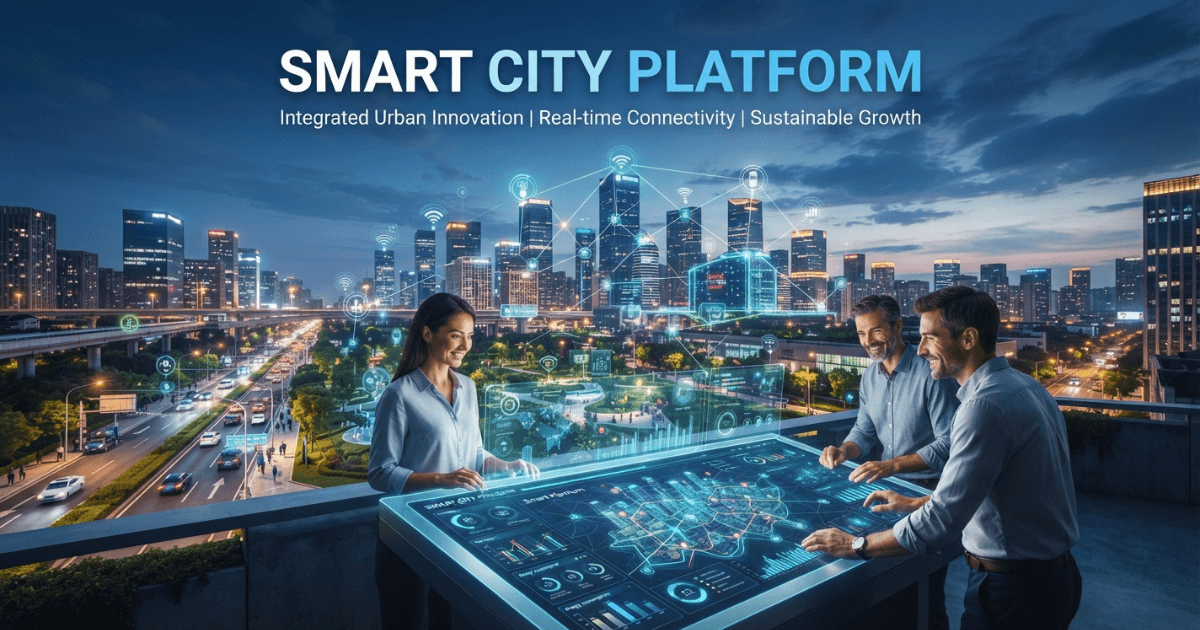
Every growing city today needs a strong smart city platform that connects municipal departments, field teams, and citizen services in one place. In Portugal, MISTO and City as a Platform show how a well-built smart city platform links territory-wide data, geographic information, and sensors together.
These systems give decision-makers a shared live view of daily operations. Epol Soft LLC built its own regional governmental digital platform, Smart City (Region), under Belarus’s state program for digital development running from 2021 to 2025.
A modern smart city platform connects residents, citizens, visitors, businesses, authorities, and government organizations through one digital ecosystem. It touches housing, mobility, transportation, public safety, situational awareness, and citizen engagement, linking city infrastructure, data sources, and public services across regions.
What Is a Smart City Platform?
A smart city platform is best described as a centralized digital environment. Geographic information, operational data, field activities, dashboards, and analytics come together instead of sitting in separate systems for every municipal service.
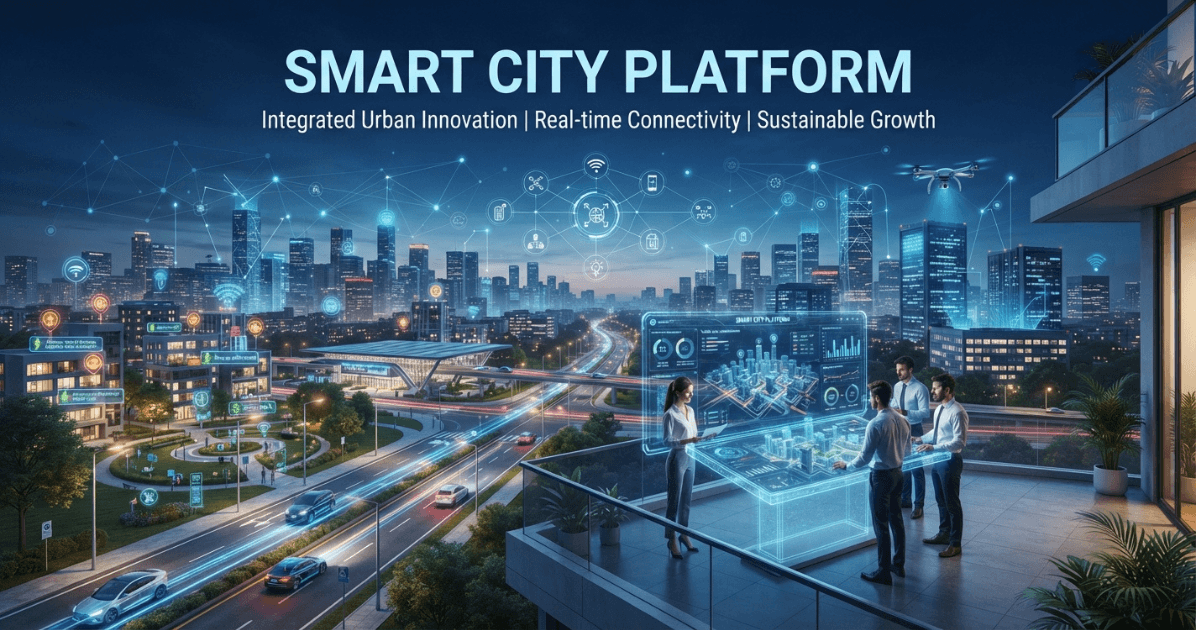
MISTO works as a smart city software platform built for municipalities and public organizations. Authorities get a place to handle monitoring and city operations, while a mobile app lets residents reach urban services through data collection, interactive maps, and notifications.
Epol Soft follows a similar path with its own smart city platform, supporting digital transformation of regional management across 17 cities, including Minsk and regional centers with populations above 80,000. Feedback channels stay open between government bodies and citizens throughout.
Data Integration and Centralized Management
Good data integration means pulling internal and external sources, including real-time sensor data, into one place. This stops municipal teams from juggling different systems every single day.
Centralizing information through collection, processing, and storage gives an integrated foundation. Data and applications work side by side instead of living in separate information environments scattered across departments.
This setup lets government organizations reach relevant information faster. A connected smart city platform helps every team coordinate digital services without duplicating work.
Mobility and Transportation
Mobility modules usually cover road occupancy, enforcement, active mobility, public transportation, and parking. Traffic-restriction management for roadworks and event-related closures gets shared with residents through Waze and Google Maps.
The Smart Mobility module inside MISTO brings transportation services, transport cards, QR tickets, and vehicle rental together. This makes urban transportation more digitally connected for daily commuters.
An Urban Mobility package adds public transit into the same unified space. This is one of the clearest examples of how a smart city platform reduces friction for everyday travel.
Tourism
Tourism tools handle tourism-related information, events, points of interest, and services tied to a city’s territory. Both permanent residents and visitors lean on interactive maps, multilingual information, and event tickets inside a city app.
The Tourism service built by Epol Soft shares details on tourist destinations, attractions, and routes. Information on history, culture, accessibility, and places of interest all flow through one digital channel.
This combination connects maps, organizations, and housing into a broad digital information environment. Local information and accommodation options sit side by side for travelers exploring a city.
Housing
The Smart Housing module helps residents manage everyday housing services such as electricity bills, water bills, and parking passes. Meter readings and transport cards fit into the same municipal services environment.
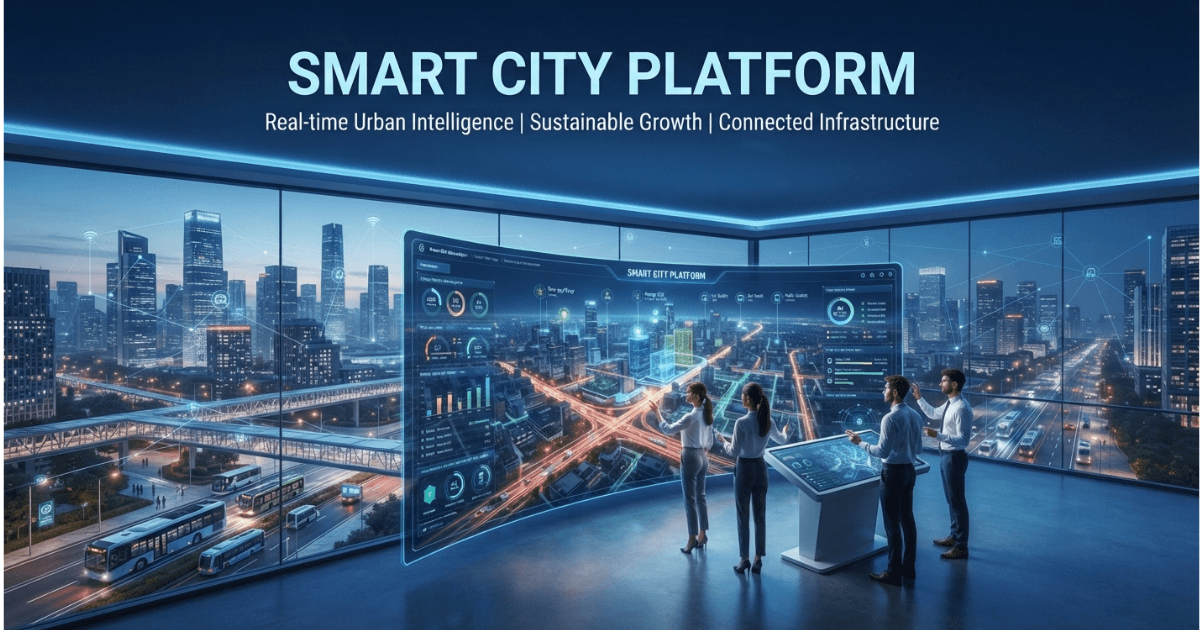
The Housing service built for a region lets people search accommodation information and review available housing options. Booking functionality is included directly in the system.
This works well for residents and visitors alike who are looking for a place to stay. It reflects how a good smart city platform brings mundane tasks into one simple flow.
Citizen Engagement and Digital Governance
Digital governance brings open data, public dashboards, and citizen participation into daily municipal life. Municipalities and residents gain new digital channels for public engagement through these tools.
Citizen engagement features such as polls, feedback channels, petitions, and public budgeting support wider digital participation. E-Democracy tools like petition voting and community dashboards keep communication flowing with city officials.
Epol Soft’s Public Opinion service adds surveys, voting, discussions, and complaints into the mix. Citizens, organizations, and government authorities get a shared space for urban development consultations.
Benefits of a Smart City Platform
A well-built smart city platform brings connected information across municipal departments and geographic visibility of urban activities. Real-time data integration improves field team coordination significantly.
Digital incident reporting, operational dashboards, and sensor-based monitoring support better communication with residents. Centralized access to municipal information leads to faster responses across every department.
Better data integration cuts down fragmentation and grows citizen communication through public opinion tools. Support for tourism through digital maps and location information rounds out a more efficient approach to government operations.
I’ve watched municipalities struggle for years with scattered spreadsheets and disconnected apps before adopting a unified system. The shift toward one central smart city platform genuinely changes how quickly problems get solved on the ground.
City as a Platform: Key Features and Solutions
City as a Platform gives municipalities’ territory management, GIS data, and infrastructure registration in one place. Teams connect operational information to exact locations, understanding what happens across a city’s territory in real time.
Operations management lets municipal services run daily activities through built-in applications. Analytics and dashboards then give decision-makers indicators, alerts, and day-to-day planning support.
Incident management lets users report issues using location data, photographs, and live status tracking. Traffic restrictions get managed on an interactive map, with updates shared through Waze and Google Maps.
A case involving the Estrela Council in Lisbon reported more than 7,000 users and 21,000 completed incidents through GeoEstrela. Lisbon City Council also rolled out a digital mobility platform that replaced static traffic listings with real-time closure tracking.
More than 50 municipalities now participate in the City as a Platform user community, sharing practices and platform development notes. The system earned the WSA Portugal 2025 award in the Government and Citizen Engagement category.
MISTO: Safety, Mobility, and Resident Services
Public safety stands at the center of MISTO, giving residents safety alerts, shelter information, and evacuation points through its mobile app. The Situational Awareness Center blends sensors and citizen interactions into real-time monitoring tools.
MISTO connects with existing city infrastructure through APIs and SDKs, keeping compatibility with legacy systems. The company states its system can cut crisis response time by up to 30 percent, though this remains a company-reported figure.
The mobile app puts city services within reach through utility payments, parking services, and municipal event tickets. Security measures cover data protection and GDPR compliance, adjusted based on each municipality’s implementation.
Digital inclusion features like digital queues and digital ID services reduce friction for residents. MISTO positions its entire approach around the idea of a ResilienceTech City, preparing communities for disruptions ahead of time.
Epol Soft
The Epol Soft platform runs several major services across urban and regional life, including Map, Events, Organizations, and Housing modules. The Map service offers an interactive geographic environment with searchable location data.
The Government Authorities module serves administrative leaders, supporting integration of smart-city solutions at the national, regional, and city level. This helps digitize regional management and automate related processes.
Businesses gain real value from this integrated regional platform through digital service ordering, booking, and feedback tools. This builds a stronger connected local digital economy for everyday customers.
Implementation spans 17 cities and regions across Belarus, including Minsk, tied to the country’s Digital Development program through 2025. The goal is accelerated socio-economic development across every participating territory.
Conclusion
MISTO links municipal authorities, residents, and public services into one ecosystem touching safety, housing, and digital payments. Epol Soft’s Smart City platform stands as a centralized digital foundation for regional government across Belarus.
Choosing the right smart city platform depends on a municipality’s specific goals, whether that means better mobility, stronger citizen engagement, or tighter emergency response. Each of these three systems proves that a connected smart city platform is no longer optional for modern urban management.
FAQs
What is a smart city platform?
A smart city platform is a centralized digital environment built for municipalities and public organizations. It connects geographic data, operational activities, sensors, analytics, and citizen services into one shared system.
How does a smart city platform help with mobility and transportation?
A smart city platform brings together public transportation, parking, transport cards, and traffic-restriction management in one place. Updates on closures and diversions get shared with residents through tools like Waze and Google Maps.
Can a smart city platform manage citizen reporting and incidents?
Yes. Most systems include an incident-management solution supporting location-based reporting, photographs, tracking, and resolution workflows. Residents can report problems and follow their status through to completion.
Does a smart city platform support emergency response?
Yes. Many platforms include situational awareness tools that combine sensor data, public services, and real-time monitoring. Some providers report faster crisis response times, though these figures are usually company-reported rather than independently verified.
Who benefits most from using a smart city platform?
Municipalities, public organizations, businesses, and residents all benefit from a connected smart city platform. It gives government teams better coordination while giving citizens a single digital point of access to services.
