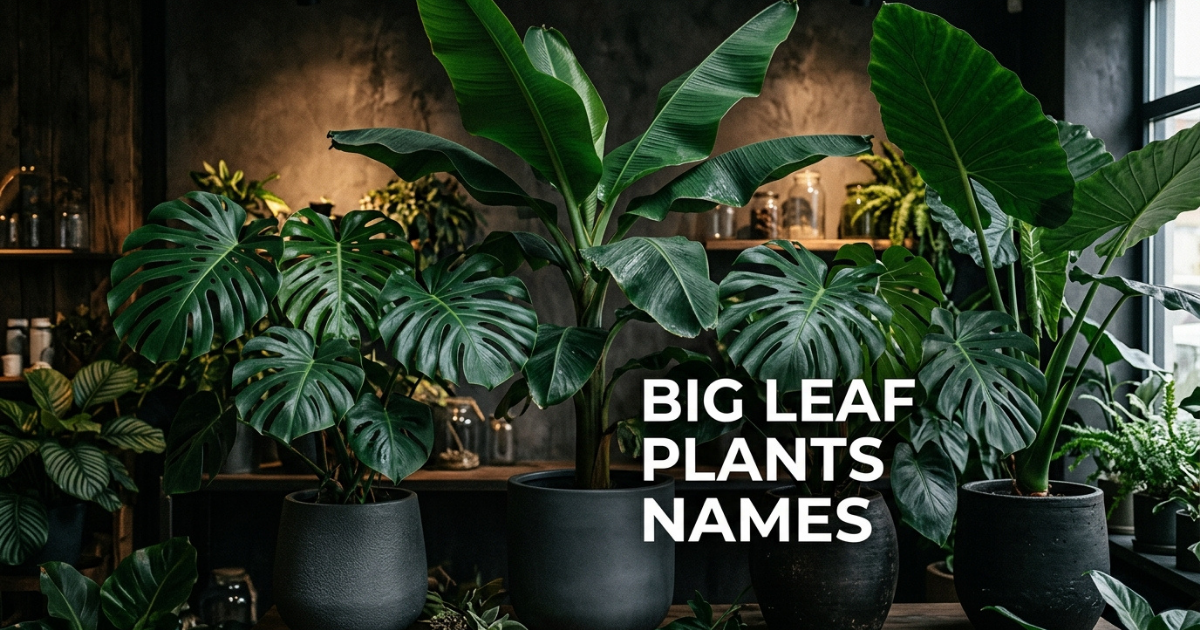
Learning the right big leaf plants names changed how I decorate every room in my house. One or two large-leaf houseplants can do more work than a whole shelf of tiny pots. This is the real gift that big foliage brings to a home, an office, or even a small patio. Once you know a handful of big leaf plants names, picking the right one for each space becomes simple.
In this guide, I share the plants and their names I trust most, both indoors and outdoors. You will also find simple care habits that keep these plants healthy for years. Every tip here comes from plants I have actually grown in my own home.
Why Choose Big Leaf Plants
Big leaf plants give a room instant character without much effort on your part. A single large plant, placed in the right spot, becomes the centerpiece of the whole room. That is exactly why so many people search for big leaf plants names before they even visit a nursery.
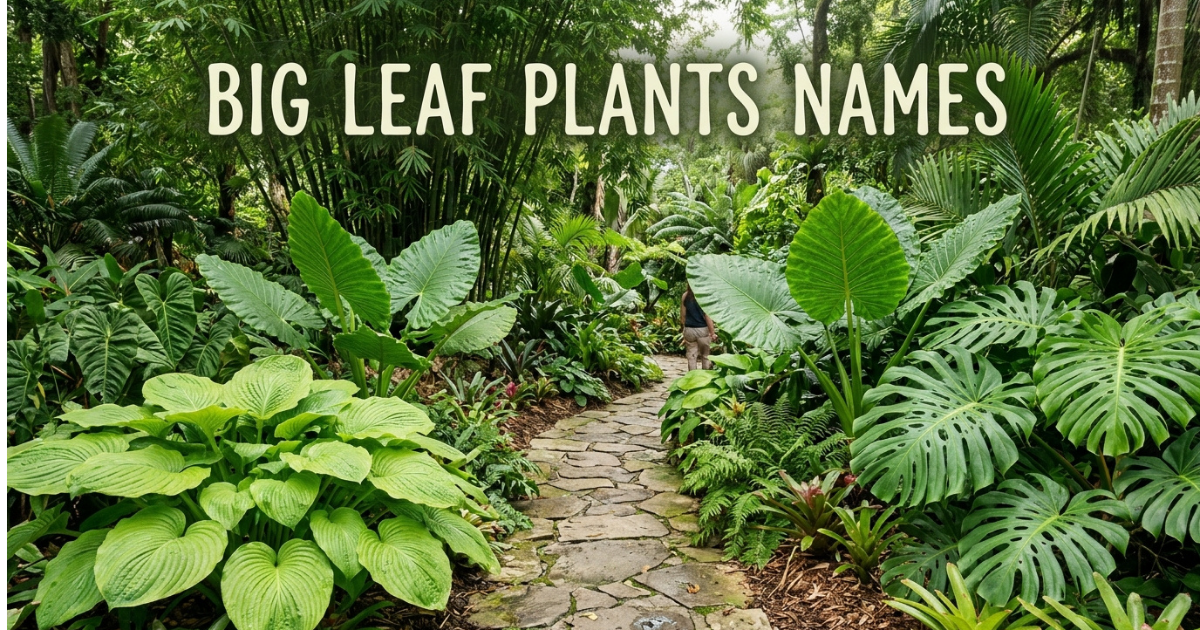
Their bold shapes suit modern, traditional, and minimalist interiors alike. Many of these plants come from tropical climates, so they bring a warm, exotic mood indoors. Outdoors, the same big leaf plants names appear again and again because they add drama and depth to garden beds.
Popular Indoor Big Leaf Plants Names
Monstera deliciosa, known as the Swiss cheese plant, grows glossy leaves with natural splits and holes. It likes bright, indirect light and slightly dry soil between waterings. A moss pole helps it climb and gives the plant a fuller, healthier shape.
The fiddle leaf fig, or Ficus lyrata, has large, violin-shaped leaves that suit contemporary interiors. It hates sudden changes in temperature or light, so keep its spot consistent. Overwatering harms the roots faster than almost anything else, so always check the soil first.
Bird of Paradise, or Strelitzia Nicolai, gives a room a bold, tropical look with tall, banana-like leaves. It needs strong light and steady moisture to grow well indoors. Because it grows large, it suits spacious living rooms and open hallways best.
Alocasia plants carry heart-shaped or arrow-shaped leaves with striking veins and rich color. They enjoy humidity, indirect light, and soil that stays evenly moist but never soggy. Among indoor big leaf plants names, Alocasia stands out for its bold, sculptural look.
Peace Lily, or Spathiphyllum, offers softer green leaves paired with elegant white blooms. It suits bedrooms and offices where a calmer, gentler look works better. A well-chosen pot turns this plant into a ready-made decorative piece.
Rubber Plant, Cast Iron Plant, and Snake Plant round out a solid list of easy indoor choices. Rubber Plant gives thick, glossy foliage, while Cast Iron Plant survives almost any light condition. Snake Plant adds upright, sword-shaped leaves that work well in tight spaces.
Fatsia Japonica, Chinese Evergreen, and Dumb Cane bring unusual textures into the mix. Fatsia Japonica has hand-shaped leaves, Chinese Evergreen shows silver patterns, and Dumb Cane offers broad, patterned foliage. These plants prove that big leaf plants names cover far more variety than most people expect.
Banyan Fig, Anthurium, and Monkey Mask Plant deserve a spot on any longer list too. Banyan Fig grows into a tree-like feature over time, Anthurium pairs foliage with colorful flowers, and Monkey Mask Plant develops striking natural holes in its leaves. Keeping a short reference list of big leaf plants names makes it easier to plan a full indoor collection.
Popular Outdoor Big Leaf Plants Names
Japanese Banana, or Musa basjoo, brings long, dramatic leaves that can reach several metres in height. Plant it in well-drained soil, in a sunny, sheltered spot, and water it regularly through summer. In colder regions, give it winter protection before the first frost.
Elephant Ear, or Colocasia, produces huge, heart-shaped leaves that thrive near patios and ponds. It prefers rich, moist soil and partial sun, with steady watering during dry spells. Bring the tubers indoors before freezing weather arrives.
Giant Rhubarb and Giant Butterbur both create enormous foliage with an almost prehistoric look. Both plants need real room to spread, so save them for larger garden spaces. Their scale alone makes them unforgettable additions to any list of big leaf plants names.
Canna Lily, Hostas, and Castor Oil Plant round out a strong outdoor lineup. Canna Lily mixes bold leaves with bright flowers, while Hostas thrive in shade and moisture. Castor Oil Plant adds dramatic, dark foliage that contrasts beautifully with green backgrounds.
Chinese Rice Paper Plant, Umbrella Plant, and Leopard Plant fill out the rest of the outdoor group nicely. Each one brings its own leaf shape, but all three share that same bold, oversized quality gardeners look for. Gardeners who study a wider range of big leaf plants names usually end up with a far more interesting border.
Simple Care Tips
Most big leaf plants prefer bright, indirect light rather than harsh, direct sun. Too little light causes smaller new leaves, leggy stems, and slow growth. Watch how your plant leans, since it often signals which direction needs more light.
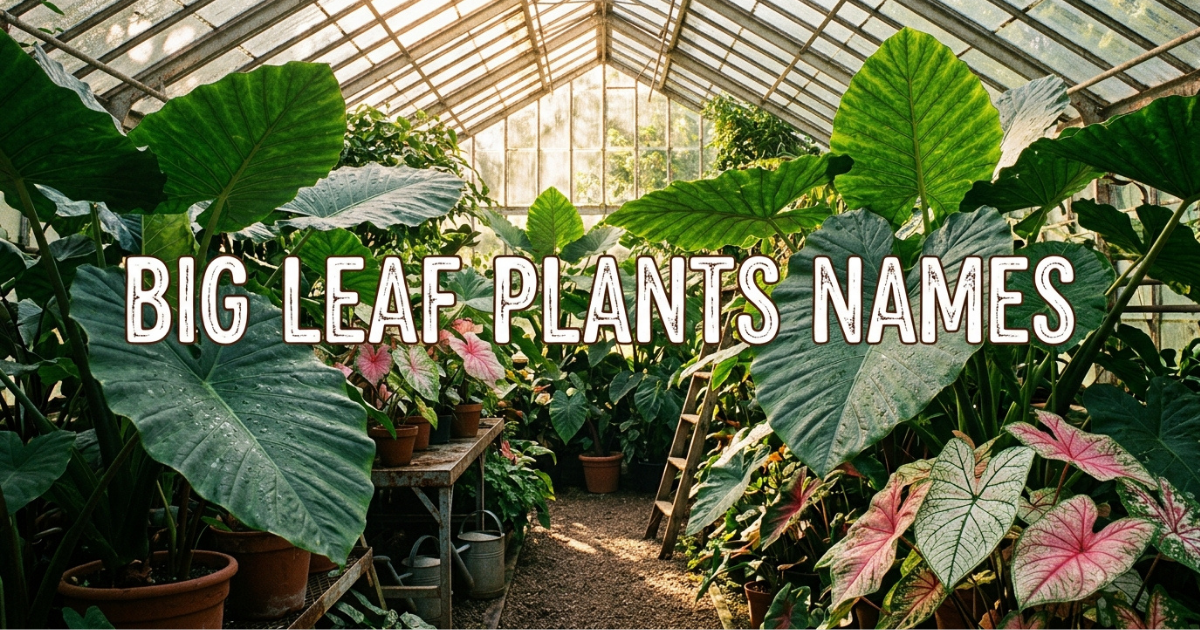
Check the soil before every watering instead of following a fixed schedule. Constantly wet soil harms roots, while very dry soil stresses the plant just as much. Good drainage in the pot solves most watering problems before they start.
Wipe large leaves with a damp cloth every few weeks to remove dust. Clean leaves absorb more light, which supports stronger, healthier growth over time. Feed your plants a balanced liquid fertilizer during spring and summer for best results.
Humidity matters more than most people realize for tropical big leaf plants names. A simple humidifier helps in dry indoor air, especially during winter months. Give climbing types, like Monstera and some Philodendrons, a moss pole or trellis for support.
Rotate the pot occasionally if your plant leans toward one light source. Prune damaged or untidy leaves whenever you spot them, since neat foliage always looks healthier. Knowing a plant’s mature size ahead of time helps you avoid surprises once it settles into its spot.
Common Problems to Watch For
Small new leaves usually point to low light or a lack of nutrients in the soil. Leggy, stretched stems mean the plant is reaching hard for more sunlight. Yellowing leaves often trace back to watering mistakes, poor drainage, or normal aging.
Dusty leaves are the easiest problem to fix, and the one most people ignore. A quick wipe every few weeks keeps the plant looking fresh and helps it absorb light properly. Catching these small signs early stops bigger problems from taking hold later on.
Using Big Leaf Plants in Design
Place your tallest plant toward the back of a bed or use it as a standalone focal point. Medium plants fill the middle layer, while smaller plants sit in front for balance. This layering trick works whether you are decorating a garden or a living room.
Containers solve the space problem for small gardens and patios. One bold plant in an attractive pot creates a tropical focal point without needing a full bed. Indoors, the same idea applies: fill an empty corner with one striking plant instead of many small ones.
Big leaf plants names like Monstera, Areca Palm, and Bird of Paradise bring a tropical feel to modern rooms. Their glossy leaves and strong shapes contrast beautifully against glass, metal, and concrete. A single well-placed plant can transform a plain corner into the best-looking spot in the house.
Mixing Indoor and Outdoor Choices
Some growers move plants between the patio and the living room as seasons change. Bird of Paradise and Banana Plant handle this shift well if you protect them from sudden cold. Others, like Monstera and Peace Lily, prefer to stay indoors year-round without much disruption.
Grouping plants by their light needs, rather than only by looks, makes this seasonal shuffle far easier. A plant that thrives outdoors in summer may need a brighter indoor spot come winter. Planning ahead for these moves keeps your whole collection healthy through every season.
Final Thoughts
After years of testing different varieties, I always come back to the same short list of favorites. Monstera, Fiddle Leaf Fig, Bird of Paradise, Alocasia, and Peace Lily rarely disappoint indoors. Outdoors, Japanese Banana, Elephant Ear, Canna Lily, and Giant Rhubarb never fail to impress.
Match the plant to your space, your light, and your patience for maintenance. Learning a few reliable big leaf plants names makes shopping and planning far easier. With the right choice and steady care, one bold plant can change how an entire room feels.
Before you buy anything, write down two or three big leaf plants names that fit your light and space. Visit a nursery with that short list in hand instead of choosing on impulse. This one habit alone has saved me from bringing home plants that never had a real chance indoors.
Why This List Matters
Choosing plants by name instead of by picture avoids costly mix-ups at the nursery. Two plants can look similar in a photo but need completely different light and water. A clear list of names and care needs helps you ask the right questions before you buy.
I also keep a small notebook with the names, light needs, and watering habits of every plant I own. This habit takes only a few minutes each season but saves plants from slow, avoidable decline. Anyone building a green home should start with the same simple system.
FAQs
Do big leaf plants grow faster than small-leaf plants?
Not necessarily, since growth speed depends on light, water, nutrients, and the specific plant species. Large leaves simply make new growth easier to notice.
Are large-leaf houseplants difficult to maintain?
They are not harder to grow, but they do need consistent watering, good humidity, and regular leaf cleaning. Most big leaf plants names on this list suit beginners just fine.
How often should I clean large leaves?
A gentle wipe every two to four weeks keeps dust from building up on the foliage. The right frequency depends on how dusty your home gets.
What happens when a large-leaf plant gets too little light?
The plant grows smaller new leaves, stretched stems, and pale, faded foliage over time. It will also lean toward the nearest light source as it searches for brightness.
Do large-leaf plants need oversized pots?
Not necessarily, since a pot should match the root system rather than be extra large. An oversized pot holds too much moisture and raises the risk of root problems.
