A good dining room ceiling design does more than sit above your table. It shapes the mood of every meal you share with family and friends. From false ceilings to wooden beams, cove lighting to chandeliers, the right choice adds depth and style.
You don’t need a full renovation to get a brighter, more stylish dining area. Small changes like paint, LED strips, or a simple border can transform the room. This guide walks through ideas for every budget and every ceiling height.
Why Dining Room Ceiling Design Matters
Most people focus on walls and floors, but the ceiling shapes a room’s character too. It affects proportions, ambience, and how light fixtures like pendant lights and chandeliers perform. A thoughtful dining room ceiling design ties the whole interior together.
In open-plan homes, a distinct ceiling shape can mark out the dining zone without a wall. Shallow structures and concealed LED strips suit small rooms better than heavy, layered designs. Light colors open up a space, while dark tones need real height to work.
Simple False Ceiling
A simple false ceiling is where most homeowners start, and it’s usually the right call. A rectangular border with recessed LED lights gives a clean, modern look without feeling crowded. For small rooms, keep the drop shallow — around 4–6 inches works well.
This kind of dining room ceiling design keeps a sense of height intact. A single-level design reads as a subtle detail rather than a heavy statement. Add soft LED strips along the edges for even, gentle illumination.
Cove Lighting and Cove Ceilings
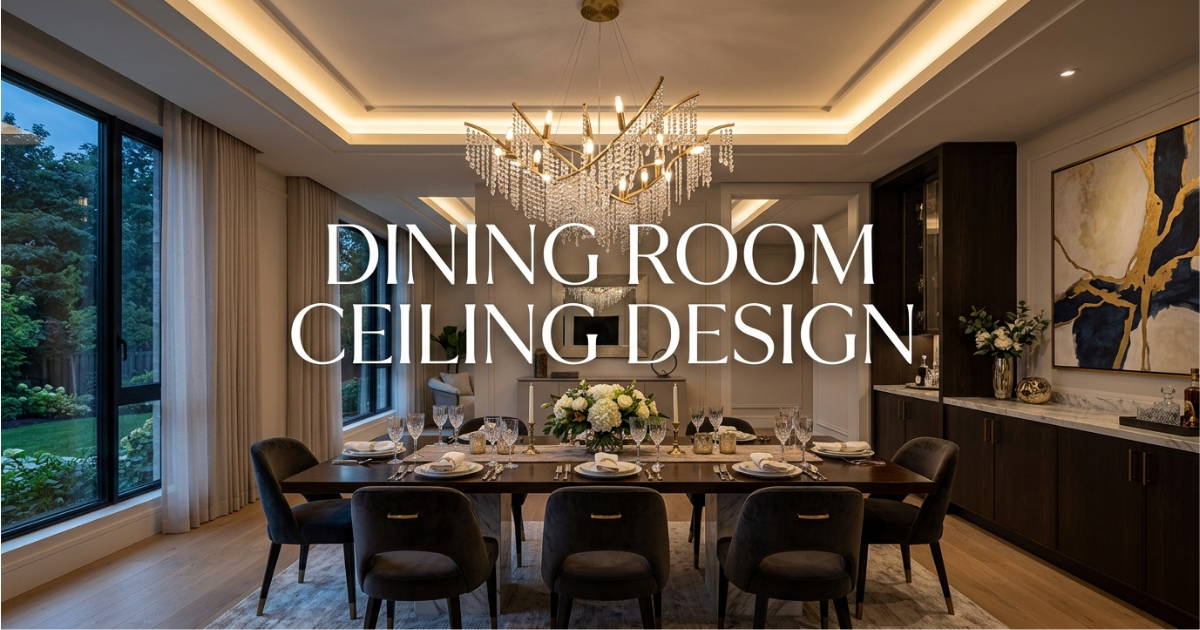
Cove lighting hides LED strips inside recessed sections, creating a soft, elegant glow. It gives off indirect light that feels warmer than harsh overhead bulbs. This works especially well for evening meals and quiet family dinners. Cove lighting remains one of the most popular dining room ceiling design choices for a reason — it looks refined without much upkeep.
A cove ceiling softens the line where walls meet the ceiling with a gentle curve. It offers architectural interest without needing full domes or vaulted structures. Contemporary rooms with minimal furniture suit this style particularly well.
Wooden Ceiling Accents
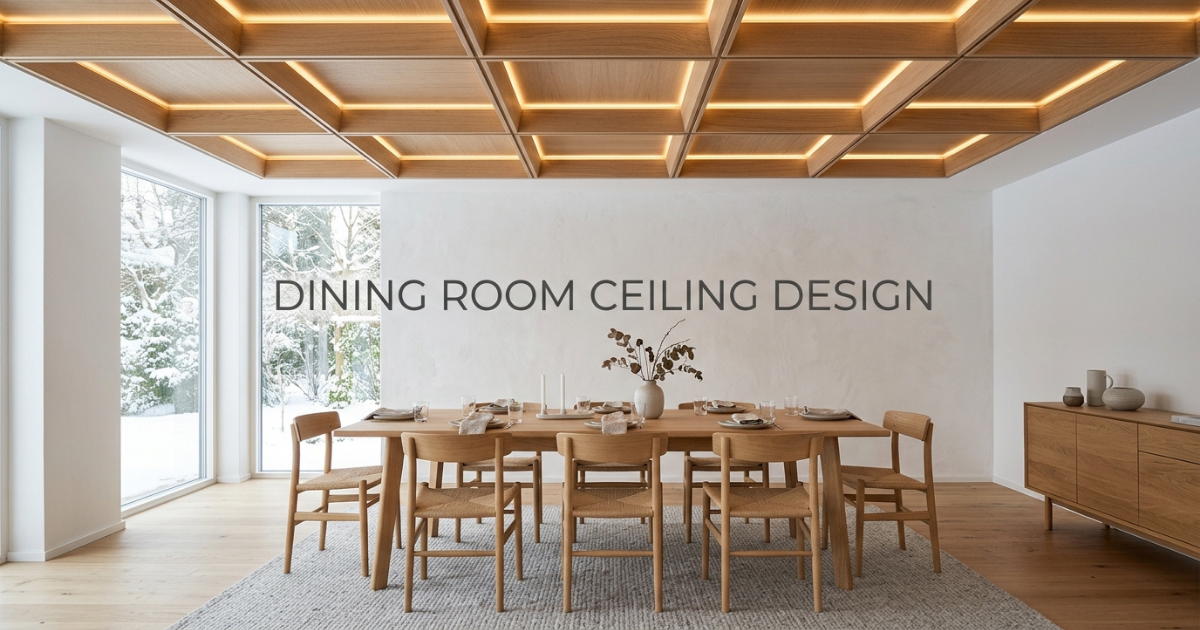
Wood brings instant warmth to a dining room. Panels, beams, or wood-look finishes work well built into a false ceiling. Pair light wood with neutral walls, or use darker wood for a cosier, intimate feel.
For a budget option, lightweight decorative beams or wood-look panels do the job. They add character without the weight or cost of solid timber. Even a few wooden strips can lift the whole room’s design.
Tray Ceiling Design
A tray ceiling lifts a central section above a recessed border, adding real depth. It naturally frames a focal point — usually a pendant light or chandelier — above the table. For small dining areas, choose a single-level tray rather than a heavily layered one.
This is a popular dining room ceiling design because it looks premium without much extra work. Run LED strips around the recessed edge to highlight the shape. The result feels comfortable, elegant, and easy to live with.
Geometric and Layered Ceiling Ideas
Geometric patterns suit modern homes well. Squares, rectangles, and clean lines add visual interest without clutter. In small rooms, keep it simple — too many shapes can feel overwhelming.
Layered ceilings add drama through multiple levels, spotlights, and LED strips. They work best with generous ceiling height; low ceilings need simpler designs. A clean geometric or single-layer look almost always suits a compact room better.
Wooden Beam Ceiling
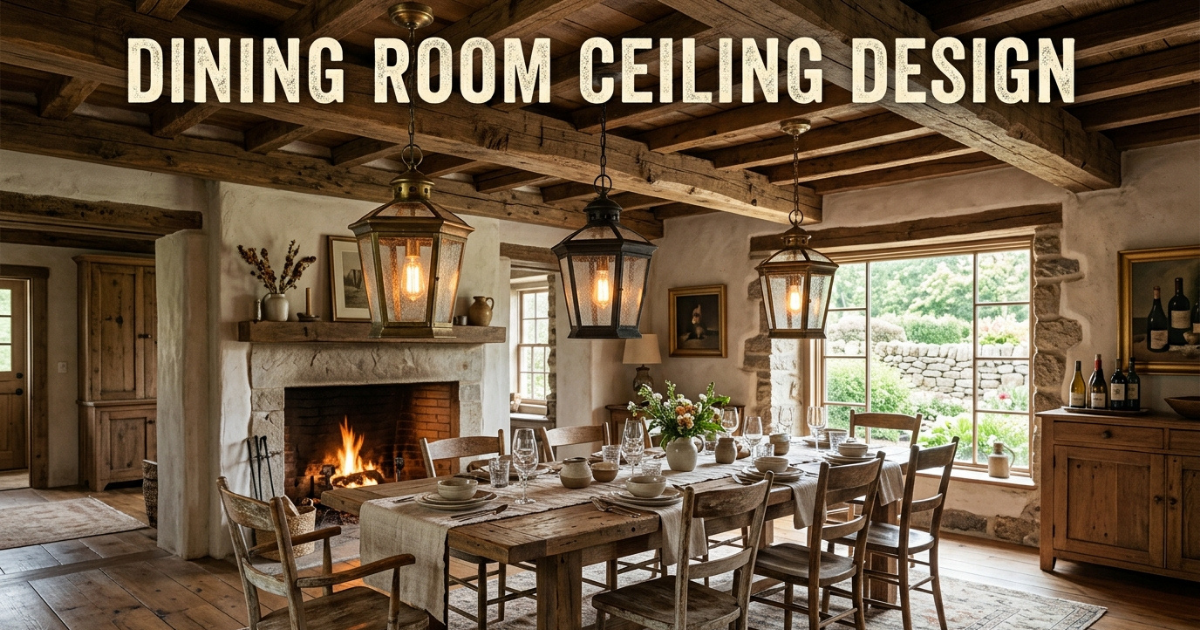
Exposed or decorative wooden beams give a dining space a rustic, elegant character. They pair well with natural textures and earthy colours, and can visually define a dining zone in an open-plan room.
In narrow rooms, run beams along the length rather than the width to stretch the space. Keep the finish simple for a contemporary look that doesn’t compete with your furniture.
Statement Chandelier or Pendant Light
Sometimes the smartest move is to keep the ceiling plain and let the light fixture shine. A chandelier over the dining table becomes an instant focal point on its own.
In small dining rooms, choose a fixture sized to match the table and ceiling height. A compact statement light can do the job of an elaborate false ceiling, minus the construction. Pairing a bold fixture with a plain ceiling is a simple dining room ceiling design trick that rarely fails.
Ceiling Color and Two-Tone Finishes
You don’t always need construction to refresh a ceiling — sometimes paint is enough. Try a neutral base like white or cream, then add a darker or wooden accent for contrast. Keep colors in line with your walls, furniture, and flooring for visual harmony. Light shades reflect more light and make a room feel larger and airier.
How to Choose the Right Dining Room Ceiling Design
Start by considering room size and ceiling height. Compact spaces suit simple ceilings, while larger rooms can carry bolder patterns. Plan lighting before installation — decide if you need general, focused, or ambient light.
For long rectangular rooms, an elongated dome creates visual balance across the space. Domes, barrel ceilings, and vaulted designs suit bigger rooms; cove or minimal curves suit smaller ones. Always plan around practical needs too, like ceiling fans and electrical clearance. Getting this right is the core of good dining room ceiling design planning.
Matching the Ceiling with Décor and Flooring
The ceiling should never be chosen alone — it needs to match your floor and wall finishes. Marble-look or glossy tiles pair well with a simple ceiling and soft lighting.
For matte or stone-look flooring, wooden accents add welcome warmth and contrast. Match your dining table, chairs, curtains, and accessories to the ceiling style for a consistent theme. Modern rooms favor clean lines and simple patterns. Traditional interiors lean towards wooden beams and classic detailing instead.
Maintenance Tips
A good ceiling still needs regular care. Wipe down light fixtures, check for dust, cracks, or moisture, and repair damaged spots quickly. Use water-resistant materials in humid areas, and have electrical connections checked by a professional when needed.
Textured surfaces collect dust, and mirror panels need frequent cleaning. Build a maintenance routine that matches your material choice and lifestyle.
Small Dining Room Ceiling Ideas
Small dining rooms need extra care. Skip heavy layers, dark colors, and busy patterns that shrink the room visually. A simple false ceiling with a narrow border, done in light colors, keeps things open.
Mirror accents, light colored flooring, and recessed lighting all help stretch the sense of space. Wallpaper with a subtle pattern can also add personality without any construction work. This kind of small-space dining room ceiling design proves you don’t need a big budget for a big impact.
Architectural Ceiling Styles: Barrel, Dome, and Vault
A barrel ceiling brings rounded curves and real architectural character to a room. A groin vault, formed where two vaulted surfaces meet, suits square or rectangular dining rooms and adds a strong sense of height.
An oval or elongated dome creates a soft, elegant focal point above the table. Pair any of these with a statement chandelier for a formal, memorable look.
Materials Worth Considering
POP suits custom, decorative shapes, while gypsum works well for clean, modern false ceilings. Wood adds warmth and natural character; PVC is a practical, low-maintenance option.
Choose your material based on budget, room design, and installation conditions. The right material makes any dining room ceiling design easier to maintain long-term.
Budget-Friendly Ideas
You don’t need an expensive renovation to see a real difference. Paint, PVC panels, decorative beams, and peel-and-stick panels are all affordable updates.
New light fixtures or a stylish pendant can transform a basic ceiling almost overnight. These small, budget-conscious choices work especially well in compact dining spaces.
Common Mistakes to Avoid
Avoid stacking too many ceiling levels in a small room — it quickly looks busy. Don’t hang an oversized chandelier in a compact space; size it to your table and room.
Don’t ignore lighting altogether, and don’t let decorative choices block fans or vents. Very dark colours only work well with generous ceiling height, so plan accordingly.
Conclusion
A thoughtful dining room ceiling design can transform the entire feel of your dining space. Whether you choose a simple false ceiling, a wooden accent, or a dramatic dome, balance style with practicality.
Consider your room’s size, lighting needs, furniture, and flooring before deciding. With the right plan, even a modest dining area can become one of the most attractive parts of your home.
FAQs
What is the best dining room ceiling design for a small space?
A simple false ceiling with a shallow drop, light colours, and recessed lighting works best for small rooms.
How much does a dining room ceiling design usually cost?
Costs vary widely based on material and complexity. Paint or PVC panels are budget-friendly, while gypsum, POP, or vaulted designs cost more due to labour and materials.
Which lighting works best with dining room ceiling design ideas?
A mix works best: recessed lights for general illumination, a pendant or chandelier over the table, and concealed LED strips for ambience.
Can I install a false ceiling in a low dining room?
Yes, but keep the drop shallow — around 4 to 6 inches — and stick to light colours and simple borders to avoid making the room feel smaller.
What materials are used in dining room ceiling design?
Common choices include gypsum, POP, wood, PVC, and wallpaper. Each material offers different looks, price points, and maintenance needs.
