
That is why modern false ceiling designs are gaining attention as the fifth wall of the home. Good false ceiling designs for living room areas bring their own colours and materials, turning a flat space into something elegant and spacious. These overlooked parts of a house create a major impact on the overall appearance of any space.
A thoughtfully designed false ceiling adds real depth, elegance, and better lighting to a room. It also gives a simple room its own distinctive character, hiding electrical wiring, pipes, ducts, and other structural elements. This guide brings together 25 inspiring false ceiling ideas, since the ceiling plays a major role in defining a room with attractive shapes, layered details, and rich textures.
What Is a False Ceiling?
A false ceiling, also called a suspended ceiling or dropped ceiling, sits below the main structural ceiling of a room. Installers usually build it using gypsum board, wood, PVC, metal, or decorative panels. This creates a space between the original ceiling and the new one, hiding electrical wiring and lighting fixtures.
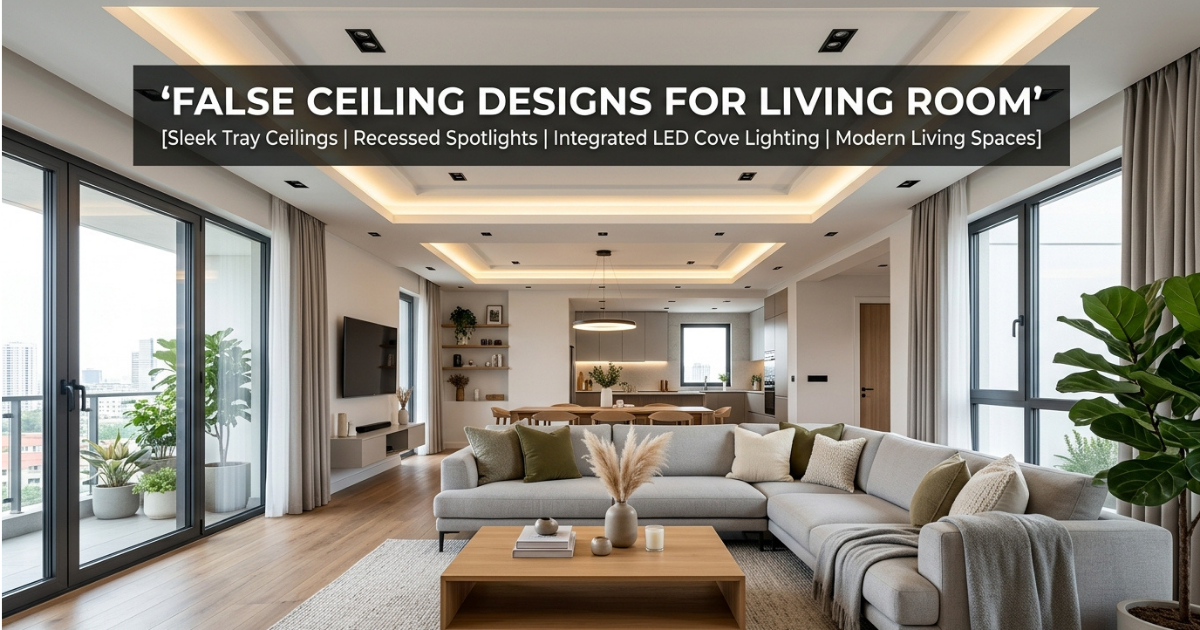
Because it can be customized into many shapes and levels, it gives homeowners real freedom in their interiors. Builders commonly work with gypsum, POP, or glass, and each material brings a different personality to modern false ceiling designs for living room projects.
Why Choose a False Ceiling for the Living Room?
False ceiling designs for living room spaces open the door to endless shapes, levels, patterns, and finishes. Gypsum boards offer strong flexibility and allow customized designs that suit any living room. This kind of ceiling can also hide electrical wires while smoothing over ceiling imperfections, improving appearance across the room.
Many gypsum ceiling systems combine looks with real benefits, including sound isolation and fire resistance. A well-planned false ceiling brings decorative benefits and practical benefits together for a finished appearance. Homeowners can experiment with textures, colours, and lighting arrangements, while the structure hides pipes and holds recessed lights or concealed LED strips.
Benefits of False Ceilings
A thoughtfully planned false ceiling brings decorative advantages and practical advantages together in one package. Uniform lighting through well-placed lighting fixtures helps distribute illumination evenly, and many designs improve thermal insulation too. This design flexibility lets a ceiling match the room’s size, shape, and theme, working with furniture for a genuinely stylish ceiling.
The relationship between the ceiling, walls, flooring, and curtains becomes easier to balance once a false ceiling ties the room together. Brands like Gyproc are known for energy-saving benefits through smart designer ceiling solutions. A ceiling also conceals wiring, tucking away electrical cables and ducts, leaving a cleaner appearance and organized appearance.
Good lighting design enhances lighting through recessed spotlights, profile lights, and cove lighting for a soft ambient effect. This simply improves interior appearance, turning a plain ceiling into a genuine decorative feature. Designers often add geometric patterns and wooden accents, keeping strong acoustic comfort throughout the room.
Materials Used for False Ceilings
Gypsum, POP, and wood remain the most popular choices, and gypsum boards come in a wide variety of designs. The right material changes the room’s appearance, so consider room conditions, ceiling height, budget, and installation requirements first. A gypsum false ceiling suits contemporary homes with its smooth finish, clean shapes, and lightweight build.
A POP false ceiling, made from plaster of Paris, can be molded into detailed patterns and artistic ceiling designs. A PVC false ceiling uses moisture-resistant panels that are easy to maintain in areas with humidity. A wooden false ceiling brings genuine warmth and texture, and pairing it with gypsum borders creates a rich contemporary appearance for false ceiling designs for living room interiors.
False Ceiling Ideas for Small Rooms
A small living room should never carry overly complicated designs, since too many layers make the space feel crowded. Stick with light colours, simple borders, and recessed lighting with minimal patterns to protect the compact space. Every plan should be customized for individual rooms, respecting the available space with proper careful planning, since false ceiling designs for living room areas must always suit their footprint.
Single-layer gypsum ceilings with thin borders work well, especially paired with recessed LED lights. Floating center panels add depth without becoming visually heavy, unlike multiple thick layers that eat into limited headroom.
False Ceiling Cost
The cost of any false ceiling designs for living room project depends on board thickness, room size, materials, lighting, and installation requirements. Brands like Gyproc typically price simple work between ₹75 and ₹120 per square foot in India. Prices vary with location, the contractor, and specific project specifications.
Design complexity and finish matter too, and platforms like Livspace show elaborate work ranging from ₹120 to ₹250 per sq. ft. Premium finishes and complex layered designs raise the final cost, along with local labor rates and material quality.
Choosing a False Ceiling That Fits Your Space and Budget
Check the size and height of your living room first, since a complicated multi-level ceiling suits a large room but overwhelms a small room. Review the available ceiling height, overall interior style, lighting requirements, electrical needs, and HVAC needs. The color combination should always complement the room and match existing furniture and décor.
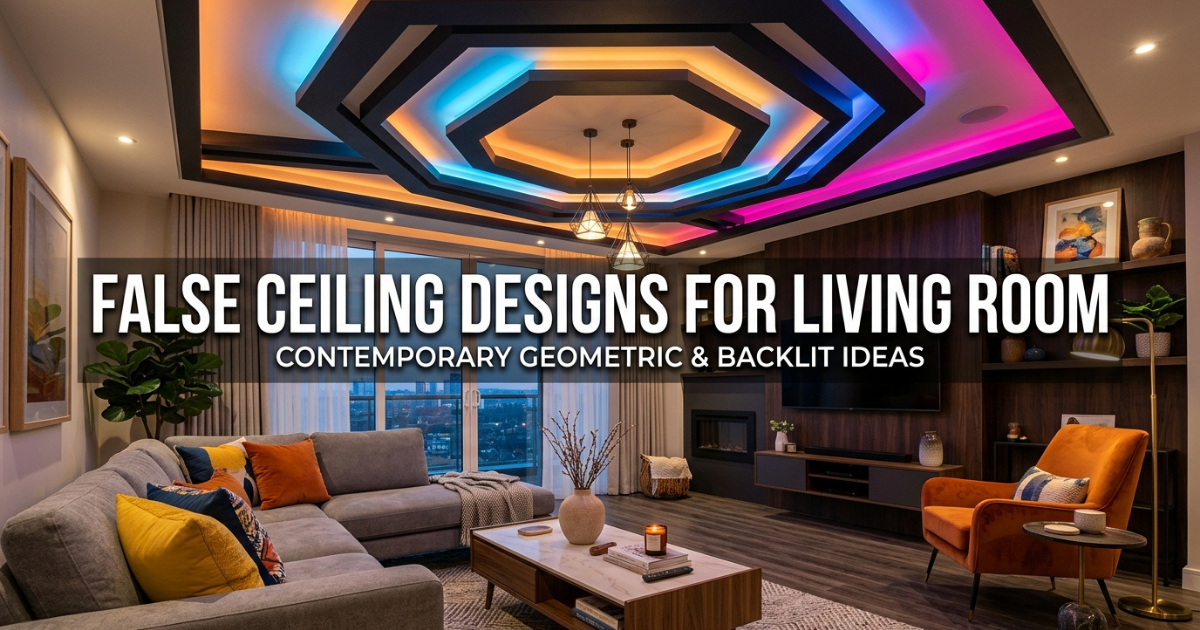
Homes with limited height should avoid heavy multi-level designs and elaborate patterns. Plan electrical points and lighting positions before installation, matching them to the interior style, flooring, and wall colors. Choose material based on budget, maintenance, moisture resistance, and future accessibility for repairs, since the right choice defines lasting false ceiling designs for living room performance.
Popular Design Ideas
A tray-style false ceiling builds different levels with LED strip lighting around a recessed section, adding depth and a sophisticated appearance. Layered ceilings stack multiple levels for a strong dimensional appearance, suiting larger living rooms with generous ceiling height. Cove lighting creates soft indirect illumination and a warm atmosphere, using LED strips tucked into recessed sections.
Geometric ceilings use squares, rectangles, and lines for a contemporary appearance that suits modern interiors. A gypsum board ceiling stays versatile, with a clean finish that can be painted in any pattern. Wooden ceilings with exposed wooden beams bring warmth and natural appearance, suiting rustic interiors and farmhouse interiors.
Other popular styles include the coffered ceiling with its grid-like pattern, the textured ceiling using stone or fabric, and the circular cutout ceiling with rounded shapes against straight lines. Linear ceiling designs and curved ceilings both suit modern interiors, while a drop ceiling with concealed lighting gives a soft atmosphere. A floating ceiling with suspended sections and hidden LED strips creates a bold statement, and 3D ceiling designs add dimensional elements for a striking visual effect.
Choosing the Right Color and Maintenance
The right color should always complement the interior, and white or light shades give a bright appearance and spacious appearance. A coordinated color palette between the ceiling color, walls, and furniture produces a balanced interior, which is a small but important part of successful false ceiling designs for living room planning.
A properly installed false ceiling needs low maintenance, just regular dusting and occasional inspection. Water leakage and prolonged moisture exposure can damage ceiling materials, so check for leaks early.
False Ceiling Designs for Low-Height Rooms
Homes with lower ceilings should choose a single-layer gypsum ceiling with a narrow perimeter for a polished look. Soft shades such as white, beige, and light grey keep the bright appearance intact. Recessed lights and concealed LED strips work better than bulky hanging fixtures in these rooms.
According to Livspace, a minimum ceiling height of about 9 feet suits comfortable false-ceiling installation, though this still depends on room conditions.
Final Thoughts
Today’s modern ceiling designs lean toward simplicity, with integrated lighting and honest textures taking centre stage. POP tray ceilings, cove lighting, recessed gypsum panels, and wooden beams remain popular this year. Floating ceiling panels, geometric cut-out patterns, and backlit decorative panels join curved multi-level ceilings and veneer-finish ceilings among the top trends shaping false ceiling designs for living room spaces this year.
The living room ceiling is never just a structural surface; it shapes the overall mood of the whole space. Getting the room size, ceiling height, lighting requirements, color scheme, and budget right takes careful planning. Well-chosen false ceiling designs for living room spaces turn an ordinary living room into a stylish and welcoming space.
In the end, this remains a genuinely practical solution that gives a home a beautiful centerpiece. Whether layered, geometric, curved, or wooden, the best false ceiling designs for living room projects always match the room’s size, architectural style, and personal taste.
FAQs
What is the average cost of false ceiling designs for living room spaces in India?
Prices generally range from ₹75 to ₹250 per square foot, depending on material, design complexity, and location.
Which material is best for false ceiling designs for living room use?
Gypsum is the most popular choice because it is lightweight, versatile, and offers strong design flexibility, though PVC and wood also work well.
Are false ceiling designs for living room spaces suitable for small rooms?
Yes, but they should use light colors, simple borders, and single-layer gypsum ceilings to avoid making the compact space feel crowded.
How much ceiling height is needed for false ceiling designs for living room installation?
A minimum ceiling height of about 9 feet is generally recommended for a comfortable false-ceiling installation.
How do I maintain false ceiling designs for living room spaces?
They need only low maintenance, including regular dusting and occasional inspection for water leakage or moisture problems.
