Farmland Santa Fe buyers often learn the hard way that water, not acreage, sets the true value of a property. New Mexico has some of the lowest average farm real estate values in the country, yet rural land near Santa Fe can sell far above that state average.
This guide covers what smart land buyers check before they commit: prices, water rights, zoning, taxes, financing and the buying steps. It focuses on Santa Fe real estate outside city limits, where most farm and grazing land sits.
What does buying farmland in Santa Fe actually involve?
Buying farmland in Santa Fe means purchasing agricultural land in or around Santa Fe County, usually through a real estate agent, a private sale or an auction. Beyond the price, you must confirm water rights, zoning, access and tax status before closing, because these decide what the land can legally produce.
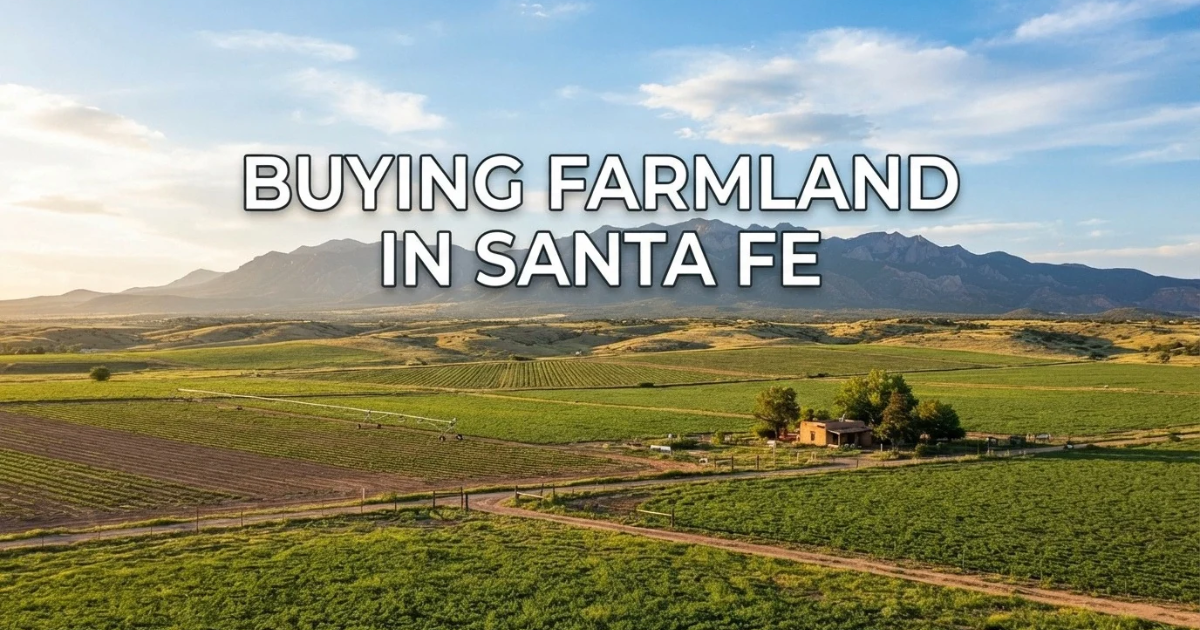
Most land for sale in Santa Fe sits in the unincorporated county rather than inside city limits, so county rules usually apply. The high desert climate means few parcels support crops without irrigation, which is why many listings are grazing land, hay fields, orchards or ranches. Local brokers group these under a farm and ranch category, next to residential property and commercial property.
Who usually buys farmland near Santa Fe?
Buyers tend to fall into three groups: people who want a small working farm or homestead, ranchers adding grazing land, and investors holding land for long-term value. Some buyers mix goals, such as raising livestock while also using the land as recreational land for hiking or horses.
Your goal shapes every later choice, from how much water you need to which lender fits. Decide your main purpose before you start scrolling through property listings.
What types of farmland can you find around Santa Fe?
Expect irrigated parcels along acequias and rivers, dry grazing land on the plains south of the city, small orchards, hay fields, horse properties and larger ranches. Large-scale row crops are less common at Santa Fe’s high elevation and low rainfall, so most working land focuses on hay, gardens, fruit or livestock.
Land may be sold as a single tract or split into a multi tract offering, which lets you bid on only the piece you want. Some parcels are unimproved land with no well, power or fence, while others are a turn-key farm with barns and irrigation already in place.
How much does farmland in Santa Fe cost?
There is no single price, but USDA data gives a baseline. New Mexico’s average farm real estate value was $725 per acre in 2025, the lowest of the surveyed states. Land near Santa Fe usually costs far more than that average, especially small irrigated parcels close to town.
The USDA figure covers land and buildings across the whole state, including huge dry ranches, so it pulls the average down. Because farmland Santa Fe listings vary so widely, treat the state number as a floor, not a target price.
Water rights, paved road access and power at the lot line all push the price per acre up. To judge a listing, ask your agent for sold properties and recently sold land with similar water, size and access, not just the asking prices of new listings. For a large purchase, a formal land appraisal gives you and your lender an independent number.
Why do water rights matter so much in Santa Fe?
In New Mexico, water rights are a separate property right that can be sold apart from the land. A farm without valid rights may not be legally irrigated. The state’s Office of the State Engineer approves water right transfers, so its records tell you what the land can really use.
A water right can also be lost through long non-use, so a right that exists on paper still needs checking. Every farmland Santa Fe buyer should ask the seller for the water right file numbers and confirm them with the State Engineer. Make your contract conditional on the rights moving to you, with the change of ownership filed at closing.
What is an acequia and how does it affect buyers?
An acequia is a community-run irrigation ditch, a system that dates back centuries in northern New Mexico. If your land draws water from one, you become a member, pay yearly dues and follow its rules on water turns and ditch cleaning. The New Mexico Acequia Association is a good first stop for questions.
Acequia water rights often carry some of the oldest priority dates in the state, which can make them valuable in dry years. Some acequias have bylaws that give them a say when water is moved off the ditch, so transfers are not simple. Ask the ditch’s mayordomo or commissioners how water is shared before you buy.
Can you drill a well on farmland in Santa Fe County?
Often yes, but every new well in New Mexico needs a permit from the Office of the State Engineer. A basic domestic well permit allows limited household and garden use and is not meant for large-scale irrigation. If you plan to grow crops or water livestock at scale, you will likely need a separate permit or an existing water right.
Groundwater depth and quality vary across the county, so ask neighbors and local well drillers about typical depths near the parcel. If a property already has a well, ask for the permit, the well record and a recent flow test.
How does zoning affect farmland in Santa Fe County?
Land outside city limits falls under Santa Fe County’s Sustainable Land Development Code, adopted in 2015. The code assigns every parcel a zoning district, including agricultural and ranch zones. Your district controls what you may build, how many homes you can add and whether you can later split the land.
Check the county zoning map for the exact district before you sign anything, since two neighboring parcels can carry different rules. Some areas also sit inside community districts, such as San Marcos, with extra standards meant to protect farming. If you hope to add a home, barn or farm stand, ask the county’s land use staff which permits you would need.
Can you subdivide farmland after buying it?
Sometimes, but it is never guaranteed. Splitting land in Santa Fe County requires county approval under the rules for subdivisions, and approval depends on zoning density, road access and proof of enough water. Buyers who plan to sell off lots later should treat that plan as uncertain until the county says yes.
This matters because development land sells at a different price than land locked into farm use. Do not pay a development price for a parcel unless you have checked its density limits and water supply.
Can you lower property taxes on farmland in Santa Fe?
Yes, if the land is used mainly for farming or grazing. New Mexico law lets county assessors value qualifying agricultural land by its production use rather than its market value, which usually means a lower tax bill. Owners must apply with the Santa Fe County Assessor and meet the county’s requirements.
The rule is called the special method of valuation, found in Section 7-36-20 of the state’s tax code. For grazing land, an older assessor guide listed minimum sizes of 80 acres in southern Santa Fe County and 53 in the north, so confirm current numbers. Land held mainly for future subdivisions or speculation does not qualify, and the status can be removed if farming stops.
Where should you look for farmland near Santa Fe?
Start with the areas south and southwest of the city, where larger parcels tend to be more common, such as Galisteo, La Cienega, La Cieneguilla, the Highway 14 corridor and Highway 285. Then widen your search to farm and ranch listings, private sales and public land auctions across the county.
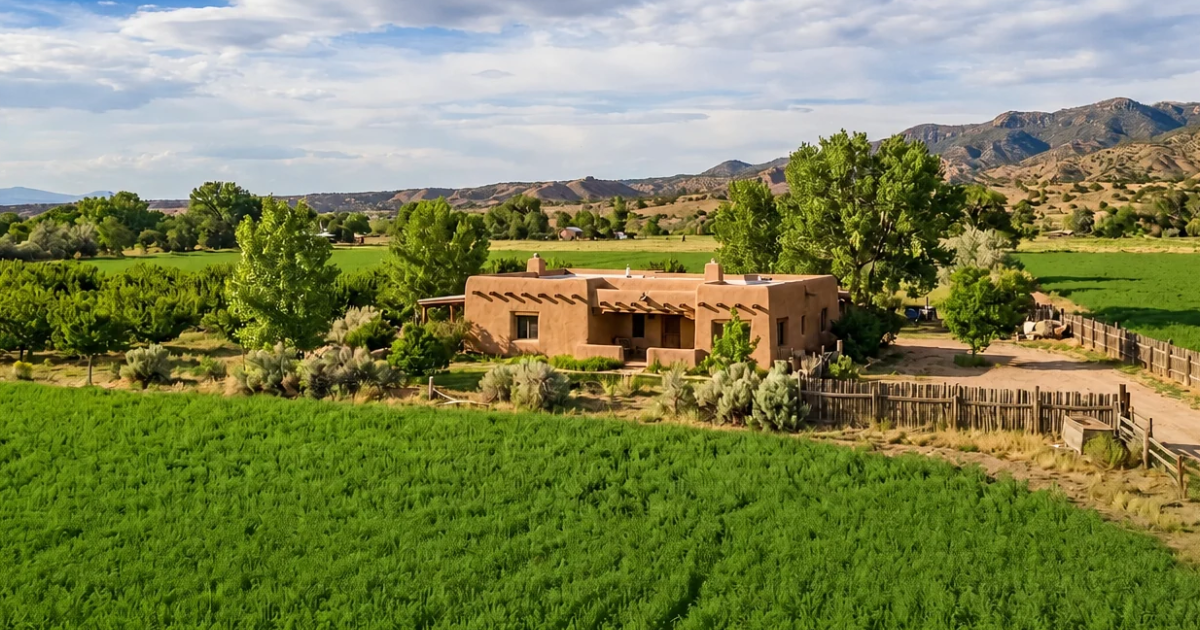
Closer-in areas like Tesuque, Agua Fria and Arroyo Hondo have smaller, pricier lots, but some include old irrigated fields and orchards. Use an interactive land map on brokerage sites to filter by acreage, land type, price range and listing status. Turn on saved searches so you get an alert when a fitting farmland Santa Fe parcel appears.
Should you buy through an agent, a private sale or an auction?
Each route suits a different buyer. An agent helps you find listings, negotiate and manage paperwork, while a private treaty sale lets you negotiate terms directly. An auction sets a fixed sale date and a public price, which suits buyers who have financing ready and have finished their checks before bidding day.
Farm brokers run online auction and simulcast auction formats, where you can bid in person or online at the same time. Government sales, such as a tax sale of tax-delinquent property, can offer lower prices, but land is often sold as is with limited title assurance. Read the terms of sale, budget for a bidder deposit, and check title, access and water first, because a successful bidder usually cannot back out.
How do you finance farmland in Santa Fe?
Most buyers use a farm lender rather than a standard home mortgage. Options include Farm Credit lenders, local banks with agricultural loan programs and the USDA Farm Service Agency, which offers farm ownership loans to qualifying farmers. Expect larger down payments for raw land than for a house.
Lenders look at your credit, cash reserves and, for working farms, your farming plan and expected income. Get pre-approved early, especially for farmland Santa Fe auctions, where closing deadlines are short.
Can you invest in farmland without buying a whole farm?
Yes. Online platforms let an accredited investor buy shares in farms through crowdfunded farmland offerings or pooled funds, often by owning an interest in an LLC that holds the land. These deals give exposure to farmland returns without managing a property, but your money is usually tied up for years.
These platforms mostly target large commercial crop regions, so they suit portfolio goals more than a wish to live on Santa Fe land. Some investors use farmland investment as a hedge against inflation or for portfolio diversification alongside stocks and bonds. If you sell other investment real estate to buy land, ask a tax adviser whether a 1031 exchange could defer capital gains tax.
What are the steps to buying farmland in Santa Fe?
Set your goal and budget, line up financing, search listings with a local agent, then make an offer with contingencies. Use the contingency period for water, title, survey, zoning and soil checks. Finish by confirming the water right transfer and recording the deed at closing.
- Define your purpose. Crops, livestock, a homestead or a long-term hold each need different water and acreage.
- Line up money. Get pre-approved and keep cash for due diligence costs such as surveys and tests.
- Hire local help. Work with a licensed real estate broker who knows rural Santa Fe County, plus a land use attorney.
- Search and compare. Review available properties, watch how fast listings reach pending sale, and study comparable sales.
- Make a conditional offer. Tie it to water rights, title, survey, access and financing.
- Investigate the land. Order a title search, a boundary survey and, where useful, a soil test.
- Verify water. Confirm wells and water rights with the State Engineer, and talk to the acequia if one serves the land.
- Close and record. Record the deed with the county clerk and file the water right change of ownership.
- Apply for agricultural valuation. If you will farm or graze, apply with the county assessor.
What practical tips help first-time farmland buyers?
Walk the land in more than one season, check legal road access, and talk to neighbors about water, wind and wildlife. Never rely on a listing’s description of water rights without checking state records, and budget extra for fencing, wells and power, which often cost more than buyers expect.
Ask whether the property has recorded easements for access and utilities, since some rural parcels are reached only by informal roads. Finally, read the latest market reports from local brokers to see how fast comparable land is selling.
Is buying farmland in Santa Fe worth it?
It can be, if your goals match what the land can actually support. Farmland in this area rarely pays off as a high-yield farm business, but it can offer a rural lifestyle, a place to raise animals and gradual growth in land value. Water is the factor that most often decides the outcome.
USDA figures show New Mexico farm values rising from $635 per acre in 2021 to $725 in 2025, about 14 percent over four years. That historical performance does not promise future gains, and prices near Santa Fe depend more on water and home buyer demand than on crop income. With clear water, the right zoning and realistic plans, farmland Santa Fe ownership can be a sound long-term hold.
FAQs
Do water rights automatically come with farmland in New Mexico?
No. Water rights can be sold separately from the land, so a farm may have none, some or all of its historic rights. Always confirm them with the Office of the State Engineer and list them clearly in your purchase contract.
What is the average price per acre of farmland in New Mexico?
USDA’s 2025 survey put New Mexico’s average farm real estate value, including land and buildings, at $725 per acre, the lowest of the 48 states surveyed. Land near Santa Fe usually costs much more, especially small irrigated parcels with good access close to town. Use recent comparable sales, not the state average, to judge a specific listing.
Can a non-farmer buy agricultural land in Santa Fe County?
Yes. You do not need to be a farmer to buy agricultural land in New Mexico. However, the land keeps its zoning, and you only get the agricultural tax valuation if the land is used mainly for farming or grazing and you apply with the county assessor. Some owners lease grazing rights to a local rancher to keep the land in farm use.
Are land auctions a good way to buy farmland?
They can be. Auctions offer a clear timeline and open bidding, and government tax sales sometimes start at low prices. The risks are short closing windows and properties sold as is, so finish your title, water and access checks before the auction rather than after. Sign up for auction alerts from farm brokers and county offices to track upcoming auctions.
How long does it take to buy farmland in Santa Fe?
As a rough estimate, a financed purchase often takes one to three months from accepted offer to closing. Water right reviews, surveys or title problems can stretch that. Auction purchases usually close faster, often in about 30 to 45 days, depending on the terms of sale.
